Shopify vs BigCommerce: How the Two Platforms Actually Compare in 2026
Both promise modern, scalable commerce infrastructure. The differences show up in pricing, ecosystem depth and the kind of merchant each platform is built for.
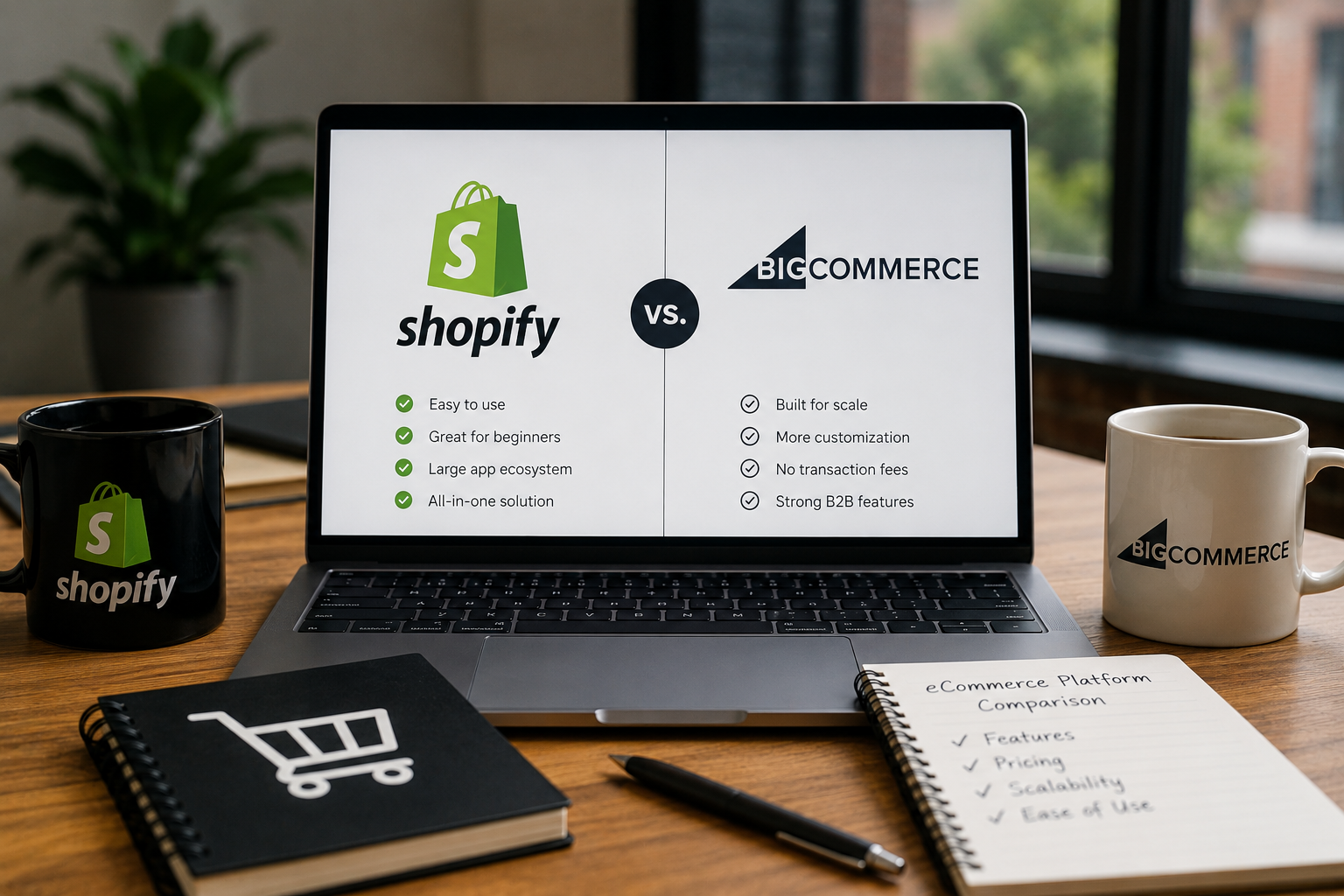
Shopify and BigCommerce are the two most frequently compared commerce platforms in the Western mid-market. They overlap on the obvious dimensions — hosted SaaS, headless support, a checkout layer, an app marketplace — and diverge on almost everything underneath. For merchants making a multi-year platform decision in 2026, the differences matter more than the similarities.
Market position and merchant base Shopify powers more than four million stores globally and counts a growing list of enterprise brands among its Shopify Plus customers, including Mattel, Allbirds, Gymshark, Steve Madden and a long tail of DTC leaders. BigCommerce serves a smaller but enterprise-skewed base, with strengths in B2B, large catalogues and merchants who want more native flexibility without a full headless rebuild.
Pricing and total cost of ownership Shopify's headline pricing is straightforward — Basic, Shopify, Advanced and Plus tiers with predictable transaction fees, plus payment processing through Shopify Payments. BigCommerce publishes Standard, Plus, Pro and Enterprise tiers with no platform transaction fees regardless of payment processor, which can materially change the math for high-AOV merchants using third-party gateways. Total cost of ownership at scale tends to depend less on the headline subscription and more on apps, themes, custom development and payment economics.
Ecosystem depth Shopify's app store is the largest in commerce by a wide margin, with deep coverage in marketing, fulfilment, subscriptions, reviews, loyalty, finance and AI tooling. BigCommerce's ecosystem is smaller but increasingly opinionated, with strong native B2B features, multi-storefront capability and tighter integrations with enterprise systems like Adobe Experience Manager, Bloomreach and Akeneo.
Native B2B and multi-storefront BigCommerce has historically led on native B2B functionality — customer groups, price lists, quote management, corporate accounts — and on multi-storefront support from a single back-end. Shopify has narrowed the gap with Shopify B2B on Plus and improved multi-store management, but merchants with complex B2B requirements still frequently shortlist BigCommerce alongside commercetools and Salesforce.
Headless and composable Both platforms support headless architectures. Shopify's Hydrogen and Oxygen stack, combined with the Storefront API and Hydrogen React components, has matured into a credible option for merchants who want React-native storefronts on Shopify infrastructure. BigCommerce has invested heavily in API-first architecture for years and remains a common choice for composable commerce stacks where the merchant wants the back-end without prescribing the front-end.
The right answer is rarely the platform with the longer feature list. It is the platform whose ecosystem and pricing curve fit how the merchant actually plans to grow.
Where each platform tends to win Shopify tends to win when speed of execution, app ecosystem depth and brand-side simplicity matter most — typical for fast-growing DTC brands and merchants leaning on third-party tools for marketing and fulfilment. BigCommerce tends to win when native B2B, multi-storefront, large catalogues or payment-gateway flexibility are decisive — typical for enterprise retailers, manufacturers and merchants with complex commercial models.
What to watch next Expect both platforms to keep expanding their AI tooling, agentic checkout support and retail-media integrations. Expect Shopify to continue pushing into enterprise with Plus, and BigCommerce to defend the mid-to-upper enterprise tier with deeper composable partnerships. For most merchants, the platform decision in 2026 is less binary than it was five years ago — and far more dependent on operating model than on feature checklists.
News Legacy maintains editorial independence. Some recommendations may contain affiliate links. We earn from qualifying purchases at no additional cost to you. Read our policy.
Read Next

The Quiet Platform War for the Future of Ecommerce Software
Shopify, BigCommerce and the headless cohort led by Commercetools are competing for the next generation of mid-market and enterprise ecommerce builds — and the lines are finally getting clearer.

The Marketing-Tech Stack for DTC and Ecommerce Has Quietly Standardised
Klaviyo, Attentive, Iterable and a small group of vendors have effectively become the default modern commerce-marketing stack — and the implications are significant.

The Quiet ERP Replacement Cycle Reshaping Mid-Market Commerce
NetSuite, Cin7 and a generation of commerce-native ERPs are reshaping how mid-market retail and DTC businesses run their back office.
One short email. Stories you can use.
A free, occasional email from our editorial team with our latest features, explainers and reads. Unsubscribe any time — your email stays with us.