Why Nike Is Struggling With DTC — and What the Pullback Really Means
After a half-decade of betting the company on direct-to-consumer, Nike is quietly rebuilding its wholesale relationships. The retreat is more strategic than it looks.
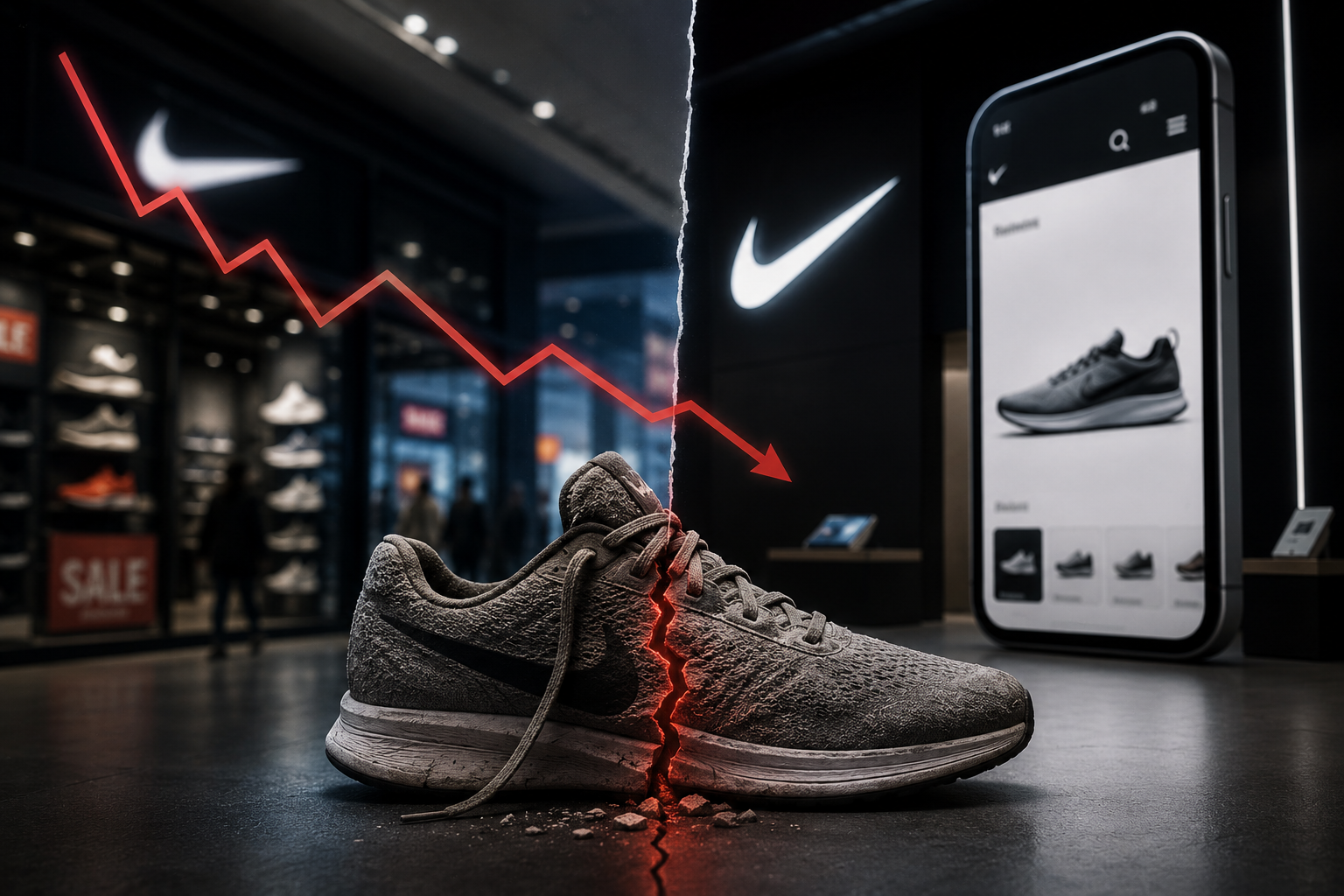
When Nike unveiled its Consumer Direct Acceleration strategy in 2020, the message to Wall Street was unambiguous: the future of the world's largest sportswear company would run through its own apps, its own stores and its own checkout. Five years later, the company is rebuilding the wholesale doors it once walked away from. The reversal is the most consequential strategic reset in modern athletic retail, and it tells a wider story about the limits of pure DTC for global brands.
The thesis that didn't quite hold Nike's original DTC bet rested on three assumptions: that members-only digital channels would compound faster than wholesale, that owned data would deepen lifetime value, and that cutting mid-tier accounts would protect brand equity. The first assumption broke first. Nike Digital growth slowed sharply through 2023 and 2024 as promotional intensity rose, full-price sell-through softened and the SNKRS app's release cadence lost the cultural urgency it once owned.
What wholesale actually delivered Door count discipline came at a cost Nike underestimated: discovery. Foot Locker, DSW, JD Sports and a long tail of regional sporting-goods retailers had quietly served as a top-of-funnel layer that Nike's own stores could not replicate at the same scale. When those doors were rationed, competitors — Hoka, On, New Balance and a resurgent Adidas — moved into the shelf space and into the consideration set.
Inventory, innovation and the Jordan question A second pressure built underneath the channel story. Nike's product pipeline leaned heavily on a small number of franchise silhouettes — Air Force 1, Dunk, Air Jordan 1 — that were stretched across colourways and collaborations until the market signalled fatigue. With innovation calendars running long and lifestyle franchises softening, wholesale partners had less reason to fight for shelf space, and Nike had less leverage when it asked them to.
The reset under new leadership Elliott Hill's return as chief executive marked an explicit pivot. The company has restored relationships with Macy's, DSW and selected European accounts, recommitted to Foot Locker as a strategic partner, and reframed Nike Direct as one channel among several rather than the destination for all premium product. Internally, the operating model is shifting back toward category-led teams capable of moving faster on performance running and basketball, the segments where competitors gained the most ground.
Nike did not fail at DTC. It discovered that even the strongest brand in sportswear cannot replace the cumulative discovery power of a healthy wholesale ecosystem.
What the Nike experience teaches the rest of the industry The lesson is not that DTC is dead. It is that DTC works as a margin and data layer on top of a balanced distribution model, not as a replacement for it. Brands with weaker cultural pull than Nike — and that is almost all of them — should treat the Nike pullback as the clearest data point yet that omnichannel discipline beats channel purity. The next phase of athletic retail will be defined by which brands can run owned, wholesale and marketplace channels as one coherent system rather than three competing ones.
News Legacy maintains editorial independence. Some recommendations may contain affiliate links. We earn from qualifying purchases at no additional cost to you. Read our policy.
Read Next

What the Original DTC Class of 2014 Has Learned About Surviving 2026
Allbirds, Warby Parker, Glossier and the brands that defined the first DTC wave have spent two years rebuilding around a new operating model. Some of them are working.

Britain's DTC Champions Are Now Genuinely Global Brands — and Operating Like It
Gymshark, Huel and Castore have crossed the threshold from UK-grown insurgents to international consumer brands with the operating discipline to match.

European DTC Beauty Has Gone From Underdog to Defining the Category
Refy, Trinny London, Westman Atelier and a wave of European beauty brands are now setting the global agenda for the category.
One short email. Stories you can use.
A free, occasional email from our editorial team with our latest features, explainers and reads. Unsubscribe any time — your email stays with us.