Shein vs Zara: The Fast-Fashion War, Explained
One reinvented vertical retail. The other rewrote the rules of ultra-fast online fashion. The collision between them is reshaping the global apparel industry.
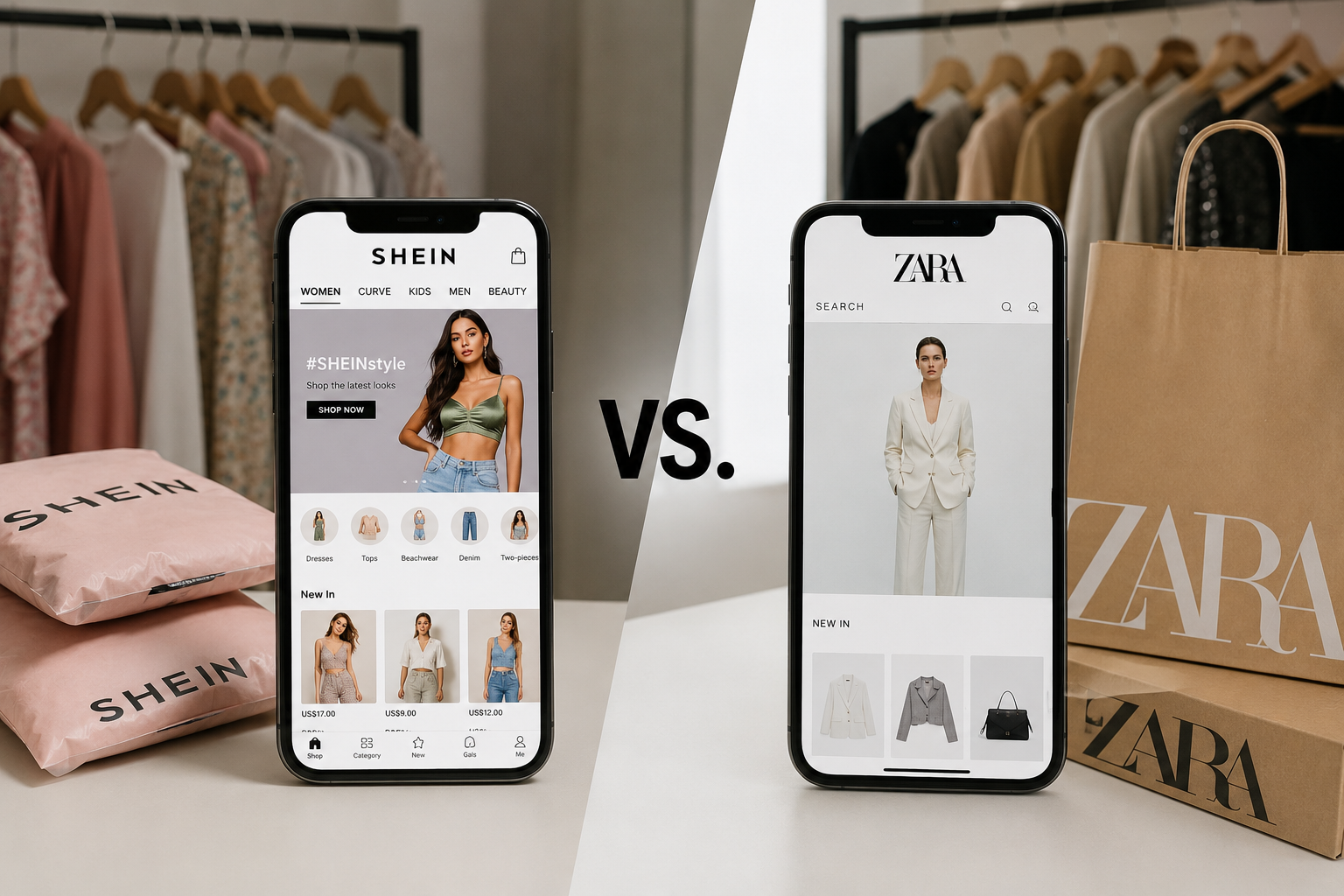
Two companies dominate the conversation about modern fast fashion, and they could not be more different. Inditex's Zara, founded in Spain in the 1970s, built its empire on vertical integration, near-shore manufacturing and a tightly choreographed store-led model. Shein, founded in China in the 2010s, built its empire on an algorithmic, on-demand supply chain that produces tens of thousands of new SKUs a week and ships directly to the consumer from factories in Guangzhou and increasingly other regions.
Two operating models, one customer Zara's model is built around speed inside a controlled assortment. Designs move from sketch to store in two to three weeks, but the total catalogue at any given moment is curated. Inditex's owned and partner factories in Spain, Portugal, Morocco and Turkey make rapid replenishment possible, and the global store fleet remains a critical merchandising and brand asset. Shein's model inverts almost every variable. The company tests thousands of designs in tiny initial runs, scales the winners through an on-demand factory network, and ships globally without a meaningful physical footprint. Prices are typically a fraction of Zara's, and the catalogue is functionally infinite.
The economics behind the headlines Shein's gross merchandise value is now in the tens of billions of dollars, with strongest penetration in the United States, the United Kingdom, France, Germany and Brazil. Inditex remains substantially more profitable per garment, with operating margins that few apparel businesses anywhere come close to. The two companies are competing for overlapping customers but on very different financial terms.
Sustainability, regulation and the de minimis question Shein has become a focal point in the global debate over fast-fashion's environmental and labour impact, and over the U.S. de minimis exemption that historically allowed low-value parcels to enter duty-free. Tightening rules in the United States and the European Union — on customs treatment, on textile waste, on supply-chain transparency — are likely to compress the ultra-low-price model over time. Zara faces its own scrutiny but starts from a more defensible position on sourcing and traceability.
Zara's response Inditex has not stood still. Zara has invested heavily in RFID, integrated inventory between online and store, and a more disciplined trend-led drop calendar that borrows pacing cues from social platforms. The brand's pricing has crept upward, positioning Zara closer to accessible premium than to true fast fashion — a deliberate strategic choice that puts daylight between it and Shein at the lower end.
Shein's response Shein has pushed in the opposite direction. The company has launched a third-party marketplace, expanded into beauty and home, opened pop-up stores, signed partnerships with established Western brands and continued to professionalise its compliance and sustainability functions in preparation for a potential public listing. Each move is designed to broaden the brand from ultra-cheap apparel into a more diversified online retailer.
The fast-fashion war is no longer Zara versus Shein in a single category. It is two opposing visions of how global apparel should be designed, manufactured, regulated and sold.
What to watch next Expect regulatory action on de minimis and textile waste to shape Shein's economics more than any competitive response. Expect Inditex to keep upgrading the Zara experience while leaning on Massimo Dutti, Bershka and Pull&Bear to defend adjacent price points. And expect a third group of competitors — Temu, H&M, Uniqlo, Primark and a wave of TikTok-native apparel brands — to keep crowding the middle of the market that both giants need.
News Legacy maintains editorial independence. Some recommendations may contain affiliate links. We earn from qualifying purchases at no additional cost to you. Read our policy.
Read Next
The Global Retail Power Rankings — Who Actually Runs Modern Commerce
Walmart, Amazon, Alibaba, Costco and a small group of operators now control the vast majority of global organised retail. The rankings have shifted in some surprising ways.
Why Tariffs and De Minimis Rules Have Become the Most Important Commerce Story of 2026
From U.S. de minimis reform to European VAT changes, the policy environment for cross-border ecommerce is undergoing the most significant restructuring in two decades.
The Quiet Globalisation of Chinese Commerce Operating Models
From Shein to TikTok Shop, the operating playbooks pioneered in China are now actively reshaping how Western consumers shop.
One short email. Stories you can use.
A free, occasional email from our editorial team with our latest features, explainers and reads. Unsubscribe any time — your email stays with us.