Why Costco Keeps Winning — Even as American Retail Bifurcates
Membership renewal rates above 90 percent, treasure-hunt merchandising and a stubbornly narrow assortment have made Costco the most consistent performer in U.S. retail. The model is harder to copy than it looks.
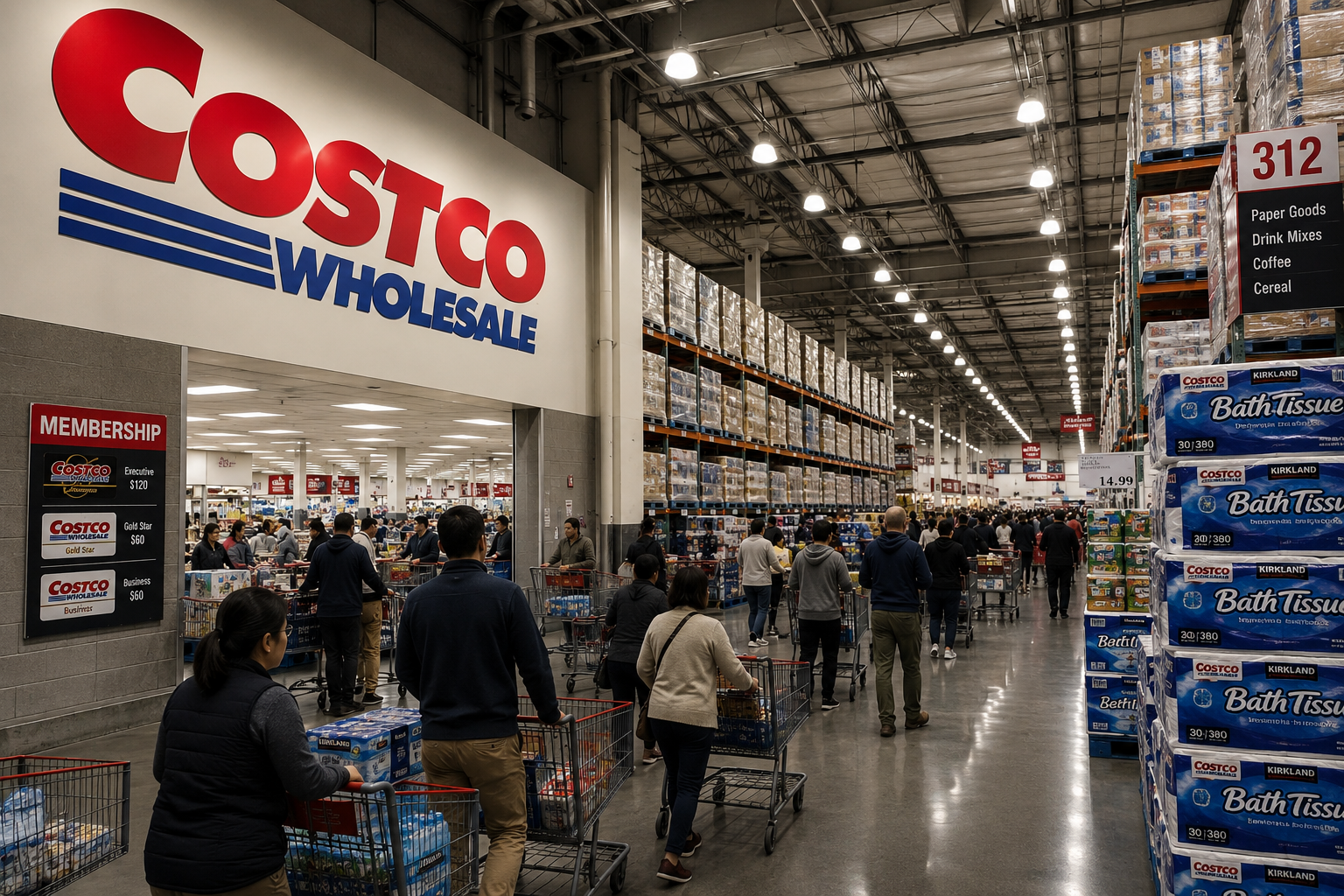
While much of American retail has spent the past three years adjusting to weaker discretionary demand, higher inventory costs and softer middle-income spending, Costco has kept compounding. Comparable sales growth, membership renewal rates and warehouse traffic have all stayed near record highs. The question is no longer whether Costco's model works — it clearly does — but why so few competitors have managed to imitate it.
Membership as the real product Costco's profit and loss statement is unusual. Most of the operating income comes from membership fees rather than merchandise margin. That single fact reframes the entire business: every decision about price, assortment and store experience is made to keep members renewing, not to maximise transactional margin. Renewal rates above 90 percent in the U.S. and Canada and rising globally are the clearest evidence the discipline is working.
A stubbornly narrow assortment A typical Costco warehouse carries roughly 3,800 SKUs — a fraction of what a Walmart Supercenter or a European hypermarket stocks. That narrowness is a feature, not a constraint. Concentrated volume per SKU gives Costco unmatched buying leverage, simplifies logistics, accelerates inventory turns and lets the merchandising team curate aggressively. The Kirkland Signature private label, which now generates more revenue than most standalone consumer brands, sits at the centre of that discipline.
The treasure-hunt mechanic Limited-time, limited-quantity items rotate through the warehouse continuously, training members to visit more often and buy when they see something compelling. The mechanic combines high-margin discovery items with low-margin staples in a way that lifts basket size without resorting to the discount cycles that have eroded margin elsewhere in U.S. retail.
Wages, retention and the operating moat Costco's wage premium relative to the rest of the warehouse-club and grocery industry is one of the most studied features of the model. Higher pay correlates with lower turnover, faster checkout, fewer stockouts and a quieter store experience — all of which feed renewal rates. The compounding effect is hard to copy because it requires accepting lower short-term operating margin in exchange for long-term membership economics.
Digital, finally, on Costco's terms Costco was famously slow to invest in ecommerce, and the company still generates the vast majority of revenue inside its warehouses. The recent build-out of Costco Logistics, expanded same-day grocery via Instacart and a more capable Costco.com has closed the digital gap without diluting the in-warehouse experience. The strategy is deliberate: digital exists to serve the membership, not to replace the trip.
Costco's moat is not low prices. It is a self-reinforcing loop of membership, assortment discipline, wages and trip frequency that the rest of retail has not been willing to commit to.
What to watch next International expansion remains the single largest growth lever, with continued openings in China, Japan, Korea, France, Sweden and Spain. Watch the gradual modernisation of digital, the slow expansion of Kirkland into new categories, and the long-running debate over the membership fee — overdue, in most analyst models, for an increase that would drop almost entirely to operating profit. The model is not glamorous. It is just very, very hard to copy.
News Legacy maintains editorial independence. Some recommendations may contain affiliate links. We earn from qualifying purchases at no additional cost to you. Read our policy.
Read Next

The 2026 Outlook for U.S. Ecommerce: Amazon, Walmart and Shopify Are Quietly Rewriting the Rules
Three operating systems now run American online retail. The next twelve months will decide which of them controls the next decade of the consumer wallet.

Britain's Ecommerce Rebound: How ASOS, Next and M&S Are Engineering a Profitable Comeback
After three years of margin pain, the United Kingdom's largest online retailers are growing again — but on dramatically different terms than before.

Europe's Ecommerce Map Is Still Beautifully Fragmented — And That's the Opportunity
While the U.S. consolidates around three platforms, Europe remains a continent of national champions: Zalando, Allegro, Cdiscount, Bol and a dozen more.
One short email. Stories you can use.
A free, occasional email from our editorial team with our latest features, explainers and reads. Unsubscribe any time — your email stays with us.