Algorithmic Drift: Assessing AI's Uneven Impact on European Retail Margins
European retailers are increasingly embedding artificial intelligence across their operations, from supply chain optimisation to personalised marketing. The resulting shifts in competitive dynamics and profitability are proving highly uneven across the continent's diverse markets.

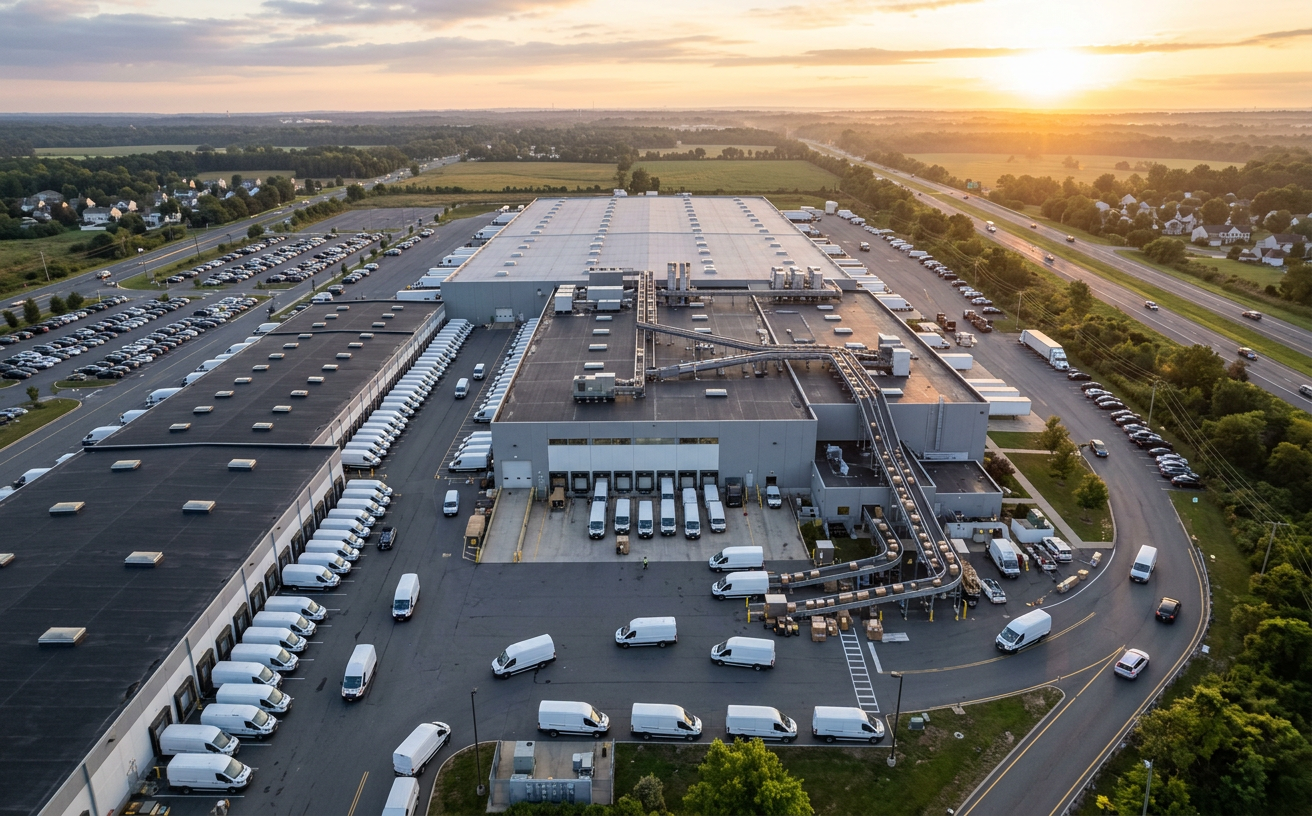
The warehouses operated by Allegro in Poland, and indeed by Zalando in Germany, increasingly depend on sophisticated algorithmic orchestration for everything from inventory placement to picking routes. While these e-commerce leaders have invested substantial capital in AI-driven efficiencies, the broader story of AI integration across Europe's retail sector reveals a complex picture, marked by varying levels of adoption, divergent strategic priorities, and, crucially, a differential impact on financial performance. Understanding these nuances is critical as operational expenditures across the bloc come under renewed scrutiny.
Early adopters, typically large online pure-plays or digitally forward omnichannel retailers, have leveraged AI to refine demand forecasting, leading to reductions in overstocking and improvements in working capital. Companies like Bol.com in the Netherlands and Cdiscount in France have deployed AI models to dynamically adjust pricing in response to real-time market conditions and competitor movements. This agility allows for fine-tuning margins on millions of SKUs, a capability not easily replicated by less technologically mature rivals.
The Cost of Intelligence: Investment vs. Return
However, the pathway to AI-driven profitability is not without significant upfront investment. Developing proprietary AI capabilities or integrating third-party solutions requires substantial outlays in technology infrastructure, data scientists, and operational recalibration. For retailers operating on historically thin margins, such as many grocers, the return on investment must be clear and relatively swift. Carrefour and REWE, for instance, are exploring AI in optimising store layouts and predicting fresh produce spoilage, but the scale of transformation needed across thousands of physical locations presents a formidable challenge.
The benefits are often tangible for those who commit. One industry analyst observes that organisations successfully integrating AI report a typical 5-15% improvement in operational efficiency within their first three years.
Cross-border dynamics further complicate the picture. A uniform AI strategy implemented from a central European headquarters might encounter resistance or prove suboptimal when confronted with distinct consumer preferences and regulatory environments in, say, Spain versus the Nordic countries. Vinted, the Lithuanian-born fashion resale platform, has successfully used AI to categorise listings and personalise recommendations across numerous European markets, demonstrating that a well-executed, locally sensitive AI deployment can scale effectively.
Consolidating AI Prowess
The e-grocery sector provides a particularly stark illustration of AI's impact. Fast delivery models, epitomised by the now-defunct Gorillas and the scaling Flink, relied heavily on AI to manage complex logistics, optimise rider routes, and predict demand surges in urban areas. While the rapid expansion often outpaced profitability, the underlying technological frameworks demonstrated the potential for significant gains in last-mile efficiency, an area where traditional supermarkets like Lidl are now also investing.
The divide between AI leaders and laggards is widening. Data siloing, legacy IT infrastructure, and a shortage of skilled personnel remain significant impediments for many mid-sized European retailers. This creates a competitive chasm, where those who can effectively leverage machine learning models to understand customer behaviour, streamline supply chains, and react swiftly to market shifts are gaining a distinct advantage in a landscape defined by increasingly slender margins. The cumulative effect over time will reshape market share allocation across the continent.
Ultimately, the strategic application of AI is becoming a non-negotiable component of retail survival and growth. While initial investments can be substantial, the long-term competitive advantages, manifested in superior customer experiences, reduced operational costs, and dynamic pricing capabilities, are compelling. The coming years will likely see a further consolidation of market power among those retailers who master algorithmic dexterity, while others risk being outmanoeuvred by more intelligent competitors.
News Legacy maintains editorial independence. Some recommendations may contain affiliate links. We earn from qualifying purchases at no additional cost to you. Read our policy.
Read Next

The Top Ecommerce Niches Quietly Winning the U.S., U.K. and European Markets in 2026
Beauty, athleisure, wellness, pet and resale are no longer trends — they are the operating cores of online retail across the West. Here is where the money is actually moving.
The 2026 Outlook for U.S. Ecommerce: Amazon, Walmart and Shopify Are Quietly Rewriting the Rules
Three operating systems now run American online retail. The next twelve months will decide which of them controls the next decade of the consumer wallet.

Britain's Ecommerce Rebound: How ASOS, Next and M&S Are Engineering a Profitable Comeback
After three years of margin pain, the United Kingdom's largest online retailers are growing again — but on dramatically different terms than before.
One short email. Stories you can use.
A free, occasional email from our editorial team with our latest features, explainers and reads. Unsubscribe any time — your email stays with us.