Continental Drift: The Uneven Evolution of Europe's Online Marketplaces
While Amazon and Alibaba cast long shadows, home-grown European marketplace platforms are carving out distinct niches, leveraging local nuances and regulatory shifts to redefine digital commerce across the continent. This is not a uniform ascent.

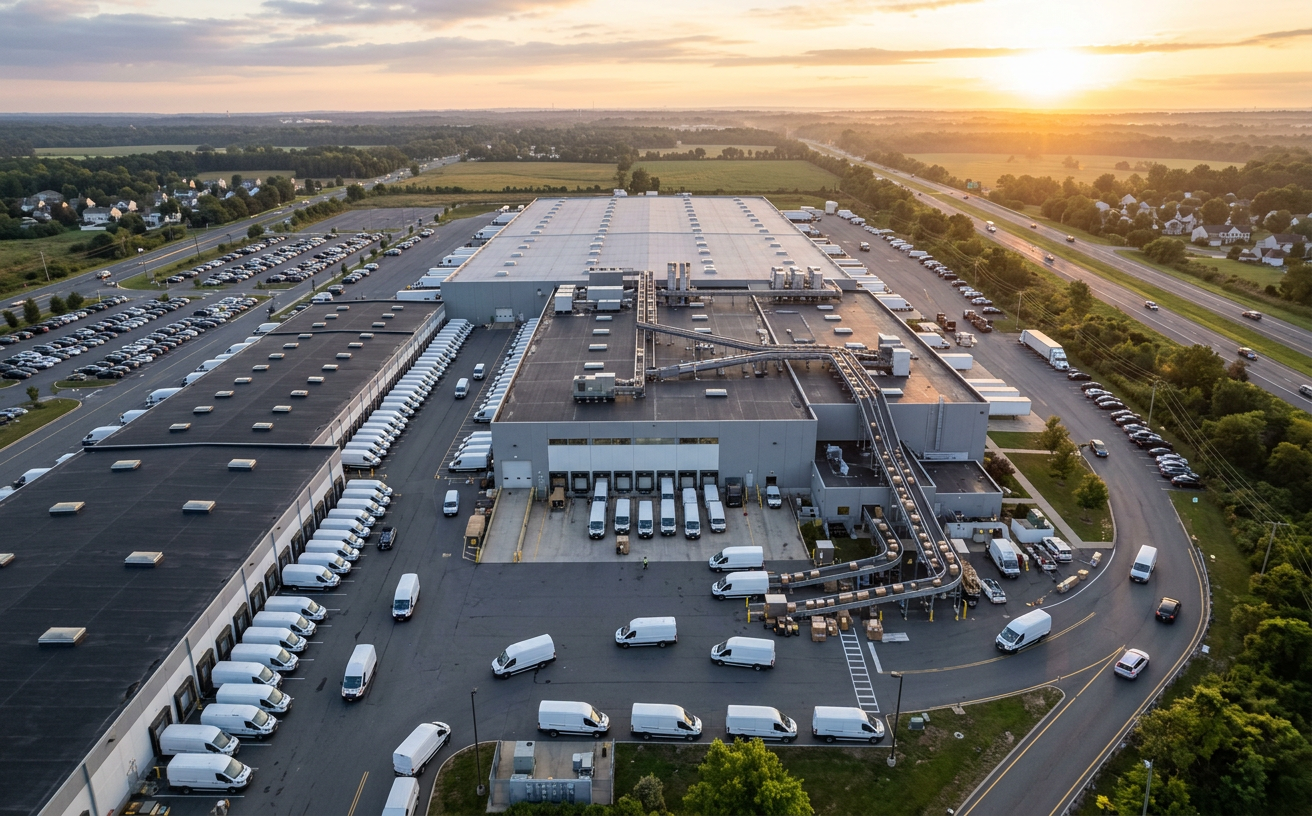
At a logistics hub outside Berlin, Zalando processes millions of fashion items monthly, a testament to its decade-long journey from a shoe seller to a formidable fashion and lifestyle marketplace across 25 European markets. Yet, its expansion, like that of many European digital champions, highlights a complex, fragmented landscape where cross-border success remains more aspiration than ubiquitous reality for many contenders.
The European marketplace sector, valued in the hundreds of billions of euros, is a battleground of global giants and nimble local players. While Amazon dominates in Western Europe and extends its reach into Poland and Sweden, and Alibaba's AliExpress maintains a significant, if sometimes controversial, Iberian presence, indigenous platforms are demonstrating resilience. This dynamic environment is forcing a re-evaluation of strategies, particularly as regulatory pressures from Brussels intensify.
The Walled Gardens of National Commerce
Despite the vision of a single digital market, national borders remain significant. Consider Allegro, a Polish e-commerce behemoth that dwarfs Amazon in its home territory, processing over 250 million items quarterly. Its attempts to replicate this success in Czechia and Slovakia through Mall.cz and WEDO have met with resistance, underscoring the challenge of porting highly localised operational models and consumer trust. Similarly, Bol.com, a Dutch and Belgian household name, has little traction beyond its immediate linguistic sphere, focusing instead on deepening its dominance in its core markets.
The inherent cultural and logistical variations across Europe, from consumer payment preferences in Germany (still heavily cash- and invoice-oriented) to the sophisticated click-and-collect networks in France (championed by Carrefour and Cdiscount), demand bespoke approaches. This fragmentation offers both a barrier to continent-wide scaling and an opportunity for hyper-localised offerings.
"Europe's digital market is less a single highway and more a network of well-trodden local paths, each with its own customs and landscape." This sentiment, often voiced by industry insiders, encapsulates the challenge.
Niche Dominance and Regulatory Tailwinds
Beyond general merchandise, niche European marketplaces are finding significant traction. Vinted, the Lithuanian-born second-hand fashion platform, has achieved unicorn status by tapping into sustainability trends and peer-to-peer commerce, successfully expanding across France, Germany, Spain, and beyond. This model, focused on community and purpose, contrasts sharply with the broader, inventory-heavy approaches of traditional retailers.
The grocery sector is another arena of spirited European competition. While rapid delivery players like the legacy Gorillas and Flink encountered significant capital expenditure challenges, established Grocers like REWE and Lidl are accelerating their digital transitions, leveraging their extensive physical footprints for online order fulfilment. This hybrid model, blending digital convenience with physical presence, appears more sustainable for the European consumer base. The forthcoming Digital Markets Act (DMA) and Digital Services Act (DSA) from the EU are expected to further level the playing field, potentially curbing the power of gatekeeper platforms and creating new avenues for European innovators. These regulations are not merely punitive; they are designed to foster competition and ensure fairer access to markets, which could disproportionately benefit smaller, innovative European players vying for market share.
The trajectory of Europe's online marketplaces is not one of monolithic expansion but rather of strategic segmentation and adaptive evolution. The next five years will likely see continued consolidation in some areas and fervent innovation in others, dictated by a blend of technological advancement, consumer demand, and an increasingly assertive regulatory environment from Brussels that prioritises fair competition and local safeguards.
News Legacy maintains editorial independence. Some recommendations may contain affiliate links. We earn from qualifying purchases at no additional cost to you. Read our policy.
Read Next

The Top Ecommerce Niches Quietly Winning the U.S., U.K. and European Markets in 2026
Beauty, athleisure, wellness, pet and resale are no longer trends — they are the operating cores of online retail across the West. Here is where the money is actually moving.
The 2026 Outlook for U.S. Ecommerce: Amazon, Walmart and Shopify Are Quietly Rewriting the Rules
Three operating systems now run American online retail. The next twelve months will decide which of them controls the next decade of the consumer wallet.

Britain's Ecommerce Rebound: How ASOS, Next and M&S Are Engineering a Profitable Comeback
After three years of margin pain, the United Kingdom's largest online retailers are growing again — but on dramatically different terms than before.
One short email. Stories you can use.
A free, occasional email from our editorial team with our latest features, explainers and reads. Unsubscribe any time — your email stays with us.