Europe's E-commerce Logistics: The Silent Power Brokers
Behind the burgeoning online retail giants, a sophisticated and often unseen logistical infrastructure determines success and failure in the fiercely competitive European market, shaping consumer expectations and national economies.

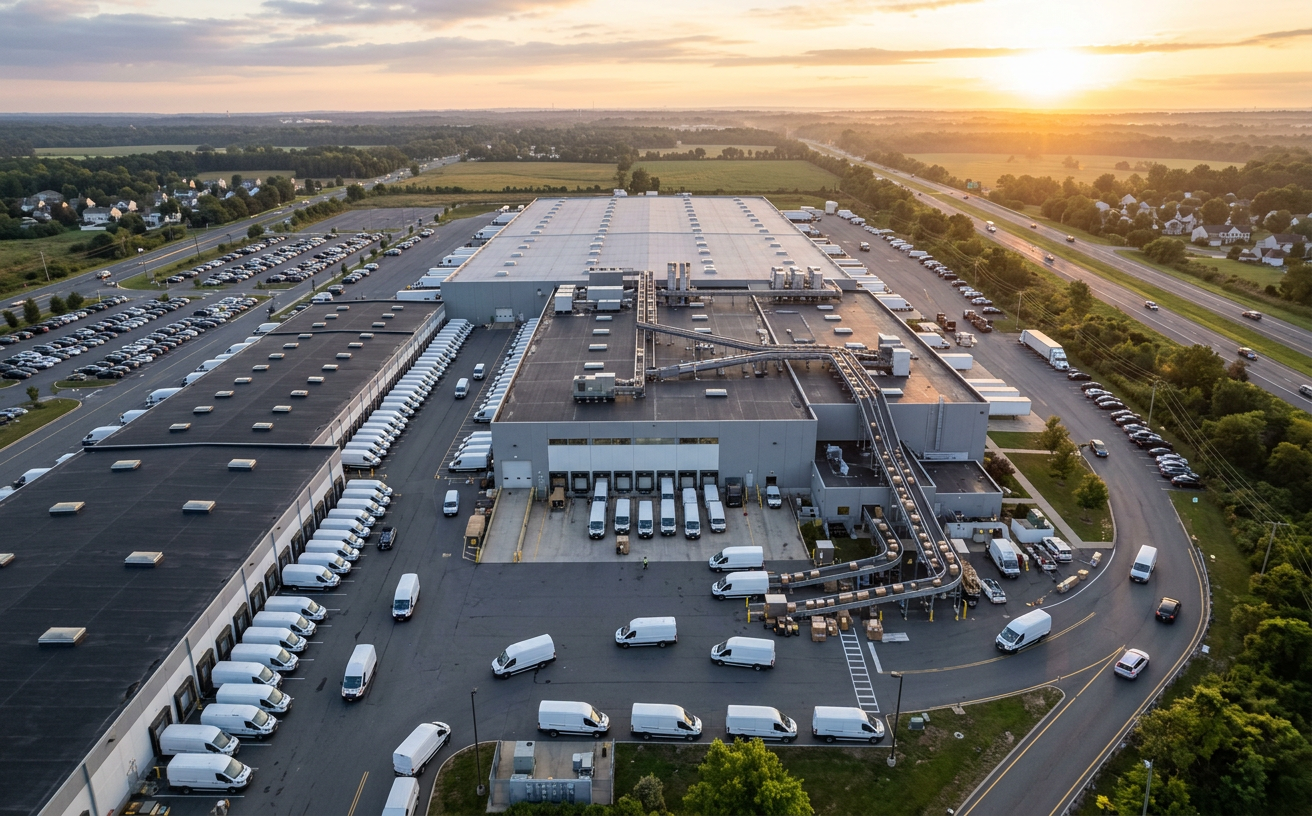
From a vast automated warehouse near Zielona Góra, Poland, packages dispatched for Zalando traverse borders, demonstrating the increasingly integrated yet complex logistical fabric underpinning European e-commerce. The scale of these operations, involving sophisticated sortation systems and cross-docking facilities, directly impacts consumer satisfaction, influencing everything from delivery speed in Berlin to returns handling in Barcelona. This intricate dance of goods across the continent's diverse consumer landscape highlights a silent but formidable arena of competition.
Europe's market, fragmented by geography, language, and consumer preferences, presents unique challenges for logistics providers. While giants like Amazon leverage their own vast networks, many other retailers, from Germany's Otto Group to France's Cdiscount, depend on a patchwork of third-party logistics (3PLs) and regional carriers. This multi-modal approach often involves a combination of road freight for inter-country hauls and last-mile specialists for urban delivery, a system constantly strained by rising fuel costs and regulatory divergence.
The Last-Mile Scramble
The 'last mile' remains the most expensive and complex segment of the supply chain. Companies like Poland's Allegro, striving to meet rapid delivery expectations, invest heavily in network density. The ephemeral rise and fall of rapid grocery delivery services such as Gorillas (now part of Getir) and Flink underscored the formidable operational hurdles of highly granular, on-demand logistics, particularly in densely populated urban centres. Profitability in this segment often eludes even well-funded ventures, revealing the fundamental economic realities of short-distance, high-frequency deliveries.
Cross-border e-commerce, while a significant growth driver, adds layers of complexity. Shoppers in Italy might order from a German retailer, or Nordic consumers from a French marketplace, each transaction requiring efficient customs processing and varied delivery options. The uniform nature of the euro simplifies financial transactions, yet varying national holidays, labour laws, and road infrastructure demand bespoke routing solutions. A parcel shipment from a REWE warehouse in Germany to a customer in the south of France involves navigating a finely tuned sequence of distribution hubs and transport modes.
The true differentiator in European e-commerce is no longer merely price or product, but the seamless, almost invisible journey of goods from seller to doorstep.
The sustainability imperative further reshapes logistics. Consumers, particularly in Western Europe, increasingly value environmentally conscious delivery options. This pressure drives investment in electric vehicle fleets for urban deliveries, optimised routing algorithms to reduce mileage, and consolidated shipments. Large retailers like Lidl and Carrefour, with their extensive physical store footprints, are exploring hybrid models, utilising stores as micro-fulfilment centres and pick-up points, thereby reducing direct-to-home vehicle emissions and increasing delivery efficiency.
Technology as an Enabler
Technological advancements are central to optimising these intricate networks. Warehouse automation, from robotic picking systems to autonomous guided vehicles, enhances throughput and reduces labour costs. Predictive analytics, driven by artificial intelligence, helps forecast demand fluctuations, allowing for more efficient inventory allocation and route planning. The integration of IoT devices provides real-time visibility into shipment locations and conditions, a critical feature for managing perishable goods or high-value items across disparate European climates.
Companies like Vinted, the Lithuanian second-hand fashion marketplace, rely on scalable, adaptable logistics partners to handle significant fluctuations in package volumes across multiple European markets. Their model thrives on low-cost shipping options which necessitate robust partnerships with national postal services and parcel carriers like InPost in Poland or La Poste in France. This dynamic highlights the intricate web of cooperation and competition that defines European e-commerce logistics, an ecosystem constantly adapting to new consumer behaviours and technological possibilities.
News Legacy maintains editorial independence. Some recommendations may contain affiliate links. We earn from qualifying purchases at no additional cost to you. Read our policy.
Read Next

The Top Ecommerce Niches Quietly Winning the U.S., U.K. and European Markets in 2026
Beauty, athleisure, wellness, pet and resale are no longer trends — they are the operating cores of online retail across the West. Here is where the money is actually moving.
The 2026 Outlook for U.S. Ecommerce: Amazon, Walmart and Shopify Are Quietly Rewriting the Rules
Three operating systems now run American online retail. The next twelve months will decide which of them controls the next decade of the consumer wallet.

Britain's Ecommerce Rebound: How ASOS, Next and M&S Are Engineering a Profitable Comeback
After three years of margin pain, the United Kingdom's largest online retailers are growing again — but on dramatically different terms than before.
One short email. Stories you can use.
A free, occasional email from our editorial team with our latest features, explainers and reads. Unsubscribe any time — your email stays with us.