Ocado’s Agile Ascent Challenges Traditional Grocery Logistics
The innovative online grocer continues to refine its automated fulfilment centres, presenting a formidable operational benchmark for legacy retail establishments grappling with evolving consumer demands and tighter margins.

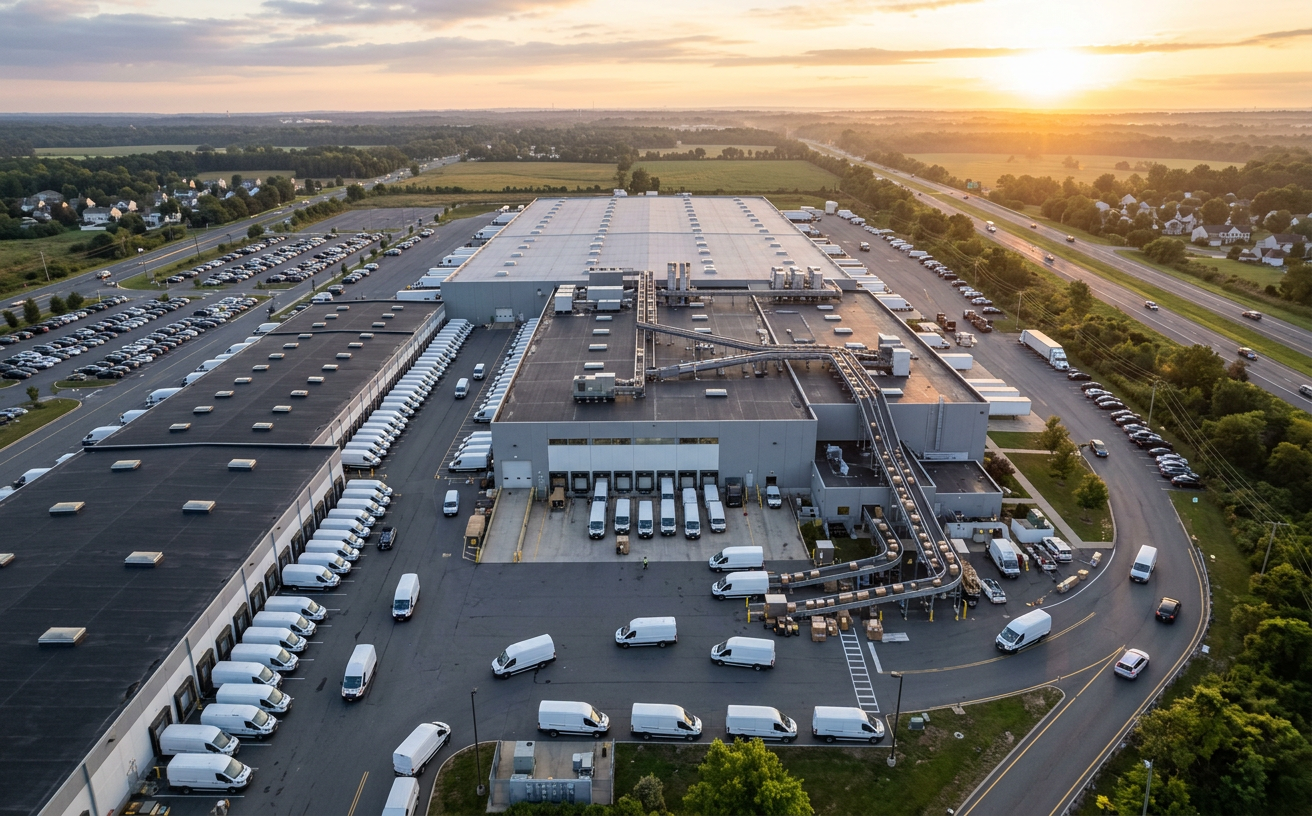
In Hatfield, the sprawling robotic grid of Ocado's Customer Fulfilment Centre hums with an orchestrated efficiency that stands in stark contrast to the conventional supermarket supply chain. This facility, one of several across the UK, exemplifies a distinct approach to grocery retail – one not reliant on brick-and-mortar aisles or manual picking, but on sophisticated automation and data-driven logistics. This model, pioneered by Ocado, is increasingly shaping expectations for convenience and speed, forcing competitors like Tesco and Sainsbury's to acutely re-evaluate their own often archaic distribution networks.
For decades, the standard grocery model has involved large out-of-town superstores acting as both retail frontage and local distribution hubs. While effective for in-person shopping, this infrastructure struggles when adapting to the nuances of widespread online order fulfilment. The expense of retrofitting existing stores for efficient 'dark store' operations or rapid click-and-collect, coupled with the logistical headache of last-mile delivery from dispersed locations, burdens traditional grocers with significant operational costs and often a compromised customer experience.
The Automation Imperative
Ocado's strategy bypasses these legacy issues entirely. Its purpose-built, highly automated warehouses, often called 'sheds,' can process thousands of orders simultaneously, utilising robotic 'bots' to retrieve and assemble groceries with remarkable speed and accuracy. This centralisation of inventory and automation of picking dramatically reduces labour costs per order and minimises errors, directly impacting profitability. While the initial capital expenditure for such facilities is substantial, the long-term operational efficiencies present a compelling argument for scalability and market dominance in the e-commerce grocery sector.
The UK's developed online grocery market, with a significant proportion of households regularly ordering provisions online, provides a fertile ground for Ocado's model. Unlike some European markets where online penetration is lower, British consumers have embraced the convenience, particularly since the pandemic accelerated digital adoption. This persistent consumer behaviour necessitates a robust, scalable, and cost-effective online fulfilment solution, a void Ocado has aggressively sought to fill, both for itself and through its technology partnerships with international retailers.
Traditional players are responding, albeit slowly. Marks & Spencer's partnership with Ocado for its online food delivery service is a clear acknowledgment of the latter's technological prowess. Supermarket giants like Tesco have invested in their own fulfilment centres and improved their in-store picking processes, but replicating Ocado's speed and density of automation without significant disruption to existing operations remains a complex challenge. The sheer volume of SKU variations and the perishability of fresh produce add further layers of complexity.
The transition from a human-centric, store-based picking model to a highly automated warehouse operation represents not merely an upgrade, but a fundamental re-architecture of the retail supply chain.
Beyond grocery, the principles of automated logistics are reverberating across other retail segments. Online fashion retailers like ASOS and even general merchandise behemoths such as Next are continuously optimising their distribution centres for speed and efficiency, though the specific demands of apparel differ from those of refrigerated food. The lesson from Ocado's journey is clear: future retail success hinges not just on enticing products, but on an underlying logistical infrastructure capable of delivering them efficiently and at scale.
The financial implications are significant. Margins in grocery retail are notoriously thin, and the added expense of online fulfilment can easily erode profitability if not managed with extreme precision. Ocado’s model, while demanding large upfront investment, aims to drive down the cost per order to a point where online grocery can become sustainably profitable. As fuel prices fluctuate and labour costs rise, the economic rationale for automation only strengthens, putting further pressure on competitors to invest or risk falling behind in the digital race for the British consumer's weekly spend.
News Legacy maintains editorial independence. Some recommendations may contain affiliate links. We earn from qualifying purchases at no additional cost to you. Read our policy.
Read Next

The Top Ecommerce Niches Quietly Winning the U.S., U.K. and European Markets in 2026
Beauty, athleisure, wellness, pet and resale are no longer trends — they are the operating cores of online retail across the West. Here is where the money is actually moving.
The 2026 Outlook for U.S. Ecommerce: Amazon, Walmart and Shopify Are Quietly Rewriting the Rules
Three operating systems now run American online retail. The next twelve months will decide which of them controls the next decade of the consumer wallet.

Britain's Ecommerce Rebound: How ASOS, Next and M&S Are Engineering a Profitable Comeback
After three years of margin pain, the United Kingdom's largest online retailers are growing again — but on dramatically different terms than before.
One short email. Stories you can use.
A free, occasional email from our editorial team with our latest features, explainers and reads. Unsubscribe any time — your email stays with us.