Ocado’s Automation Gambit: The Uneven Pace of Retail Digitalisation Beyond the Grocery Aisle
While Ocado continues to push the boundaries of automated fulfilment in the grocery sector, the broader UK retail landscape reveals a fragmented and often cautious embrace of advanced digital tools beyond the immediate customer interface.

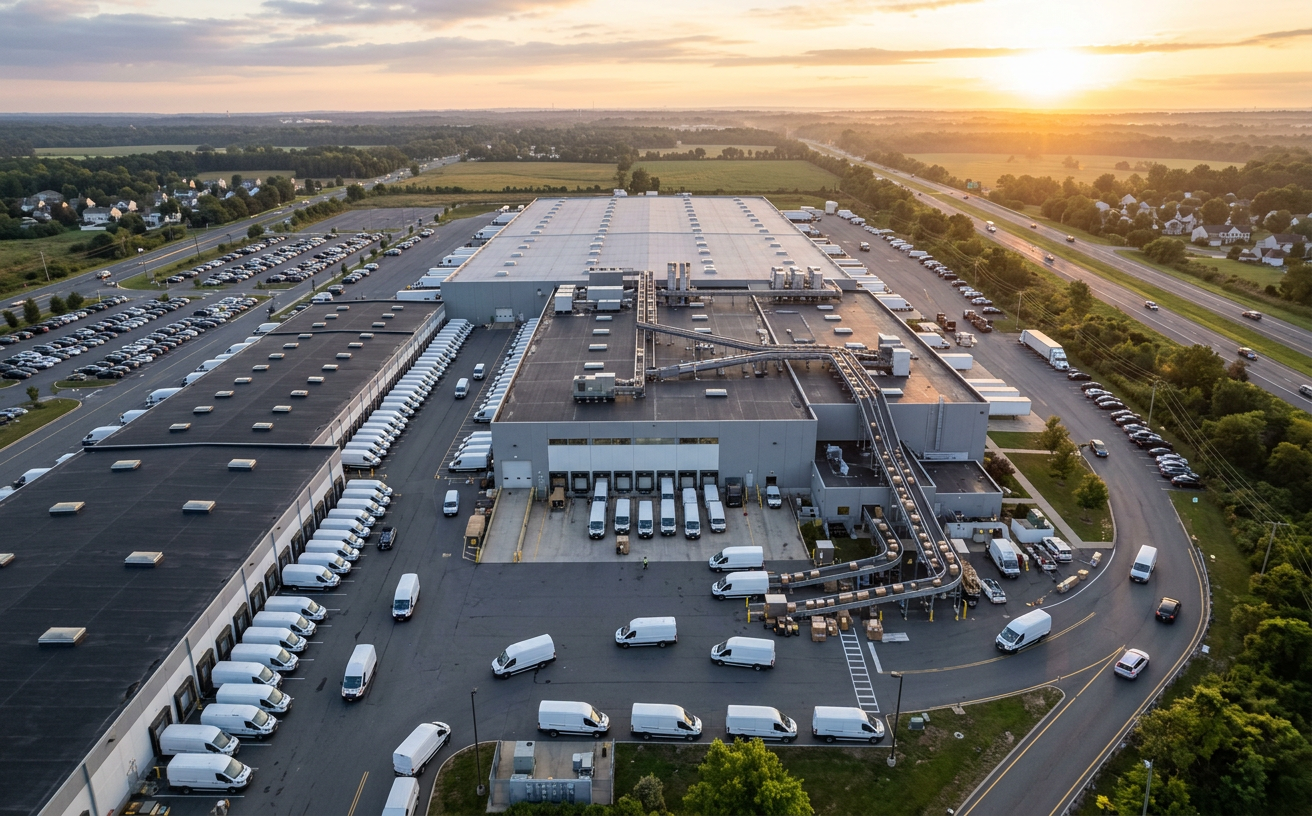
Stepping into one of Ocado’s customer fulfilment centres, such as the facility in Erith, Kent, offers a glimpse into a retail future defined by robotic precision and intricate algorithms. Hundreds of 'bots' navigate a grid, orchestrating the assembly of grocery orders with efficiency that traditional supermarket picking simply cannot match. This operational sophistication has been critical to Ocado's market positioning, particularly as it navigates the competitive UK online grocery market alongside Tesco and Sainsbury's.
Yet, outside of this highly capital-intensive, niche segment, the picture of digital transformation across the UK’s retail landscape is considerably less uniform. While many retailers have invested heavily in front-end e-commerce platforms and customer-facing applications, the integration of advanced SaaS (Software as a Service) tools into deeper operational processes, supply chains, and inventory management remains a strategic challenge for many.
The Legacy Burden and Incremental Shifts
Many established UK retailers, including Marks & Spencer and Next, contend with decades of accumulated IT infrastructure and operational practices. Implementing comprehensive new SaaS solutions often necessitates a 'rip and replace' approach, a proposition fraught with risk and significant upfront cost. Consequently, the adoption tends to be incremental, focusing on specific pain points rather than wholesale transformation.
For instance, improvements in warehouse management systems (WMS) or demand forecasting software may be implemented in isolation, leading to islands of digital excellence rather than a fully integrated, data-driven ecosystem. This contrasts sharply with the greenfield development approach taken by digital-native companies or specialist logistics providers, which can embed advanced AI and machine learning from their inception.
One industry analyst observes that the perceived return on investment for back-end automation in non-grocery retail often struggles to compete with more immediate marketing or sales initiatives.
The pandemic accelerated the necessity for robust online channels, pushing retailers like ASOS and even traditional high street mainstays to enhance their digital storefronts and click-and-collect capabilities. However, the subsequent infrastructure required to support these channels—optimised logistics, real-time inventory visibility, and personalisation engines—has often lagged behind the customer-facing developments.
Consider the continued reliance on manual processes for returns handling at some retailers or the challenges in inventory accuracy across multiple physical and online channels. These are precisely the areas where modern SaaS solutions, from distributed order management to predictive analytics for returns, could yield substantial efficiencies, potentially saving millions of pounds in operational costs and reducing waste.
Scaling Digitalisation Beyond the Giants
The UK market is also characterised by a long tail of small and medium-sized retailers. For these businesses, the entry barrier for sophisticated SaaS platforms can be financial as well as technical. While many are adopting readily available e-commerce platforms like Shopify, bespoke or enterprise-grade solutions for supply chain optimisation or complex CRM systems often remain out of reach.
The growth of last-mile delivery platforms such as Deliveroo and Just Eat illustrates a different facet of digital transformation, one focused on aggregation and network effects rather than deep internal operational overhaul for individual merchants. While these platforms offer a crucial digital channel for restaurants, the underlying inventory and order management systems within those businesses may still operate on more rudimentary frameworks. The challenge for the UK retail sector lies in translating the demonstrable success of automation in areas like grocery into a broader, more inclusive digital evolution across its diverse segments.
News Legacy maintains editorial independence. Some recommendations may contain affiliate links. We earn from qualifying purchases at no additional cost to you. Read our policy.
Read Next

The Top Ecommerce Niches Quietly Winning the U.S., U.K. and European Markets in 2026
Beauty, athleisure, wellness, pet and resale are no longer trends — they are the operating cores of online retail across the West. Here is where the money is actually moving.
The 2026 Outlook for U.S. Ecommerce: Amazon, Walmart and Shopify Are Quietly Rewriting the Rules
Three operating systems now run American online retail. The next twelve months will decide which of them controls the next decade of the consumer wallet.

Britain's Ecommerce Rebound: How ASOS, Next and M&S Are Engineering a Profitable Comeback
After three years of margin pain, the United Kingdom's largest online retailers are growing again — but on dramatically different terms than before.
One short email. Stories you can use.
A free, occasional email from our editorial team with our latest features, explainers and reads. Unsubscribe any time — your email stays with us.