The Scramble for Europe's Digital Basket: E-commerce Giants Face a Patchwork Future
Europe's online retail landscape, once projected as a monolithic growth engine, is Balkanising. Local champions and cross-border specialists are cementing their positions, challenging the dominance of pan-European ambitions.

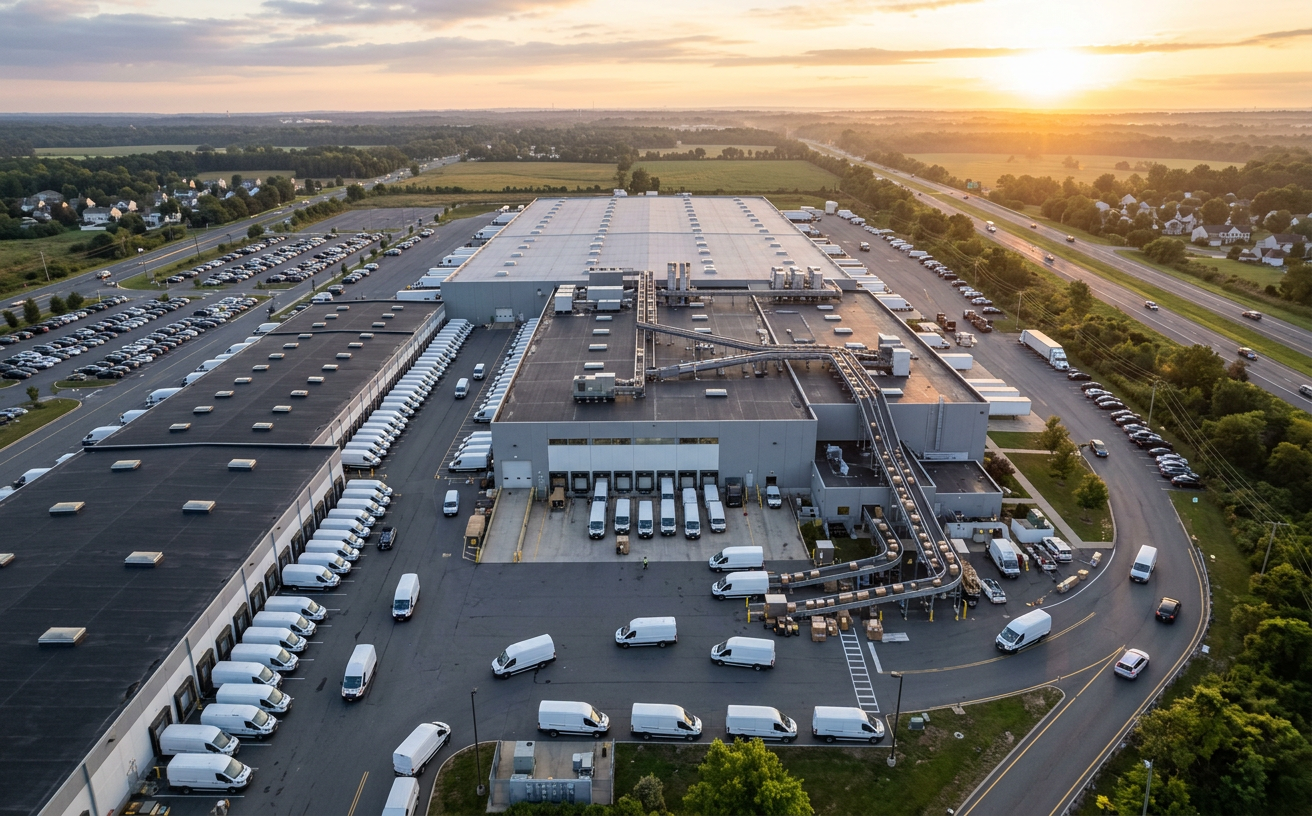
At a logistics hub outside Katowice, Poland, Allegro, the country's dominant e-commerce platform, processes millions of parcels weekly. Its unparalleled penetration in the Polish market, a testament to deep local understanding and robust delivery networks, illustrates a broader trend across the European Union: the ascent of national or regional e-commerce players who are outmanoeuvring global — and even continental — competitors by catering specifically to nuanced consumer preferences and regulatory environments. This fragmentation is reshaping investment strategies and operational blueprints for retailers across the continent.
While Amazon and Zalando certainly command significant market shares, particularly in Western Europe, their path to complete dominance is anything but assured. In France, Cdiscount maintains a strong foothold, leveraging its hypermarket heritage and a well-developed marketplace model. The Netherlands and Belgium see Bol.com as the de facto online shopping destination, its ubiquity rooted in local payment methods and consumer trust. These domestic champions are not merely surviving; they are thriving by offering tailored product assortments, localised customer service, and often, more relevant loyalty programmes.
The Endurance of Local Loyalty
The notion that European consumers would uniformly gravitate towards the largest, most frictionless platforms has proven simplistic. Southern Europe, for instance, exhibits distinct purchasing habits. Italian and Spanish consumers often prioritise product authenticity and detailed descriptions over sheer speed of delivery, creating opportunities for specialist retailers. Even within a single country, regional variations persist, compelling platforms to invest disproportionately in hyper-local fulfilment and marketing efforts.
Cross-border e-commerce within the EU, while facilitated by single market principles, still encounters friction. Varying VAT regimes, differing consumer protection laws, and the persistent linguistic barriers mean that a seamless 'European customer experience' remains an aspiration, not a universal reality. This complexity benefits players like Vinted, the Lithuanian-founded second-hand fashion marketplace, which has successfully scaled across multiple European markets by mastering peer-to-peer logistics and community building, largely bypassing traditional retail hurdles.
The promise of a single digital market has collided with the reality of diverse national preferences and regulatory landscapes, yielding a more complex, multi-polar e-commerce future.
The rapid grocery delivery sector provides another compelling example of this dynamic. While venture-backed players like Gorillas (now part of Getir, facing significant challenges) and Flink initially aimed for pan-European scale, their operational models proved difficult to sustain uniformly. Established grocers such as Carrefour, REWE, and Lidl, with their extensive physical store networks and existing supply chains, are now integrating robust online delivery services, often leveraging click-and-collect or local dark stores. This hybrid approach, combining digital convenience with tangible proximity, resonates strongly with European shoppers, particularly for everyday essentials.
Strategic Realignment and Investment
Investment in European e-commerce is increasingly targeting these regional strengths. Rather than broad-stroke expansion, capital is flowing towards companies demonstrating deep market penetration and efficient last-mile delivery solutions within specific geographies. This means funding for logistics technology tailored to dense urban centres or complex rural routes, and for platforms that can effectively integrate unique local payment systems or handle specific product categories with high conversion in particular states. The total value of online retail sales across the EU continues to climb, projected to comfortably exceed €800 billion annually by 2025, but the distribution of this value is becoming increasingly skewed towards those who master the local nuances.
For international players, this evolving landscape necessitates a strategic pivot from 'one size fits all' expansion to more nuanced, localised approaches. Partnerships with national postal services, bespoke marketing campaigns reflecting cultural specificities, and even strategic acquisitions of local champions are becoming standard practice. The future of European online retail will likely be a mosaic of interconnected but distinct markets, each with its own dominant players and unique competitive dynamics, far from the homogenised vision once widely predicted.
News Legacy maintains editorial independence. Some recommendations may contain affiliate links. We earn from qualifying purchases at no additional cost to you. Read our policy.
Read Next

The Top Ecommerce Niches Quietly Winning the U.S., U.K. and European Markets in 2026
Beauty, athleisure, wellness, pet and resale are no longer trends — they are the operating cores of online retail across the West. Here is where the money is actually moving.
The 2026 Outlook for U.S. Ecommerce: Amazon, Walmart and Shopify Are Quietly Rewriting the Rules
Three operating systems now run American online retail. The next twelve months will decide which of them controls the next decade of the consumer wallet.

Britain's Ecommerce Rebound: How ASOS, Next and M&S Are Engineering a Profitable Comeback
After three years of margin pain, the United Kingdom's largest online retailers are growing again — but on dramatically different terms than before.
One short email. Stories you can use.
A free, occasional email from our editorial team with our latest features, explainers and reads. Unsubscribe any time — your email stays with us.