Affiliate Shift: UK Retailers Recalibrate Digital Spends Amidst Margin Pressure
As inflation continues to reshape British consumer habits, major retailers are re-evaluating the economics of affiliate marketing, seeking efficiency and transparency in an increasingly competitive digital advertising landscape. The strategic adjustments signal a move away from volume-at-all-costs towards more profitable engagements.

The digital storefronts of British giants like Tesco, ASOS, and Next are subtly recalibrating their affiliate marketing strategies, a reflection of broader commercial pressures rippling through the UK economy. With household budgets under strain and operational costs escalating, the historical model of commission-based sales is undergoing intense scrutiny. Retailers are increasingly demanding greater return on investment from their digital partnerships, moving beyond simple click-throughs to focus on demonstrable value and incremental sales.
For years, affiliate marketing has represented a low-risk, performance-based advertising channel, allowing brands to pay only for completed sales or qualified leads. This model proved particularly attractive during periods of rapid e-commerce expansion. However, as the digital advertising ecosystem matures and consumer acquisition costs rise, some retailers question whether the commissions paid to affiliates genuinely drive new customer growth or merely capture sales that would have occurred organically.
The Scrutiny of Incremental Value
The core challenge lies in attribution. Differentiating between an affiliate-driven purchase and one initiated through other marketing channels, or even by a customer already intending to buy, has become paramount. Marks & Spencer, for instance, known for its discerning approach to marketing, is likely scrutinising whether its affiliate spend contributes meaningfully to its premium food or clothing divisions, or if it merely adds to the cost of an already-committed customer transaction. Similarly, grocery delivery services like Ocado, Deliveroo, and Just Eat operate on fine margins, making every customer acquisition cost a critical metric.
Recent adjustments by several large UK retailers illustrate this strategic pivot. Some are observed to be lowering commission rates for certain product categories or types of affiliates, while others are tightening their terms for approving affiliate partners. This is not a wholesale abandonment of the channel, but rather a surgical approach to optimisation. The objective is to incentivise affiliates to drive higher-value customers or new customer acquisition, rather than simply facilitating existing demand.
This shift is compounded by the broader economic climate. Annual inflation rates, though stabilising, have reshaped consumer spending, with many Britons prioritising essentials and seeking greater value. Retailers are consequently adjusting their pricing and promotional strategies, which in turn impacts the profitability calculations for affiliate commissions. A percentage cut on a lower average order value, or on a deeply discounted item, yields less revenue for both the affiliate and the retailer.
The era of treating all digital traffic as equally valuable for commission purposes is drawing to a close. Retailers are demanding more sophisticated partnership models that directly link spend to net new revenue and customer lifetime value.
Consider the varied landscape of UK retail: ASOS and Next operate within highly competitive fashion segments where customer loyalty can be fleeting. For these companies, the long-term value of an acquired customer outweighs the immediate commission cost. In contrast, supermarkets like Sainsbury's and Tesco, with established customer bases and loyalty schemes, might evaluate affiliate contributions differently, focusing on driving specific basket additions or encouraging trials of new services.
The evolution of this dynamic will necessitate greater transparency and more sophisticated data analytics from affiliate networks and partners. Retailers are seeking clear evidence of incremental sales, new customer acquisition, and engagement with target demographics. Those affiliates capable of delivering these metrics, perhaps through innovative content marketing or niche audience engagement, are likely to command more favourable terms, while those providing only broad traffic are likely to see their influence wane. The outcome will be a more discerning, and potentially more efficient, application of digital marketing budgets across the British retail sector.
News Legacy maintains editorial independence. Some recommendations may contain affiliate links. We earn from qualifying purchases at no additional cost to you. Read our policy.
Read Next

Is Sohna Really the Next Chhatarpur?
Three decades after Chhatarpur redrew South Delhi's map for space, privacy and exclusivity, a familiar pattern is now taking shape further south, and Sohna is where the smart money is beginning to look.
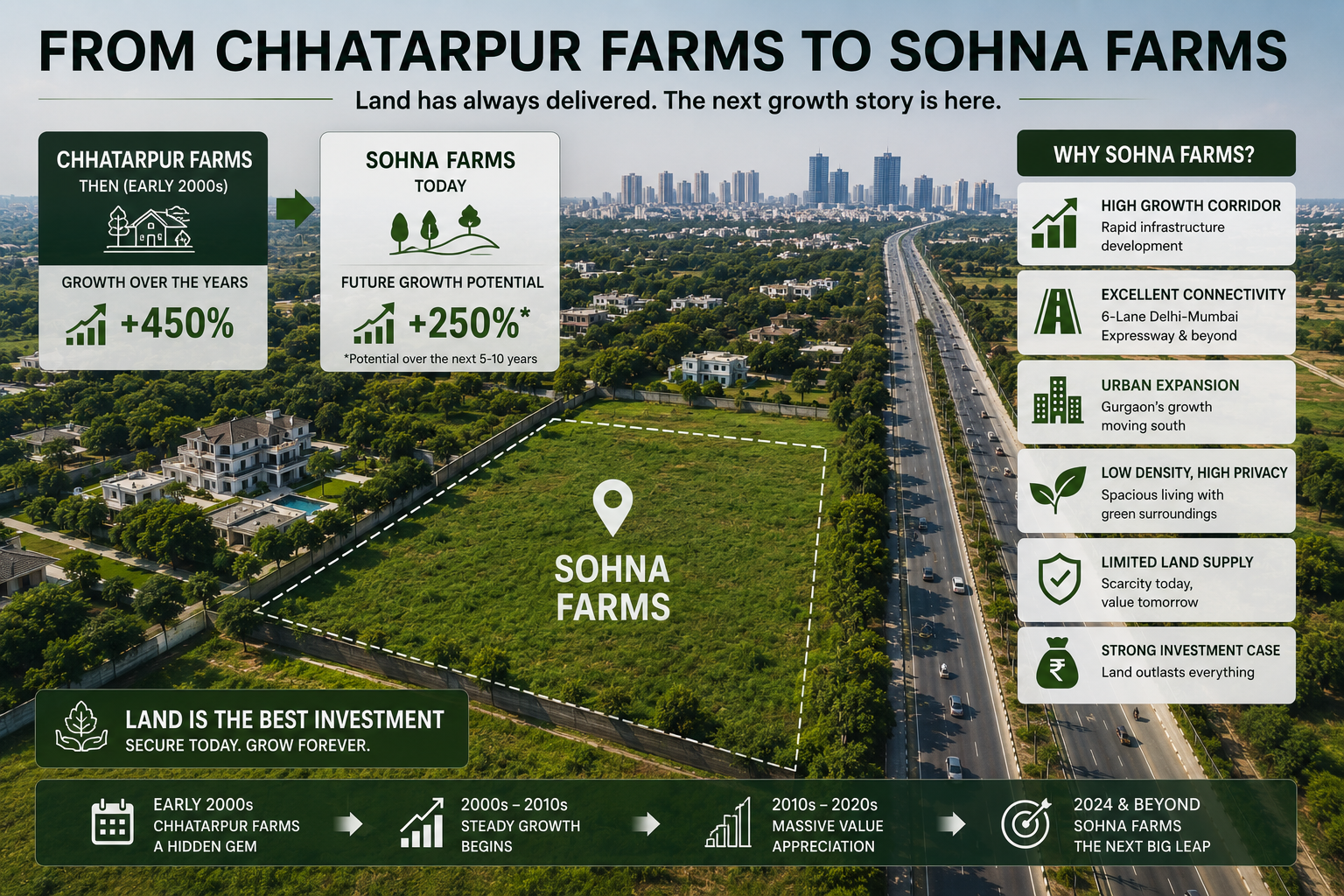
How Chhatarpur Farmhouses Created Multi-Crore Wealth for Early Buyers
What a quiet corner of South Delhi can teach investors about land, scarcity, and long-term wealth creation.

The ₹5 Crore Land Purchase That Became Worth ₹70 Crore
What the Story of DLF Chhatarpur Farms Reveals About Wealth Creation Through Premium Land Ownership
One short email. Stories you can use.
A free, occasional email from our editorial team with our latest features, explainers and reads. Unsubscribe any time — your email stays with us.