The ₹5 Crore Land Purchase That Became Worth ₹70 Crore
What the Story of DLF Chhatarpur Farms Reveals About Wealth Creation Through Premium Land Ownership
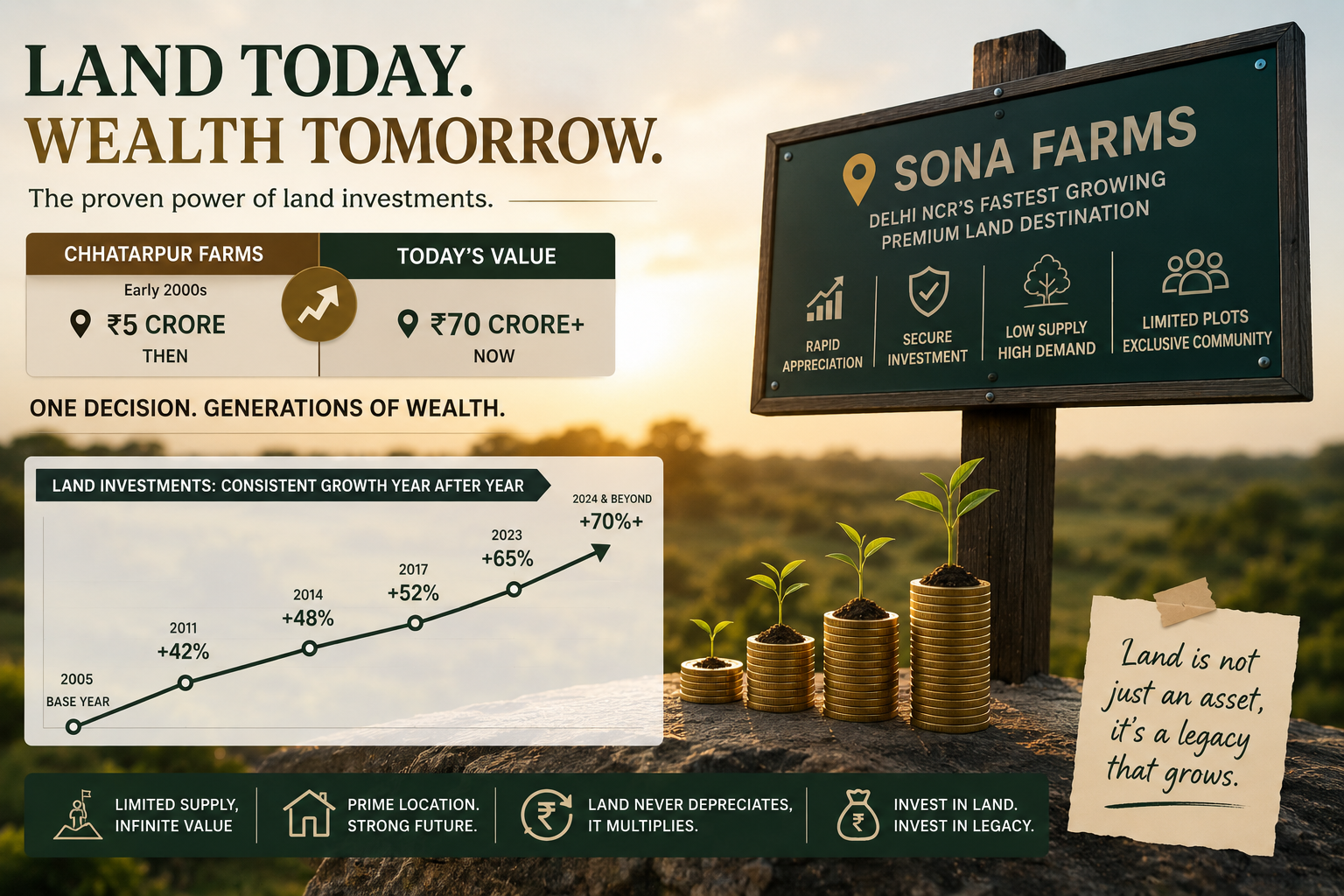
In investing, there are assets that generate income. Then there are assets that quietly create wealth. Over the last three decades, few examples in Delhi NCR demonstrate this better than the evolution of premium farmhouse land in Chhatarpur.
While investors often focus on stocks, commercial real estate, startups, or luxury residences, some of the largest fortunes have been built through something far simpler: owning scarce land in the right location and holding it long enough. The story of DLF Chhatarpur Farms offers a fascinating lesson in how premium land can transform from a lifestyle purchase into a multi-crore wealth-generating asset.
A Purchase That Looked Expensive At The Time
One of the most common mistakes investors make is assuming that today's premium location has always been expensive. History suggests otherwise. Many of Delhi NCR's most sought-after addresses were once considered peripheral. At different points in time, Golf Course Road was largely undeveloped, Gurgaon was viewed as an uncertain satellite city, and Chhatarpur was considered distant from central Delhi. Yet investors who recognized the long-term value of location, connectivity, and scarcity were rewarded significantly.
According to historical references commonly cited in the luxury farmhouse market, premium farmhouse land in Chhatarpur that traded in the range of a few crores in the early 2000s has appreciated into the tens of crores today. In many cases, plots that were once viewed as expensive purchases are now considered irreplaceable assets.
Why Chhatarpur Was Different
The success of Chhatarpur was not an accident. It was the result of several powerful wealth drivers working simultaneously.
1. Proximity To Delhi's Wealth Centres
Chhatarpur sits adjacent to some of the most affluent parts of South Delhi. As wealth concentration increased across Vasant Vihar, West End, Anand Niketan, Defence Colony, and Golf Links, many wealthy families began seeking larger parcels of land that could not be found within traditional city neighborhoods. Chhatarpur provided that opportunity.
2. Scarcity Of Large Land Parcels
One luxury apartment can be replicated. A one-acre plot cannot. Land scarcity is one of the most powerful drivers of wealth creation. As available inventory declined over time, demand continued to rise. The result was a simple economic equation: more buyers chasing fewer opportunities. This principle is visible across virtually every premium residential market in the world.
3. Infrastructure Changed Everything
Perhaps the biggest misconception in real estate investing is assuming that future infrastructure is already reflected in current prices. History repeatedly proves otherwise. The arrival and expansion of Delhi Metro connectivity, airport accessibility, improved road networks, and Gurgaon growth corridors significantly improved accessibility to South Delhi's farmhouse belt. What once felt like a weekend retreat gradually became a highly connected luxury residential zone.
The Mathematics Of Wealth Creation
Consider two investors.
Investor A
Purchases a luxury apartment. Over time, the structure ages, maintenance costs increase, and new projects compete with it. The asset appreciates, but growth is partly offset by building depreciation.
Investor B
Purchases premium land. Over time, the land remains scarce, the city expands, infrastructure improves, and supply becomes increasingly limited. In many cases, the land itself becomes the primary source of wealth creation. This is one reason why some of the world's wealthiest families allocate significant capital toward residential land ownership rather than solely built assets.
The Global Pattern Is Surprisingly Consistent
The story of Chhatarpur is not unique. It follows a pattern seen globally.
Lutyens' Delhi
One of India's most valuable residential districts. Large plots, extremely limited supply, and near-zero opportunity for future replication. As a result, prices remain among the highest in the country.
Beverly Hills
For decades, wealthy families have been willing to pay extraordinary premiums for large private estates. The value is rarely just the house. It is the land beneath it.
Wentworth Estate, Surrey
One of Britain's most prestigious residential communities. Large plots, low density, strict planning controls, and exceptional scarcity. These characteristics have helped preserve long-term value.
Chhatarpur Farms
The same fundamentals exist. Large land parcels, low density, limited future supply, strong connectivity, and growing prestige. The formula is remarkably similar.
Why Wealthy Families Continue To Buy Land
According to Knight Frank's global wealth research and multiple luxury residential market studies, ultra-high-net-worth individuals increasingly allocate capital toward real assets. The reasons are straightforward.
Wealth Preservation
Land cannot be printed. It cannot be manufactured. Its supply is finite.
Inflation Protection
Over long periods, scarce land has historically acted as a hedge against inflation.
Legacy Planning
Land ownership often spans generations. Many wealthy families view premium land as a legacy asset rather than a short-term investment.
Lifestyle Value
Unlike financial instruments, premium land can be enjoyed while it appreciates. That combination is rare.
The Next Evolution: From Farmhouses To Private Estates
One interesting shift is now occurring in NCR. Buyers are increasingly looking beyond traditional standalone farmhouses. They want defined ownership structures, planned infrastructure, controlled access, community standards, and hospitality integration. In other words, they want the benefits of premium land ownership without many of the traditional challenges associated with fragmented farmhouse developments. This is where the concept of private estate communities is beginning to gain attention.
What Investors Can Learn From Chhatarpur
The biggest lesson is not that a ₹5 crore purchase became worth ₹70 crore. The real lesson is deeper. The families who created extraordinary wealth through land ownership generally did four things: they bought scarcity, they bought ahead of widespread recognition, they held through market cycles, and they focused on land, not trends. That formula has worked repeatedly across Lutyens' Delhi, Beverly Hills, Wentworth, and Chhatarpur. And it continues to shape how sophisticated investors think about premium residential land today.
Final Thought
By the time a location becomes universally desirable, much of the wealth creation has already occurred. The investors who benefited most from Chhatarpur were not reacting to a trend. They were participating in one before it became obvious.
Today, as NCR expands and new luxury corridors emerge, many buyers are asking a familiar question: what if the greatest opportunity is not in buying another house, but in owning scarce land within a carefully planned estate environment? Projects such as The Estates by Malissa reflect this evolving mindset, combining large private land parcels, low-density planning, gated infrastructure, and hospitality-led living into a format that aligns closely with how many modern HNIs now think about long-term real estate ownership.
Editor's Note
The ₹5 crore and ₹70 crore figures used in this article are illustrative of the broader appreciation trends observed in premium farmhouse markets over extended periods. Actual property values vary significantly based on location, plot size, approvals, development quality, and transaction timing. For publication, it is advisable to verify any specific price references against current market data before presenting them as factual transaction records.
News Legacy maintains editorial independence. Some recommendations may contain affiliate links. We earn from qualifying purchases at no additional cost to you. Read our policy.
Read Next
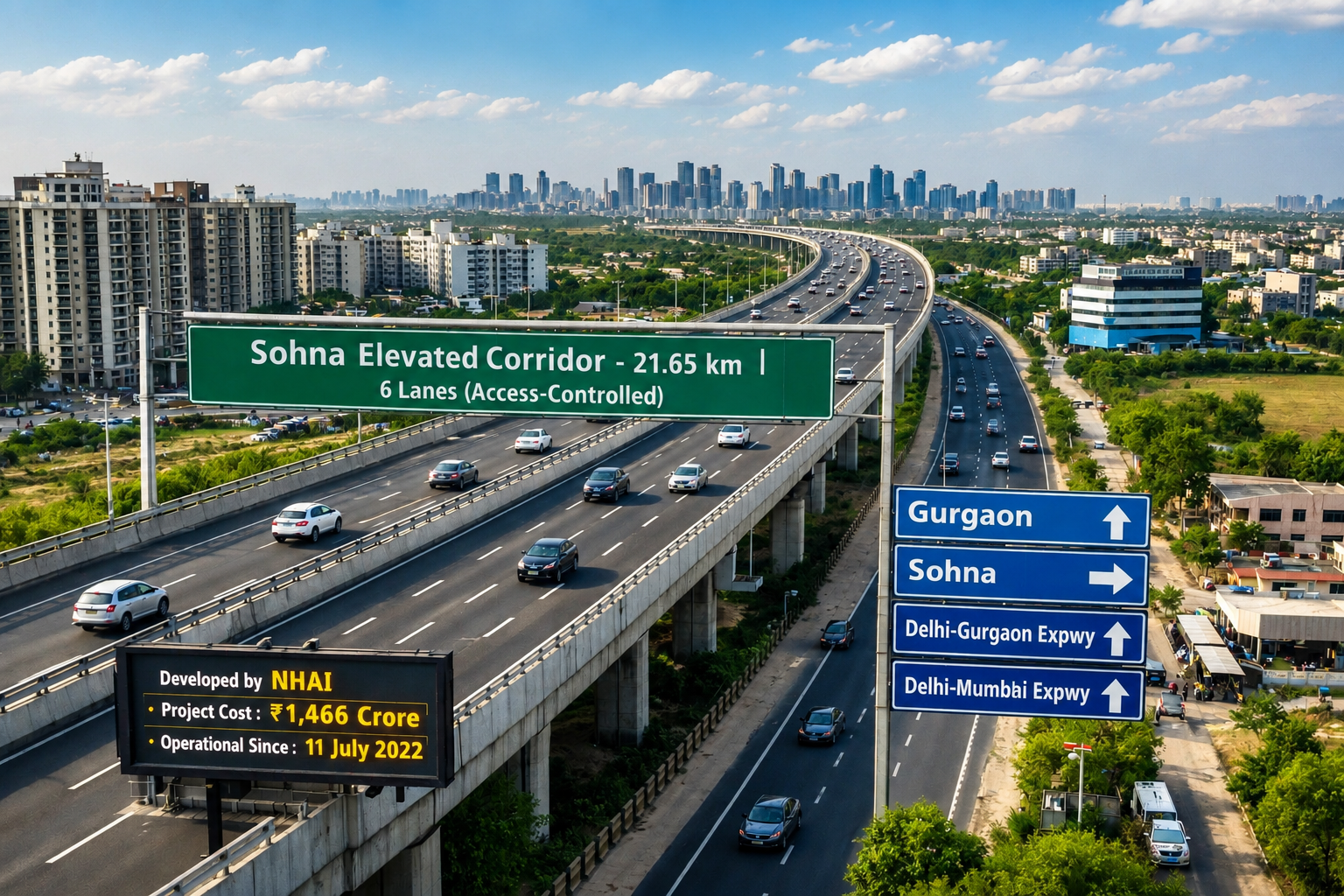
Is Sohna Really the Next Chhatarpur?
Three decades after Chhatarpur redrew South Delhi's map for space, privacy and exclusivity, a familiar pattern is now taking shape further south, and Sohna is where the smart money is beginning to look.
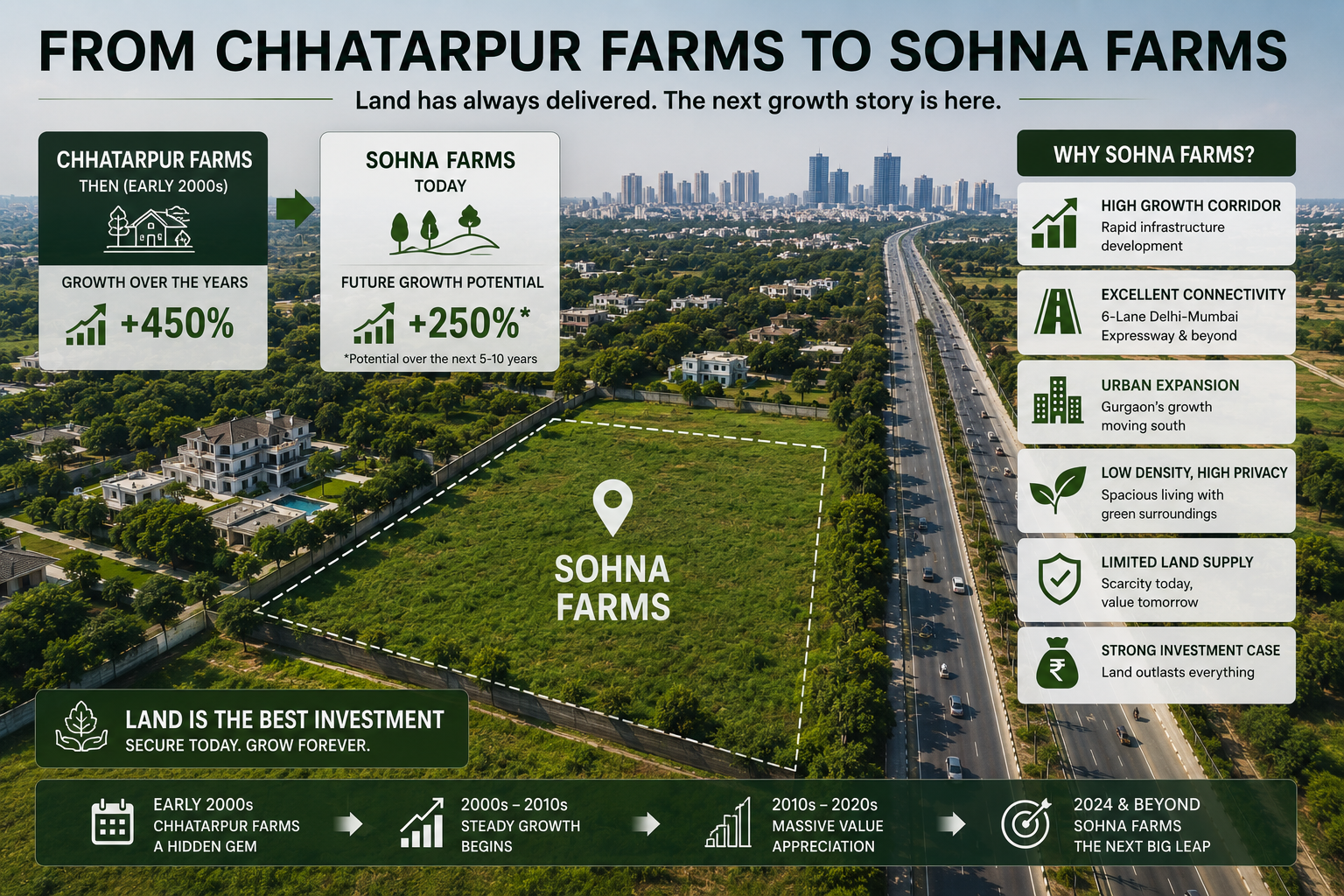
How Chhatarpur Farmhouses Created Multi-Crore Wealth for Early Buyers
What a quiet corner of South Delhi can teach investors about land, scarcity, and long-term wealth creation.
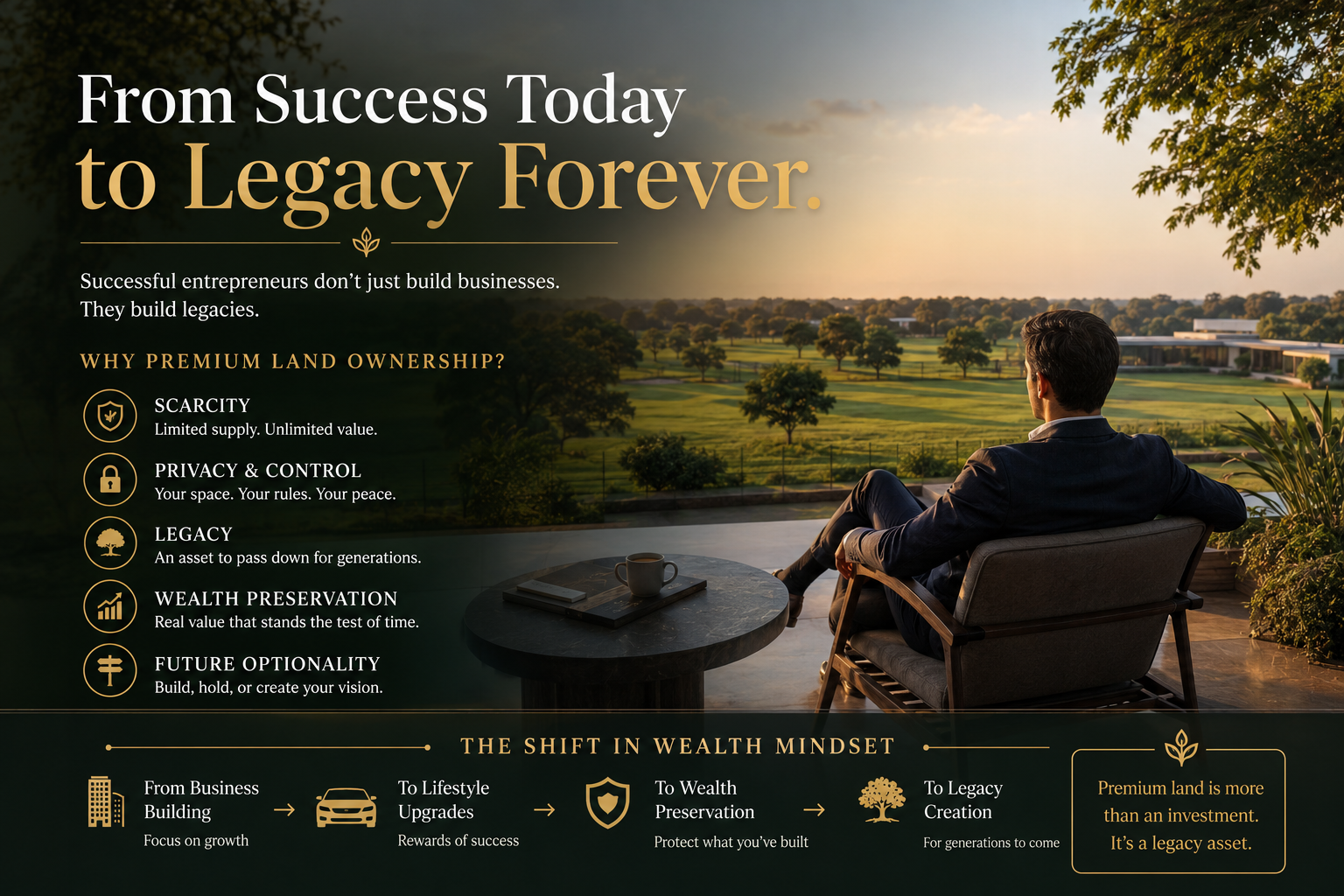
Why Successful Entrepreneurs Eventually Move Towards Premium Land Ownership
From Luxury Consumption to Legacy Creation
One short email. Stories you can use.
A free, occasional email from our editorial team with our latest features, explainers and reads. Unsubscribe any time — your email stays with us.