Why Successful Entrepreneurs Eventually Move Towards Premium Land Ownership
From Luxury Consumption to Legacy Creation
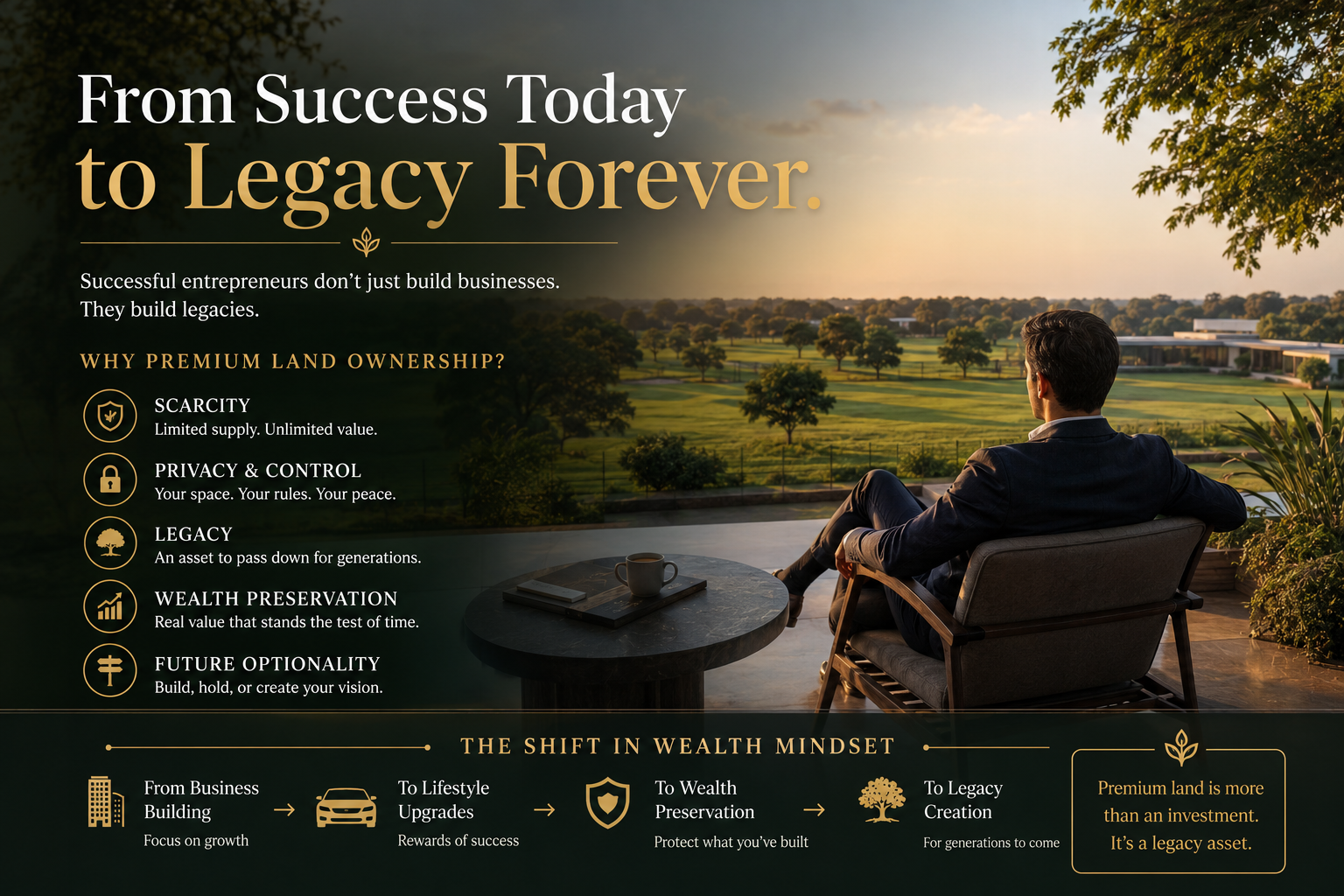
There comes a point in the life of many successful entrepreneurs when the definition of wealth begins to change. In the early years, success is often measured by growth. Revenue. Expansion. Acquisitions. New offices. New ventures. Later, it becomes measured by something else. Stability. Legacy. Privacy. And increasingly, ownership of scarce assets that cannot easily be replicated.
This is one reason why many successful entrepreneurs, founders, industrialists, and family business owners eventually gravitate towards premium land ownership. Not because they need another property. But because land offers something that few other assets can. Permanence.
The Wealth Journey Changes Over Time
Every entrepreneur goes through phases.
Phase 1: Business Building. Capital is reinvested into growth. Every rupee is expected to generate returns. Liquidity is directed toward expansion.
Phase 2: Lifestyle Upgrades. The rewards of success begin to appear. Luxury cars. International travel. Premium residences. Club memberships. Experiences.
Phase 3: Wealth Preservation. This is where thinking changes. The question shifts from: "How do I make more money?" to: "How do I preserve what I've already created?" This is often the point at which premium land ownership enters the conversation.
Why Entrepreneurs Think Differently About Land
Most entrepreneurs build businesses. And business owners understand one fundamental principle better than most investors: Scarcity creates value.
The most valuable companies often own something scarce. A unique technology. A powerful brand. A dominant market position. Land follows the same principle. Particularly premium land. There is only so much of it. Once it's gone, it cannot be manufactured.
The World's Wealthiest Families Follow The Same Pattern
Across the world, many of the most successful families hold significant amounts of premium residential land. Consider:
Lutyens' Delhi. Perhaps India's most prestigious residential district. The defining characteristic isn't luxury architecture. It is large plots, low density, and an almost impossible supply constraint.
Beverly Hills. For decades, business leaders and entrepreneurs have paid extraordinary premiums for large private estates because privacy and land are becoming increasingly rare.
Palm Beach. One of America's wealthiest residential markets where scarcity continues to drive long-term value.
Wentworth Estate. A benchmark for low-density estate living in the UK, known for its large plots, privacy, and exclusivity.
Despite being separated by continents, these communities share the same foundation: Scarcity. Space. Privacy.
The Pandemic Changed Luxury Forever
The Covid era accelerated a trend that was already underway. For years, luxury was associated with prime city addresses, vertical living, and access to clubs and social venues.
Then suddenly people began valuing something different. Space. Open land. Privacy. Nature. Low-density environments.
The idea of success started shifting away from living among thousands of people toward living among fewer, more like-minded individuals. Across NCR, demand for plotted developments, premium land parcels, and farmhouse-style living saw renewed interest as affluent families sought larger private spaces. The definition of luxury evolved.
Why Land Creates Emotional Value
Not all investments are purely financial. Some assets provide emotional returns alongside economic ones. Premium land does exactly that.
A family can host celebrations, build a dream residence, create family traditions, entertain guests, and spend weekends together, while the asset itself continues to appreciate over time. Few investments offer that combination.
The Rise Of The Private Estate
An interesting shift is now taking place across NCR. The aspiration is no longer simply to own a farmhouse. The aspiration is to own land within a thoughtfully planned environment.
Today's entrepreneurs increasingly seek defined ownership, professional infrastructure, controlled access, curated community standards, and hospitality-led experiences. In short, they want the benefits of land ownership without the uncertainty that often accompanies fragmented developments.
Why Time Matters More Than Timing
One lesson repeatedly emerges from premium land markets. The greatest wealth creation rarely comes from perfect timing. It comes from long-term ownership.
Consider locations that were once overlooked: Golf Course Road, DLF Phase 1, Chhatarpur Farms, and certain parts of Gurgaon. Many investors initially considered them expensive. Years later, those same purchases often appear remarkably inexpensive in hindsight. The real advantage belonged to those who understood the long-term trajectory and held patiently.
The New Status Symbol Isn't A Bigger House
A decade ago, luxury was often displayed through larger homes and visible consumption. Today, many successful families seek something more understated. Privacy. Space. Exclusivity. A place that isn't accessible to everyone. A place that reflects achievement without needing to announce it.
That is one reason low-density estate living is increasingly attracting attention among affluent buyers.
What Entrepreneurs Are Really Buying
When a successful entrepreneur acquires premium land, they are rarely just buying acreage. They are buying scarcity, control, privacy, legacy, wealth preservation, and future optionality.
The land itself becomes a platform. A platform for family. A platform for lifestyle. A platform for future generations.
A Shift Visible In NCR
As NCR continues to mature, many affluent buyers are beginning to explore a category that sits between a traditional farmhouse and a conventional residential community: Private Estate Living.
This category combines the advantages of large land ownership with the benefits of professional planning, infrastructure, security, and hospitality. Projects such as The Estates by Malissa are part of this emerging shift, offering large private land parcels within a low-density gated environment designed for long-term ownership and legacy creation. For many entrepreneurs, this is not simply a real estate decision. It is a long-term wealth preservation decision.
Final Thought
Most entrepreneurs spend decades building businesses. At some point, the focus shifts from creating wealth to preserving it. That is often when premium land ownership begins to make sense. Not because it is fashionable. Not because it is trendy. But because the qualities that make great businesses valuable are often the same qualities that make great land valuable: Scarcity. Control. Longevity.
And as NCR's luxury real estate market evolves, more successful entrepreneurs are discovering that premium land is not merely a lifestyle purchase. It is a legacy asset. Because ultimately, some assets are bought for returns. Others are bought for generations.
News Legacy maintains editorial independence. Some recommendations may contain affiliate links. We earn from qualifying purchases at no additional cost to you. Read our policy.
Read Next
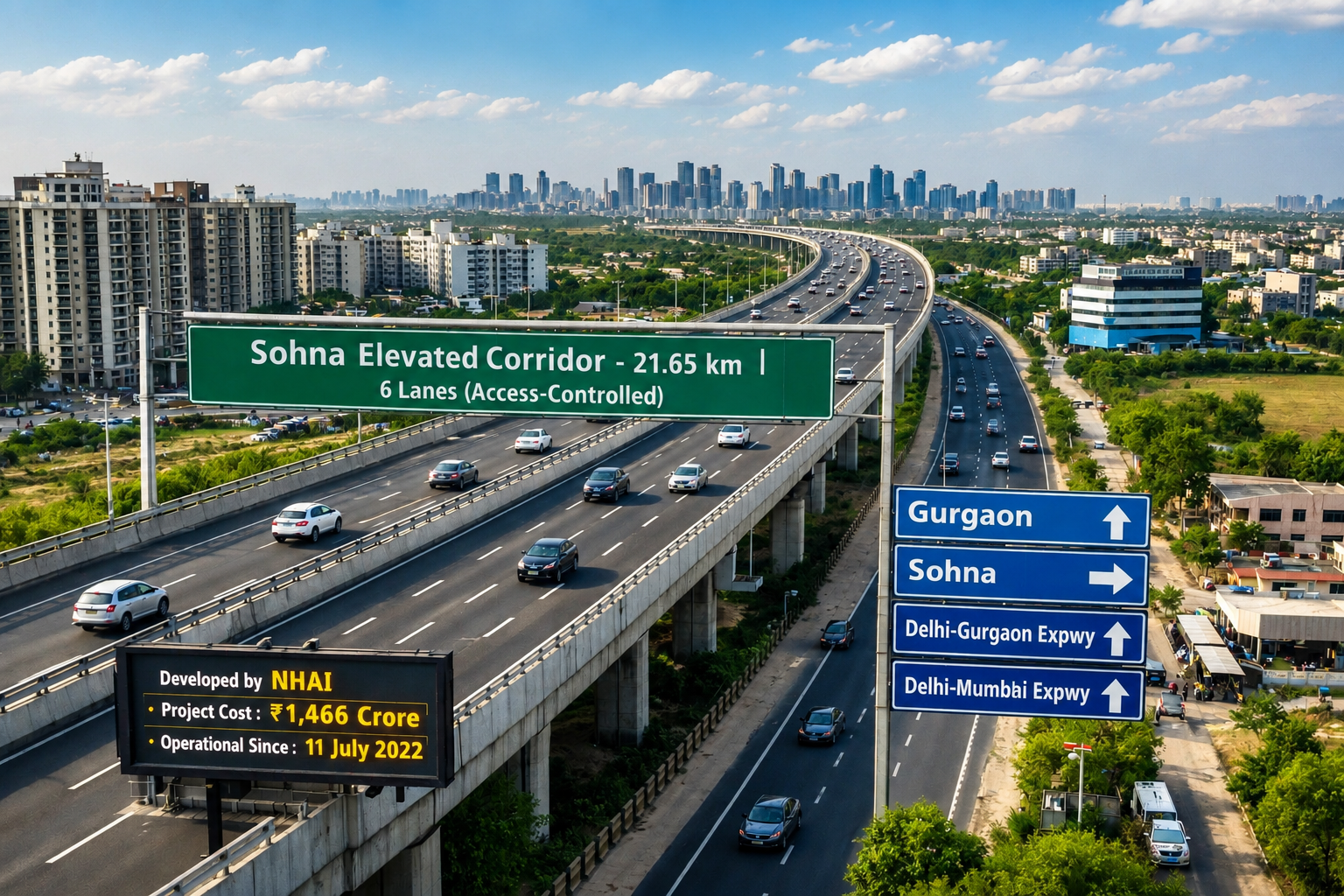
Is Sohna Really the Next Chhatarpur?
Three decades after Chhatarpur redrew South Delhi's map for space, privacy and exclusivity, a familiar pattern is now taking shape further south, and Sohna is where the smart money is beginning to look.
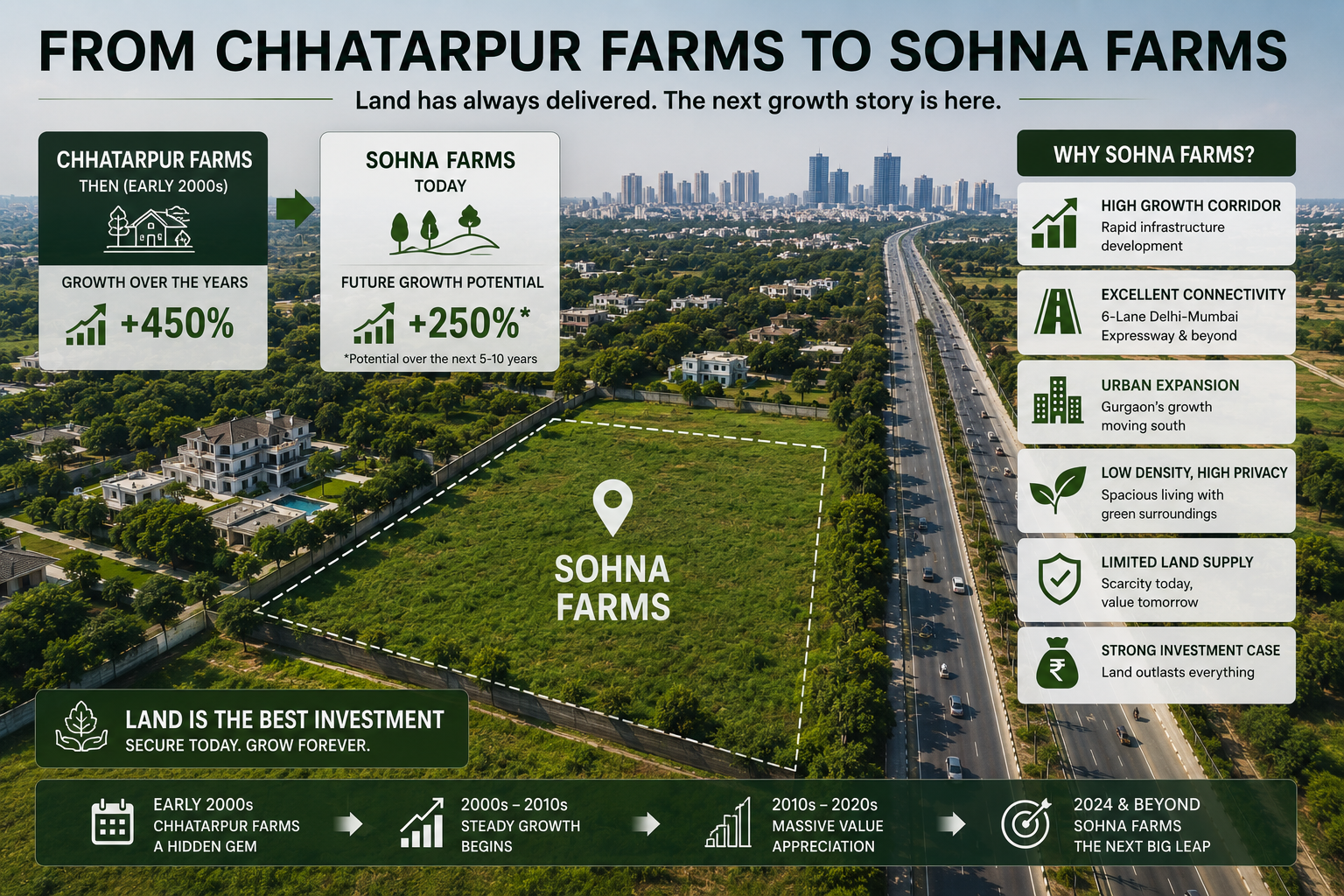
How Chhatarpur Farmhouses Created Multi-Crore Wealth for Early Buyers
What a quiet corner of South Delhi can teach investors about land, scarcity, and long-term wealth creation.
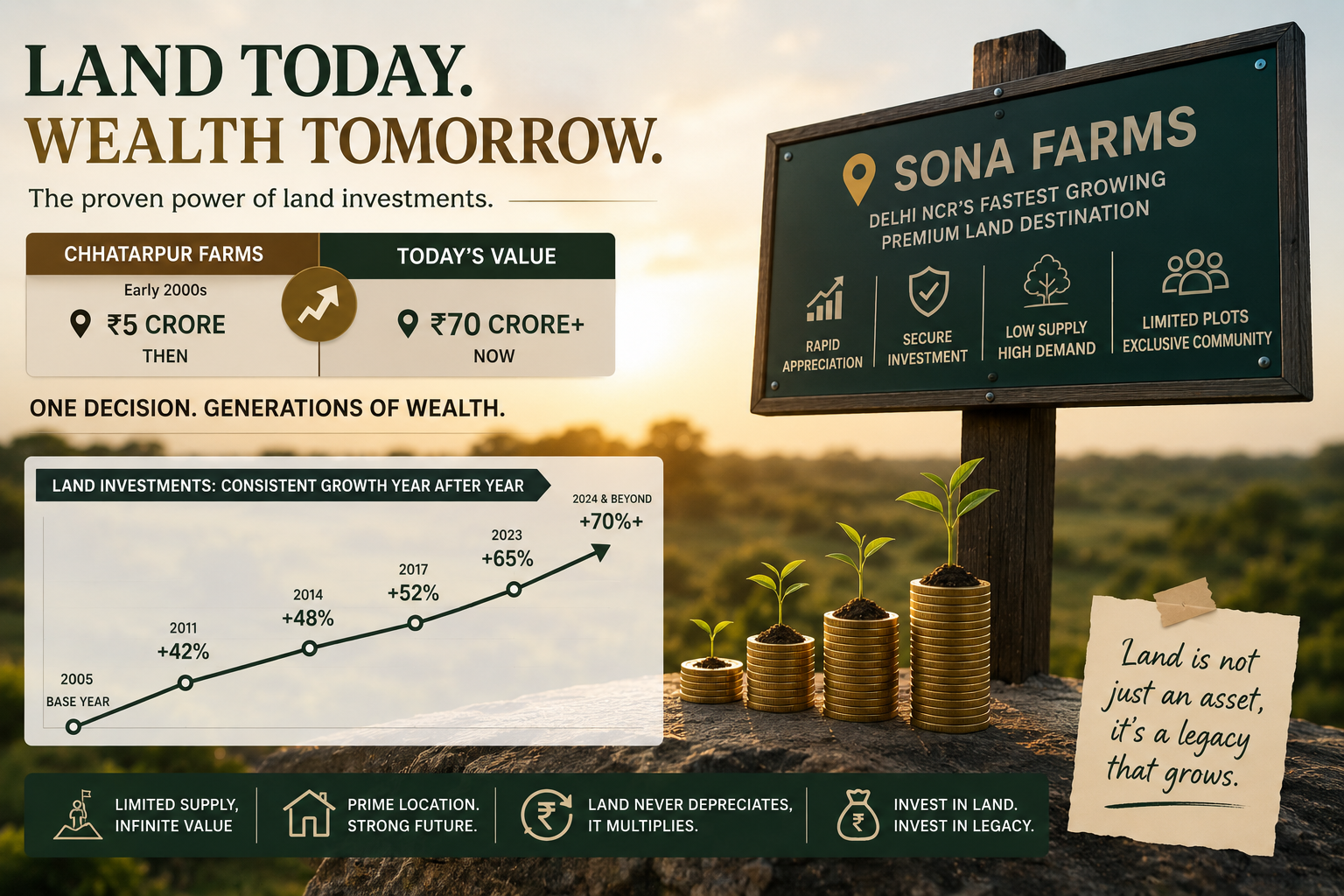
The ₹5 Crore Land Purchase That Became Worth ₹70 Crore
What the Story of DLF Chhatarpur Farms Reveals About Wealth Creation Through Premium Land Ownership
One short email. Stories you can use.
A free, occasional email from our editorial team with our latest features, explainers and reads. Unsubscribe any time — your email stays with us.