Algorithmic Imperatives: UK Retail’s AI Adoption Dilemma
British retailers are navigating a complex landscape where artificial intelligence promises operational efficiencies and personalised customer engagement, yet often demands significant capital expenditure and a re-evaluation of established business models. The strategic integration of AI presents both opportunities for sustained competitive advantage and a substantial risk for those unable to adapt.

From its sprawling fulfilment centres in Hatfield, Ocado has demonstrated the transformative power of automation and advanced algorithms in grocery logistics for years. Yet, for much of the broader UK retail sector, the application of artificial intelligence remains a patchwork of pilot programmes and cautious integrations. While the potential for AI to revolutionise everything from supply chain optimisation to customer service is widely acknowledged, the practicalities of implementation and the tangible return on investment are proving more challenging to quantify.
The competitive pressures on UK retailers are relentless. High street stalwarts like Marks & Spencer and Next face persistent challenges from online pure-plays and shifting consumer habits. AI offers a pathway to sharper inventory management, reducing the millions of pounds lost annually to overstocking or missed sales opportunities. Predictive analytics, for instance, can forecast demand with greater accuracy, a critical capability as supply chains grapple with increasing geopolitical uncertainty and domestic labour shortages.
Personalisation Beyond the Algorithm
Customer personalisation, a frequently cited benefit of AI, has moved beyond simple recommendation engines. Retailers are now exploring how AI can tailor the entire shopping journey, from dynamic pricing based on individual browsing behaviour to AI-powered chatbots that offer real-time, context-aware support. Tesco and Sainsbury's, through their extensive loyalty programmes, possess vast troves of customer data, the raw material for sophisticated AI models designed to anticipate individual preferences and drive increased basket sizes. The challenge lies in translating this data into actionable, privacy-compliant insights that genuinely enhance the customer experience without feeling intrusive.
The real test for AI in retail is not simply its technical capability, but its seamless integration into existing operational ecosystems and its ability to deliver measurable value to the bottom line.
For online fashion retailers such as ASOS, AI tools aid in trend forecasting, optimising website layouts, and even guiding design decisions. The ability to quickly identify and respond to micro-trends can significantly reduce lead times and improve sell-through rates in a fast-paced sector. However, the capital outlay required for robust AI infrastructure, talent acquisition, and ongoing model refinement can be substantial, often requiring a multi-year commitment before significant benefits materialise.
The Workforce Reimagined
The impact of AI on the retail workforce is another critical consideration. While concerns about job displacement are prevalent, many retailers are focusing on how AI can augment human capabilities, freeing up staff from repetitive tasks to focus on higher-value customer interactions. For instance, AI-driven automation in warehouses, as seen with Ocado, reduces the need for manual labour in certain areas, but creates demand for engineers and data scientists. British consumer behaviour also plays a role. While increasingly comfortable with digital interactions, there remains a strong preference for human assistance for complex queries or bespoke service, particularly at the premium end of the market.
Investment in AI is not uniform across the sector. Larger players with stronger balance sheets, like Tesco and M&S, can dedicate significant budgets to transformative AI projects. Smaller independent retailers, however, often rely on off-the-shelf AI solutions from third-party providers, which offer accessibility but may lack the bespoke integration potential of custom-built systems. The next few years will likely see a widening divergence between those retailers embracing AI as a core strategic pillar and those for whom it remains a peripheral technological add-on, inadvertently determining their long-term viability in a fiercely competitive market.
News Legacy maintains editorial independence. Some recommendations may contain affiliate links. We earn from qualifying purchases at no additional cost to you. Read our policy.
Read Next

Is Sohna Really the Next Chhatarpur?
Three decades after Chhatarpur redrew South Delhi's map for space, privacy and exclusivity, a familiar pattern is now taking shape further south, and Sohna is where the smart money is beginning to look.
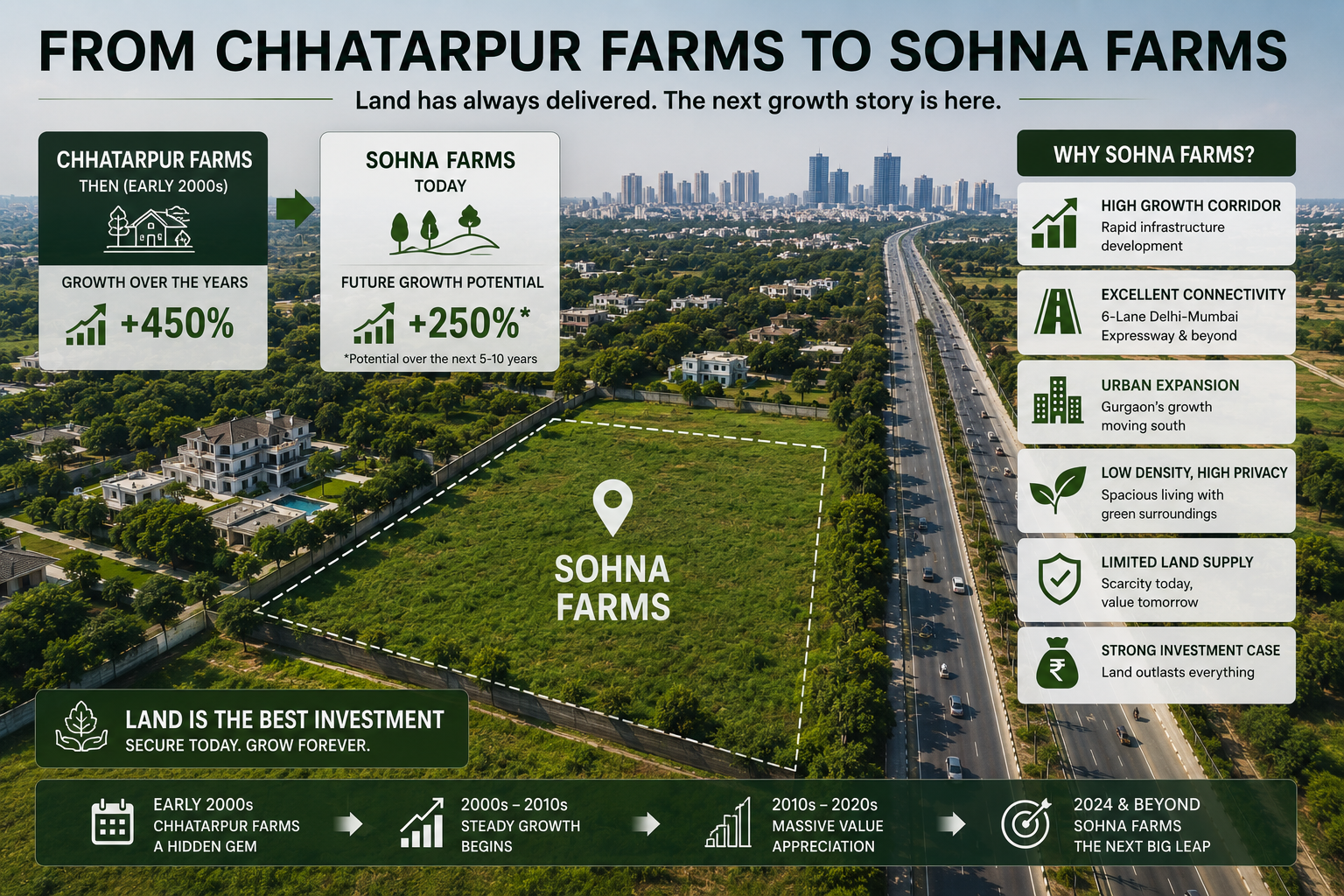
How Chhatarpur Farmhouses Created Multi-Crore Wealth for Early Buyers
What a quiet corner of South Delhi can teach investors about land, scarcity, and long-term wealth creation.

The ₹5 Crore Land Purchase That Became Worth ₹70 Crore
What the Story of DLF Chhatarpur Farms Reveals About Wealth Creation Through Premium Land Ownership
One short email. Stories you can use.
A free, occasional email from our editorial team with our latest features, explainers and reads. Unsubscribe any time — your email stays with us.