Amazon's Last-Mile Dominance Prompts UK Retailers to Reassess In-House Logistics Investments
British retailers are confronting a strategic dilemma: replicate Amazon's sophisticated delivery infrastructure or defer to its established logistical prowess. The cost implications and competitive pressures are driving difficult choices across the sector.

The sight of Amazon-branded vans navigating London's congested streets has become commonplace, a daily affirmation of the e-commerce giant's logistical ubiquity. For UK retailers, from supermarket chains like Tesco and Sainsbury's to fashion stalwarts such as ASOS and Next, this pervasive presence represents both a challenge and a potential solution. The substantial investment required to match Amazon's delivery efficiency and geographical reach is forcing a re-evaluation of long-held strategies concerning in-house fulfilment capabilities.
While Ocado has demonstrated that a highly automated, proprietary logistics network can yield significant competitive advantages in groceries, its model demands upfront capital expenditure running into hundreds of millions of pounds for each customer fulfilment centre. This scale of investment is increasingly difficult to justify for many retailers facing fluctuating consumer demand and persistent inflationary pressures on operational costs. Marks & Spencer, for instance, has evolved its online strategy over the years, leveraging a mix of proprietary and third-party solutions to manage its diverse product lines.
The Appeal of Outsourcing
A growing number of UK retailers are now weighing the economic benefits of leveraging Amazon's logistics services, specifically its 'Fulfilment by Amazon' (FBA) programme, or partnering with other third-party logistics (3PL) providers. Decoupling online sales from direct logistical execution can free up capital, reduce overheads associated with warehouse management, and mitigate the complexities of last-mile delivery, particularly in dense urban environments or more remote areas of the country. This shift allows businesses to concentrate resources on product development, marketing, and the in-store experience, areas where differentiation remains crucial.
The financial implications are stark. Developing an in-house delivery network comparable to Amazon's, encompassing everything from sorting centres to advanced route optimisation software, could easily cost a large multi-channel retailer tens of millions annually. This figure does not even account for the ongoing operational expenses of fuel, vehicle maintenance, and a large, directly employed driver workforce. For many, the prospect of offloading these burdens holds considerable appeal, even if it means ceding some control over the customer's final delivery experience.
However, this outsourcing brings its own set of risks. Relinquishing direct management of the final leg of the customer journey could dilute brand identity and create points of friction if third-party performance falters. Retailers like Deliveroo and Just Eat, while primarily aggregators, highlight the importance of seamless delivery to overall customer satisfaction in the online food sector. Extending that principle to general merchandise underscores the reputational stakes involved.
Data and Strategic Vulnerability
A significant concern among retailers considering deeper integration with Amazon’s logistics is the potential for data leakage and strategic vulnerability. Sharing sales volumes, delivery patterns, and customer demographics with an entity that is also a direct competitor in numerous categories presents a discernible hazard. While Amazon operates FBA as a service, the boundary between service provider and rival can become blurred, prompting caution among companies fiercely guarding their market intelligence.
One industry analyst observes that: Companies must carefully balance the immediate operational efficiencies against the long-term competitive ramifications of deepening ties with dominant platform providers. The trade-off is rarely straightforward.
The decision facing UK retailers is more than a simple make-or-buy calculation for logistics. It represents a fundamental strategic choice about where value is created and how control over the customer relationship is maintained. As online penetration continues to rise across various retail segments, these choices will profoundly shape the competitive landscape for years to come.
News Legacy maintains editorial independence. Some recommendations may contain affiliate links. We earn from qualifying purchases at no additional cost to you. Read our policy.
Read Next

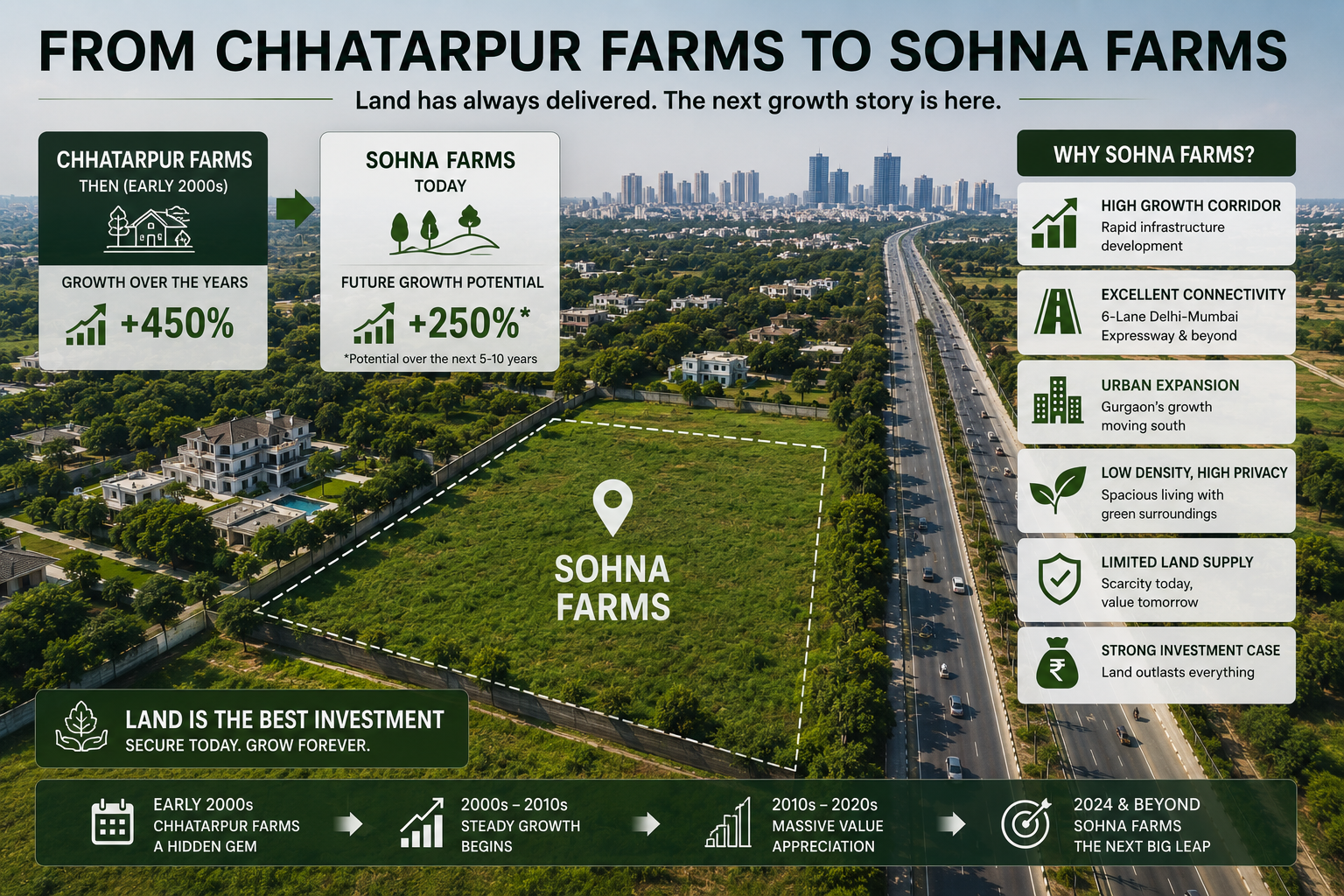
Is Sohna Really the Next Chhatarpur?
Three decades after Chhatarpur redrew South Delhi's map for space, privacy and exclusivity, a familiar pattern is now taking shape further south, and Sohna is where the smart money is beginning to look.
How Chhatarpur Farmhouses Created Multi-Crore Wealth for Early Buyers
What a quiet corner of South Delhi can teach investors about land, scarcity, and long-term wealth creation.

The ₹5 Crore Land Purchase That Became Worth ₹70 Crore
What the Story of DLF Chhatarpur Farms Reveals About Wealth Creation Through Premium Land Ownership
One short email. Stories you can use.
A free, occasional email from our editorial team with our latest features, explainers and reads. Unsubscribe any time — your email stays with us.