Beyond the Dark Store: Continental Retail Startups Turn from Rapid Delivery to Cross-Border Logistics
As the capital-intensive frenzy of 10-minute grocery delivery recedes across Berlin and Paris, European retail technology is entering a more austere, infrastructure-focused chapter.

In the industrial outskirts of Frankfurt and Poznań, vacant fulfilment sheds that once housed rapid-delivery depots are quietly being retrofitted. The collapse of the venture-funded instant grocery model—characterised by the fire sales of Gorillas and the painful retrenchment of Flink—has cleared the field of speculative excess. In its place, a pragmatic cohort of continental enterprise startups is addressing an older, more intractable challenge: the structural friction of moving goods across internal European borders.
For years, the continent's e-commerce landscape remained stubbornly provincial compared to the unified digital markets of North America or China. A merchant operating across the European Union must navigate distinct regional champions rather than a single hegemon: Allegro dictates commercial terms in Poland, Bol anchors the Netherlands and Flanders, Cdiscount maintains entrenched defences in France, and Zalando commands fashion across the German-speaking core. Bridging these distinct ecosystems requires an operational flexibility that monolithic software stacks have failed to provide.
The friction of twenty-seven borders
The primary obstacle to continental scale has never been a lack of consumer appetite, but rather the operational penalty of fragmented returns, regional carrier contracts, and divergent tax reporting. When a customer in Seville orders apparel from a brand operating out of Hamburg, reverse logistics can erode the entire margin of the transaction if an automated return requires bespoke carrier handling.
A new wave of software intermediaries is stepping into this breach. Rather than burning capital on proprietary delivery vans or direct-to-consumer advertising, these emerging ventures build parcel aggregation, cross-dock orchestration, and automated customs workflows for mid-market merchants. By integrating directly into local carrier networks across Spain, Italy, and the Nordics, they allow a regional seller to offer localised delivery speeds without bearing the fixed costs of foreign warehousing.
Recommerce and the secondary supply chain
The illusion of a frictionless single market has long disguised the messy physical reality of parcel transit across internal borders.
This structural pivot is equally visible in the secondary market. The remarkable commercial ascendance of Vilnius-founded Vinted, which proved that peer-to-peer apparel exchange could reach profitable scale in Europe, has exposed a stark deficit in physical recommerce infrastructure. Traditional third-party logistics providers were engineered for linear distribution, not the continuous grading, sanitisation, and individual dispatch of single-item second-hand garments.
Startups across France and Germany are therefore prioritising automated returns triage and verification hardware. Traditional grocery and retail conglomerates—including Carrefour, REWE, and the Schwarz Group’s Lidl—are beginning to commission these modular systems. Driven in part by stricter European Union packaging mandates and upcoming textile waste regulations, incumbents recognise that the capability to process reclaimed stock is no longer an eccentric environmental programme, but an operational necessity.
A sober investment calculus
Venture allocations reflect this strategic shift. The era of writing nine-figure equity cheques to fund customer acquisition subsidies in urban grocery is finished. Capital allocators in Stockholm, Paris, and Munich are instead funding enterprise automation with verifiable unit economics, typically pricing rounds on enterprise software multiples rather than gross merchandise volume.
The result is a continental retail-tech sector that is markedly less visible to ordinary consumers, but substantially more resilient. Europe’s commerce technology is no longer defined by brightly clad couriers idling on inner-city pavements; it is being forged in the API layers that stitch fragmented transport networks, automated grading tables, and disparate national marketplaces into a coherent commercial territory.
News Legacy maintains editorial independence. Some recommendations may contain affiliate links. We earn from qualifying purchases at no additional cost to you. Read our policy.
Read Next

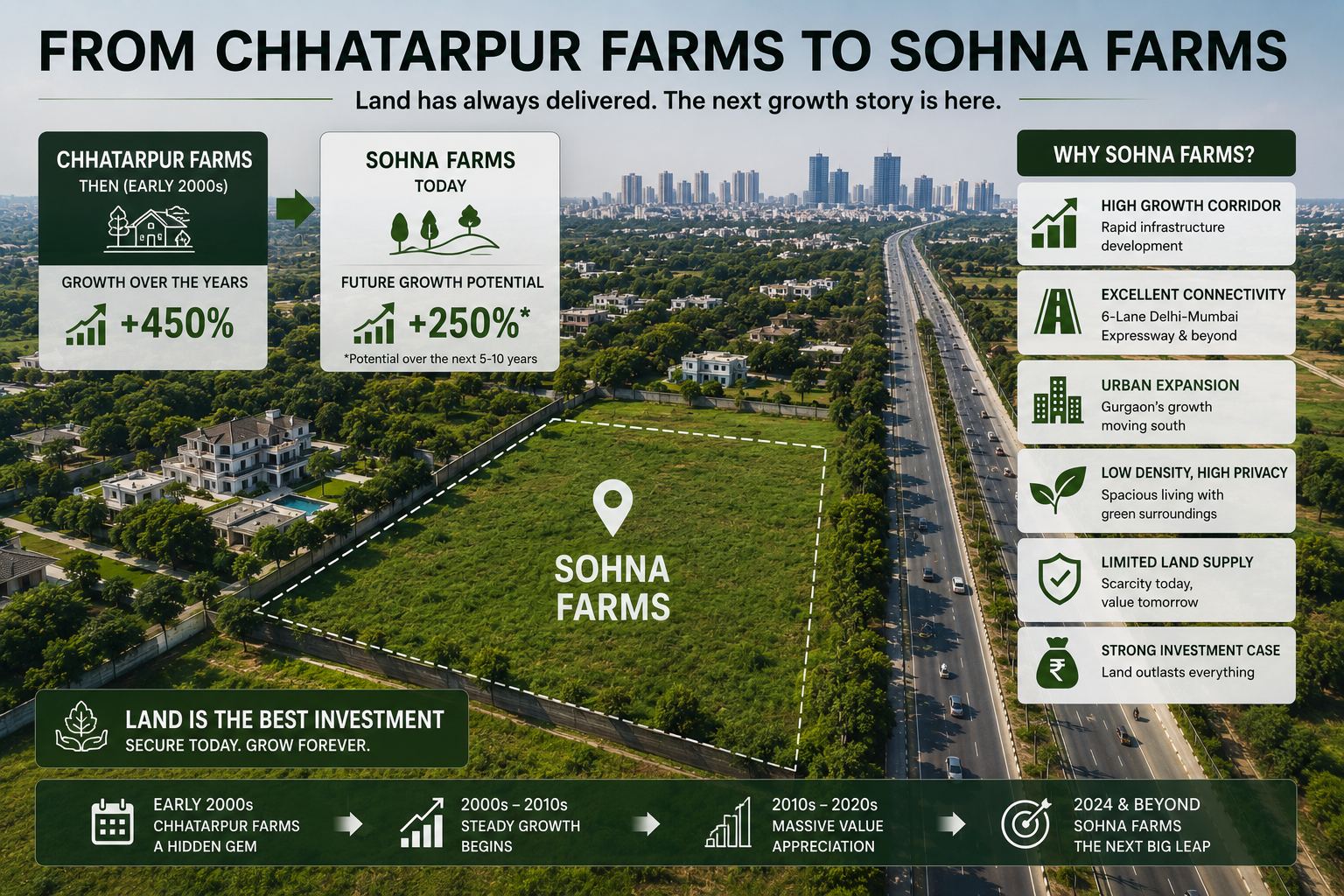
Is Sohna Really the Next Chhatarpur?
Three decades after Chhatarpur redrew South Delhi's map for space, privacy and exclusivity, a familiar pattern is now taking shape further south, and Sohna is where the smart money is beginning to look.
How Chhatarpur Farmhouses Created Multi-Crore Wealth for Early Buyers
What a quiet corner of South Delhi can teach investors about land, scarcity, and long-term wealth creation.

The ₹5 Crore Land Purchase That Became Worth ₹70 Crore
What the Story of DLF Chhatarpur Farms Reveals About Wealth Creation Through Premium Land Ownership
One short email. Stories you can use.
A free, occasional email from our editorial team with our latest features, explainers and reads. Unsubscribe any time — your email stays with us.