Beyond the High Street: How UK Retail Tech is Rewriting Market Share Rules
Venture capital inflows are equipping a new guard of British retail technology firms, allowing them to carve out niches and challenge established market dynamics without the burden of legacy infrastructure.

Even as traditional high street stalwarts like Marks & Spencer and Next navigate a perpetually shifting consumer landscape, a quiet revolution is underway in the UK's retail technology sector. This movement is not characterised by gleaming new storefronts, but by sophisticated software, advanced logistics, and data-driven engagement models. Its practitioners are steadily altering the competitive calculus for shoppers and incumbents alike, suggesting that future market dominance will be won less by square footage and more by algorithmic prowess.
The UK’s robust venture capital ecosystem has proved fertile ground for these nascent enterprises. In the first half of 2023, funding for British retail tech firms reached approximately £1.2 billion, demonstrating sustained investor confidence despite broader economic headwinds. This capital is not merely fueling speculative ventures; it is enabling companies to develop solutions that directly address cost efficiencies, supply chain resilience, and personalised customer experiences, areas where larger, slower-moving retailers often struggle to innovate rapidly.
One notable area of disruption lies in inventory management and supply chain optimisation. Firms like Ankorstore, originally French but with a significant UK presence and operational focus, are creating sophisticated B2B marketplaces that connect independent retailers with emerging brands, bypassing traditional distributors. This model offers greater agility and choice for smaller shops, allowing them to compete more effectively with the curated selections of larger chains without the financial outlay for extensive warehousing.
The Data-Driven Edge
The analytical capabilities afforded by these new platforms represent a formidable competitive advantage. Consider the rise of companies specialising in real-time pricing intelligence or predictive demand forecasting. These tools allow businesses to respond instantaneously to market fluctuations, optimise stock levels, and minimise waste, a crucial factor in an era of tightening margins. For instance, while Tesco and Sainsbury's deploy significant resources into their own data science, smaller, more focused startups often possess a nimbleness that allows for quicker iteration and deployment of niche solutions.
The true battleground for retail market share has migrated from the shop floor to the data centre, where algorithms, not aisle displays, dictate success.
Another significant development is in the last-mile delivery segment, an area already transformed by giants such as Deliveroo and Just Eat. New entrants are refining this further, using advanced routing algorithms and localised micro-fulfilment centres to offer even faster, more cost-effective options, particularly for non-grocery items. This pushes the boundaries of consumer expectations, putting pressure on established players like Ocado to continually enhance their own intricate logistics networks.
The evolution of online fashion also provides a salient example. While ASOS and Next have invested heavily in their e-commerce infrastructure, new platforms are emerging that focus on hyper-personalisation or sustainable fashion. These niche players, often with lower overheads, can cultivate highly engaged communities, leveraging social commerce and bespoke recommendation engines to capture specific demographic segments that larger, more generalised retailers may overlook or struggle to serve authentically.
This shift suggests a future where retail market share is increasingly fragmented, contested by a diverse array of agile, technology-first enterprises rather than being dominated solely by established multi-channel behemoths. The challenge for UK incumbents will be to either acquire these innovative capabilities or adapt their own structures to foster similar internal agility, rather than risk gradual erosion of their customer base by these digitally native challengers.
News Legacy maintains editorial independence. Some recommendations may contain affiliate links. We earn from qualifying purchases at no additional cost to you. Read our policy.
Read Next

Is Sohna Really the Next Chhatarpur?
Three decades after Chhatarpur redrew South Delhi's map for space, privacy and exclusivity, a familiar pattern is now taking shape further south, and Sohna is where the smart money is beginning to look.
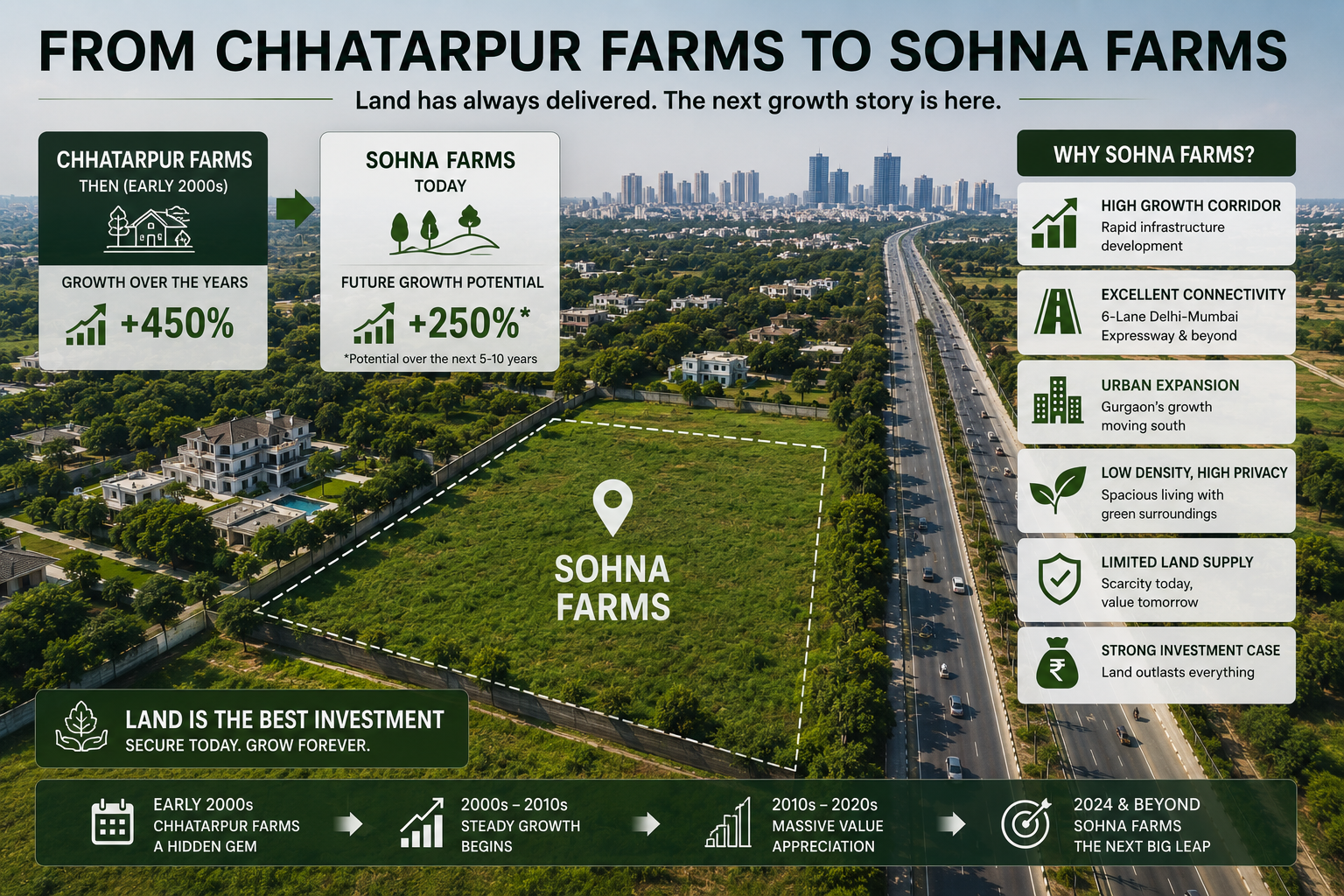
How Chhatarpur Farmhouses Created Multi-Crore Wealth for Early Buyers
What a quiet corner of South Delhi can teach investors about land, scarcity, and long-term wealth creation.

The ₹5 Crore Land Purchase That Became Worth ₹70 Crore
What the Story of DLF Chhatarpur Farms Reveals About Wealth Creation Through Premium Land Ownership
One short email. Stories you can use.
A free, occasional email from our editorial team with our latest features, explainers and reads. Unsubscribe any time — your email stays with us.