Consolidation and Capital: Europe's Retail Startup Reckoning
The era of aggressive, cash-burning expansion for European retail startups is giving way to a more pragmatic pursuit of profitability, reshaping a dynamic but increasingly concentrated market.

The recent acquisition of some Gorillas assets by Flink, a move consolidating two prominent players in the rapid grocery delivery sector, underscores a broader trend across Europe's retail startup landscape. This transaction, following a period of intense investment and often unsustainable growth models, signals a maturation in venture capital appetite and a renewed focus on fiscal discipline, prompting a reassessment of which models can genuinely achieve scale and solvency on the continent.
For several years, venture capital poured into European retail technology, fuelling innovative logistics networks, digital marketplaces, and novel consumer propositions. Firms like Vinted, the Lithuanian-based second-hand fashion platform, achieved significant traction, expanding from its Baltic roots into markets like France, Germany, and Italy, demonstrating the potential for cross-border digital retail. Similarly, Poland's Allegro, originally an auction site, evolved into a dominant marketplace, showcasing robust regional strength that has not always translated into pan-European supremacy.
However, the operational complexities of serving a diverse European market — encompassing varying consumer preferences, regulatory frameworks, and logistical challenges from the Atlantic coast to the Baltic Sea — have proven formidable. Companies such as France's Cdiscount and the Netherlands' Bol.com thrive within their national or linguistic spheres, yet face stiff competition from Amazon and domestic incumbents when attempting wider reach. Cross-border success demands more than just a compelling digital interface; it requires deep understanding of local market nuances and efficient supply chain adaptation.
The Pressure for Profitability
The shift in the investment climate, characterised by higher interest rates and a more cautious outlook among funders, has amplified pressure on these ventures to demonstrate viable pathways to profit rather than just growth at any cost. Many rapid delivery services, for instance, relied on substantial subsidies and low delivery fees to attract customers, a model unsustainable without continuous capital injection. This has led to painful retrenchments, workforce reductions, and a strategic pivot towards higher-margin offerings or more efficient operational structures.
Traditional retail behemoths, including Germany's REWE Group and Carrefour in France, alongside discounters like Lidl, have not remained static. They have intensified their own digital transformations, leveraging existing infrastructure and customer loyalty to compete with nimbler startups. Their scale allows for investment in automation and data analytics, often at a lower per-unit cost than many nascent players can achieve, creating a formidable barrier to entry for smaller firms.
The European market, while vast, presents a fragmented landscape where national champions often coexist with, rather than being entirely supplanted by, pan-European entities. While Zalando has built a significant footprint in fashion across multiple countries, leveraging sophisticated logistics and a strong brand, its path to profitability has been long and carefully managed. The lesson for many newer entrants is that rapid expansion without a clear route to self-sufficiency is a perilous strategy.
The pursuit of market share at any expense has yielded invaluable data on consumer behaviour, but its cost-efficiency is now under unprecedented scrutiny by investors.
Strategic Retrenchment and Specialisation
This environment necessitates a strategic retrenchment for many. Instead of attempting to conquer an entire continent, some firms are focusing on deepening their penetration within specific, profitable regions or niches. Others are exploring partnerships with established players, offering their technological prowess or logistical solutions in exchange for market access. The emphasis has shifted from being a generalist to becoming a highly efficient specialist.
Ultimately, the next phase for European retail startups will likely be defined by consolidation, strategic specialisation, and a rigorous focus on unit economics. The frothy years of boundless growth capital have receded, replaced by a more sober assessment of sustainable business models. Those capable of achieving operational excellence and demonstrating clear paths to positive cash flow are the ones most likely to endure and thrive in Europe's diverse and competitive retail future.
The total capital deployed into European retail tech remains substantial, but future deployments will be far more discerning. For every Vinted that successfully scales, numerous others will find their ambitious growth trajectories curtailed, either by competition, capital constraints, or the sheer logistical complexity of continental expansion. The market is maturing, and with that comes a sharper distinction between innovation and viable enterprise.
News Legacy maintains editorial independence. Some recommendations may contain affiliate links. We earn from qualifying purchases at no additional cost to you. Read our policy.
Read Next

Is Sohna Really the Next Chhatarpur?
Three decades after Chhatarpur redrew South Delhi's map for space, privacy and exclusivity, a familiar pattern is now taking shape further south, and Sohna is where the smart money is beginning to look.
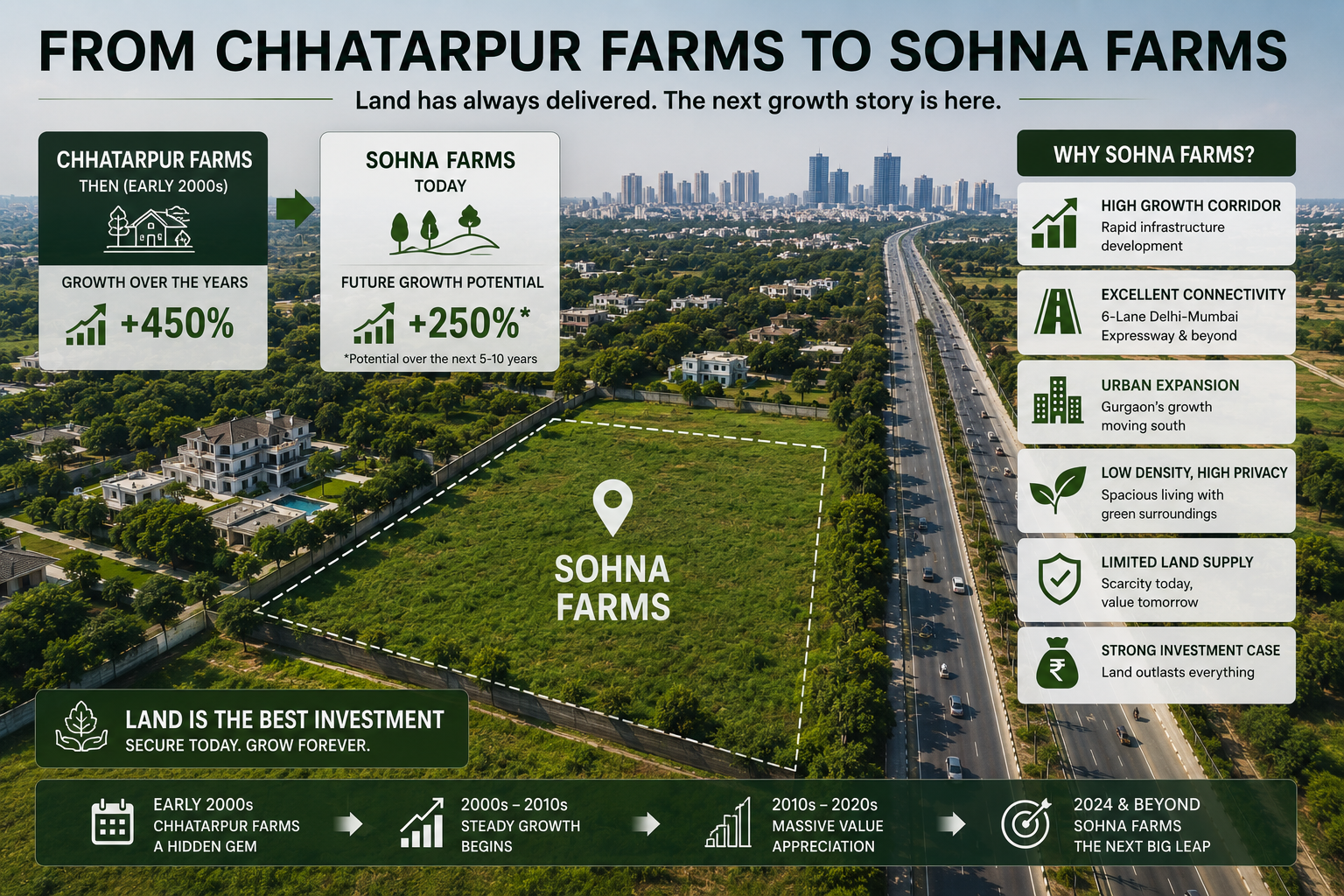
How Chhatarpur Farmhouses Created Multi-Crore Wealth for Early Buyers
What a quiet corner of South Delhi can teach investors about land, scarcity, and long-term wealth creation.

The ₹5 Crore Land Purchase That Became Worth ₹70 Crore
What the Story of DLF Chhatarpur Farms Reveals About Wealth Creation Through Premium Land Ownership
One short email. Stories you can use.
A free, occasional email from our editorial team with our latest features, explainers and reads. Unsubscribe any time — your email stays with us.