Continental Drift: Why Europe’s Retail Startups Are Abandoning the Front Counter for the Supply Chain
As venture capital contracts across the continent, an emerging cohort of commerce startups is forsaking consumer acquisition to rebuild logistics and software for established grocers.

In distribution hubs outside Frankfurt and Lyon, the frantic land grab that characterised European commerce technology between 2020 and 2022 has evaporated. The rapid collapse and distress-sale consolidation of early quick-commerce pioneers such as Gorillas, accompanied by Flink’s disciplined retreat into defensible urban corridors, offered an unmistakable warning to investors. Today, institutional funding across Berlin, Paris, and Stockholm is migrating decisively down the technology stack, swapping subsidised grocery deliveries for unglamorous, high-margin supply-chain orchestration.
The transition reflects structural geography as much as fiscal restraint. Continental Europe offers none of the frictionless digital scale of North America. Any young merchant seeking to expand from Germany across France, Spain, Italy, and Poland runs immediately into divergent employment codes, fractured payment rails, and deeply entrenched national incumbents. Supermarkets such as Carrefour, REWE, and Lidl, alongside regional online strongholds like Warsaw-listed Allegro and the Benelux leader Bol, command fierce local loyalty and massive physical footprints that upstart consumer platforms could never hope to displace on price.
The Enterprise Pivot
Consequently, the most resilient retail technology ventures emerging today do not confront the giants; they sell to them. Rather than burn capital attempting to poach basket share from Cdiscount or Mercadona, European founders are developing automated depot software, predictive ordering models, and multi-carrier orchestration layers. For established grocery and general merchandise retailers facing margin compression from hard discounters and soaring operational overheads, purchasing modular, third-party software is significantly faster than building modern digital stacks in-house.
The era of using venture capital to subsidise consumer convenience across borders is dead; the capital that remains demands recurring enterprise software margins.
The secondary market has proved equally fertile ground for this business-to-business pragmatism. Inspired by the sustained cross-border expansion of Lithuania-founded Vinted, an ecosystem of infrastructure providers has formed to service reverse logistics, authentication, and inventory refurbishment. Navigating value-added tax compliance and return freight routes between the Nordics and the Iberian peninsula requires bespoke cross-border tooling that generalist logistics platforms have historically neglected.
Fragmented Borders as a Moat
Paradoxically, Europe’s stubborn linguistic and regulatory fragmentation—long considered an obstacle to Silicon Valley-scale venture returns—has become an operational moat for homegrown enterprise providers. An inventory platform designed to reconcile French collective bargaining constraints, German data governance mandates, and Polish customs documentation possesses an inherent defence against monolithic American software exports. Zalando demonstrated the commercial value of this regional nuance through the gradual expansion of its proprietary logistics arm, turning European fulfillment complexity into a lucrative service sold to third-party brands.
The discipline forced upon the sector by sustained higher interest rates has arguably constructed a more durable foundation for European retail innovation. The visual spectacle of neon-clad courier fleets darting across southern European capitals has largely receded, replaced by enterprise-grade infrastructure humming quietly within distribution centres and head offices. For the continent's traditional commercial heavyweights, the new generation of retail startups no longer represents an existential challenge, but the digital connective tissue required to survive.
News Legacy maintains editorial independence. Some recommendations may contain affiliate links. We earn from qualifying purchases at no additional cost to you. Read our policy.
Read Next

Is Sohna Really the Next Chhatarpur?
Three decades after Chhatarpur redrew South Delhi's map for space, privacy and exclusivity, a familiar pattern is now taking shape further south, and Sohna is where the smart money is beginning to look.
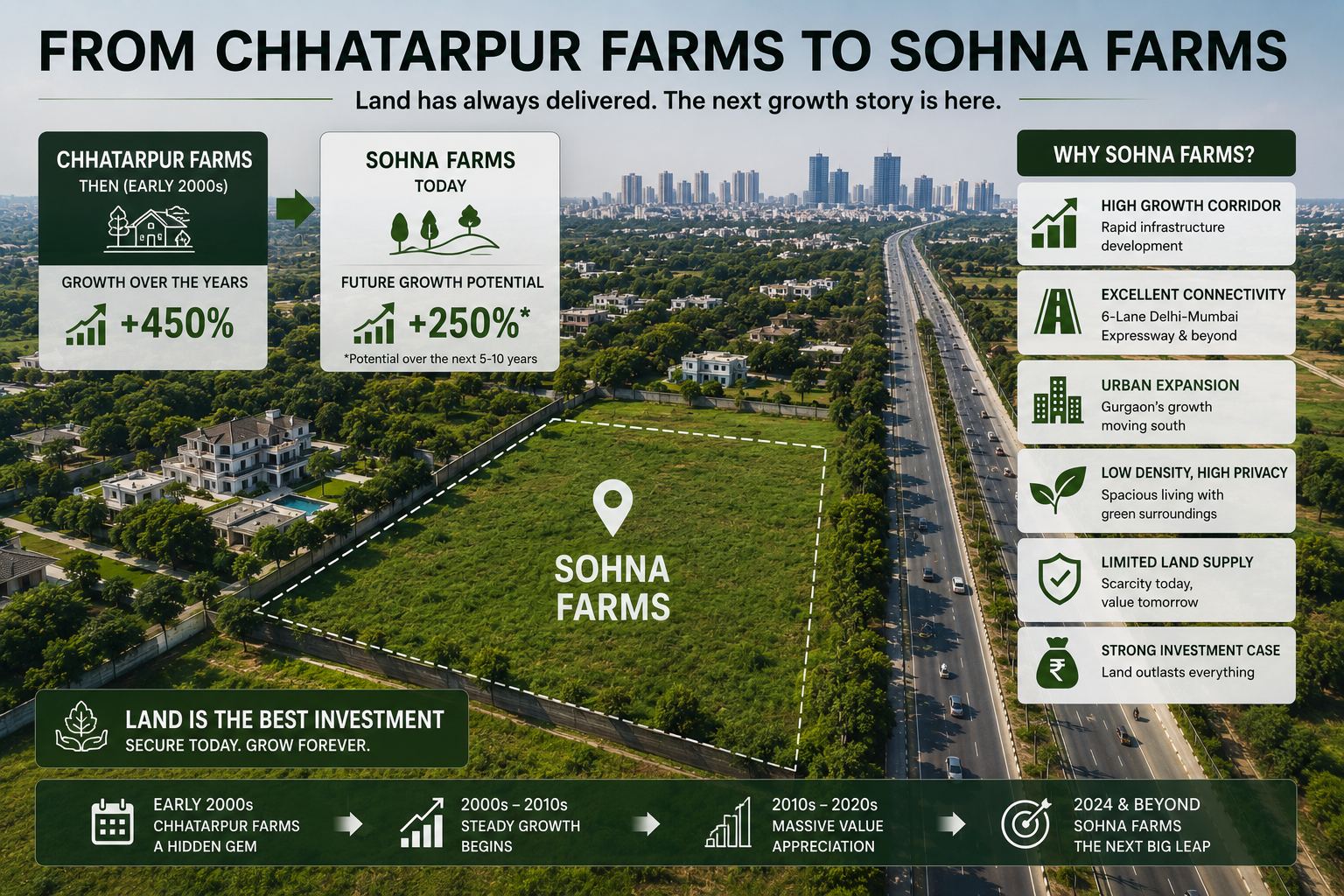
How Chhatarpur Farmhouses Created Multi-Crore Wealth for Early Buyers
What a quiet corner of South Delhi can teach investors about land, scarcity, and long-term wealth creation.

The ₹5 Crore Land Purchase That Became Worth ₹70 Crore
What the Story of DLF Chhatarpur Farms Reveals About Wealth Creation Through Premium Land Ownership
One short email. Stories you can use.
A free, occasional email from our editorial team with our latest features, explainers and reads. Unsubscribe any time — your email stays with us.