Continental Europe’s Retail Challengers Pivot from Van Fleets to Platform Plumbing
Having burnt billions attempting to replicate Silicon Valley delivery models across fragmented urban centres, early-stage commerce ventures are turning their attention to cross-border logistics, reverse supply chains, and enterprise software.

Inside an intermodal distribution hub outside Utrecht, robotic sortation arms flick parcel after parcel into dedicated outbound bins bound for Germany, Belgium, and northern France. Two years ago, seed capital in this corridor chased twenty-something founders promising ice cream and detergent delivered to suburban doorsteps in under a quarter of an hour. Today, that exuberant era has yielded to an austere, highly technical focus on the invisible sinews of continental retail: customs routing, pallet optimisation, and the stubbornly expensive challenge of cross-border returns.
The collapse of the quick-commerce wave left an indelible mark on European venture books. The aggressive land grabs spearheaded by Berlin-based Gorillas and its well-funded peer Flink proved ruinously capital-intensive when confronted with dense municipal regulation, rising cost-of-capital regimes, and the razor-thin margins of grocery retailing. Entrenched supermarket groups such as Carrefour in France, REWE in Germany, and the Schwarz Group’s Lidl quietly leaned on their existing store footprints and scaled procurement muscle, outlasting venture-backed disruptors that lacked an economic moat beyond subsidised coupons.
The ghost of instant delivery
That chastening experience shifted founder priorities across Paris, Berlin, Madrid, and Stockholm. Rather than attempting to displace native category leaders, today’s emerging retail tech firms are designing tools to service them. Continental Europe remains a notoriously fractured market: what functions seamlessly for Allegro in Poland or Bol across the Low Countries falters when exported to Spain or Italy, where local payment habits, legacy courier networks, and consumer expectations diverge sharply.
The illusion of a frictionless single market consistently evaporates once physical inventory attempts to cross the Rhine or the Pyrenees.
The secondary commerce boom has provided an obvious proving ground for this infrastructural reset. Vilnius-born Vinted proved that second-hand apparel could command mainstream consumer volumes across France, Spain, and Italy, yet its scale simultaneously exposed systemic bottlenecks in carrier interoperability and automated quality grading. A crop of B2B startups has stepped into the breach, building white-label inspection systems, automated dispute resolution engines, and localized parcel-locker software to help legacy retailers mount credible circular programmes of their own.
Infrastructure over consumer acquisition
Established marketplace incumbents are actively inviting these external technical integrations. Zalando’s transition towards platform logistics, alongside Cdiscount’s commercialisation of its Octopia marketplace stack, signals that Europe’s largest digital retailers are keen to monetize operational infrastructure. For early-stage companies, selling specialised routing engines or fraud-prevention modules to these regional giants offers predictable recurring enterprise revenue, in stark contrast to the volatile economics of direct-to-consumer brand-building.
Regulatory pressures from Brussels are accelerating the trend. Stricter European Union directives regarding supply-chain traceability, extended producer responsibility for packaging waste, and digital product passports demand granular audit trails that many merchant back-ends cannot produce natively. Software startups capable of tracking a garment’s lifecycle across French drop-off points, German distribution centres, and Nordic refurbishment hubs are finding ready buyers among chief technology officers under compliance deadlines.
The resulting investment thesis is far more modest in its marketing claims, but markedly sturdier on balance sheet fundamentals. By trading consumer-facing vanity metrics for enterprise integrations, Europe’s retail technology sector is quietly assembling the commercial apparatus necessary to make the continent's fractured single market operate, at long last, as a unified territory.
News Legacy maintains editorial independence. Some recommendations may contain affiliate links. We earn from qualifying purchases at no additional cost to you. Read our policy.
Read Next

Is Sohna Really the Next Chhatarpur?
Three decades after Chhatarpur redrew South Delhi's map for space, privacy and exclusivity, a familiar pattern is now taking shape further south, and Sohna is where the smart money is beginning to look.
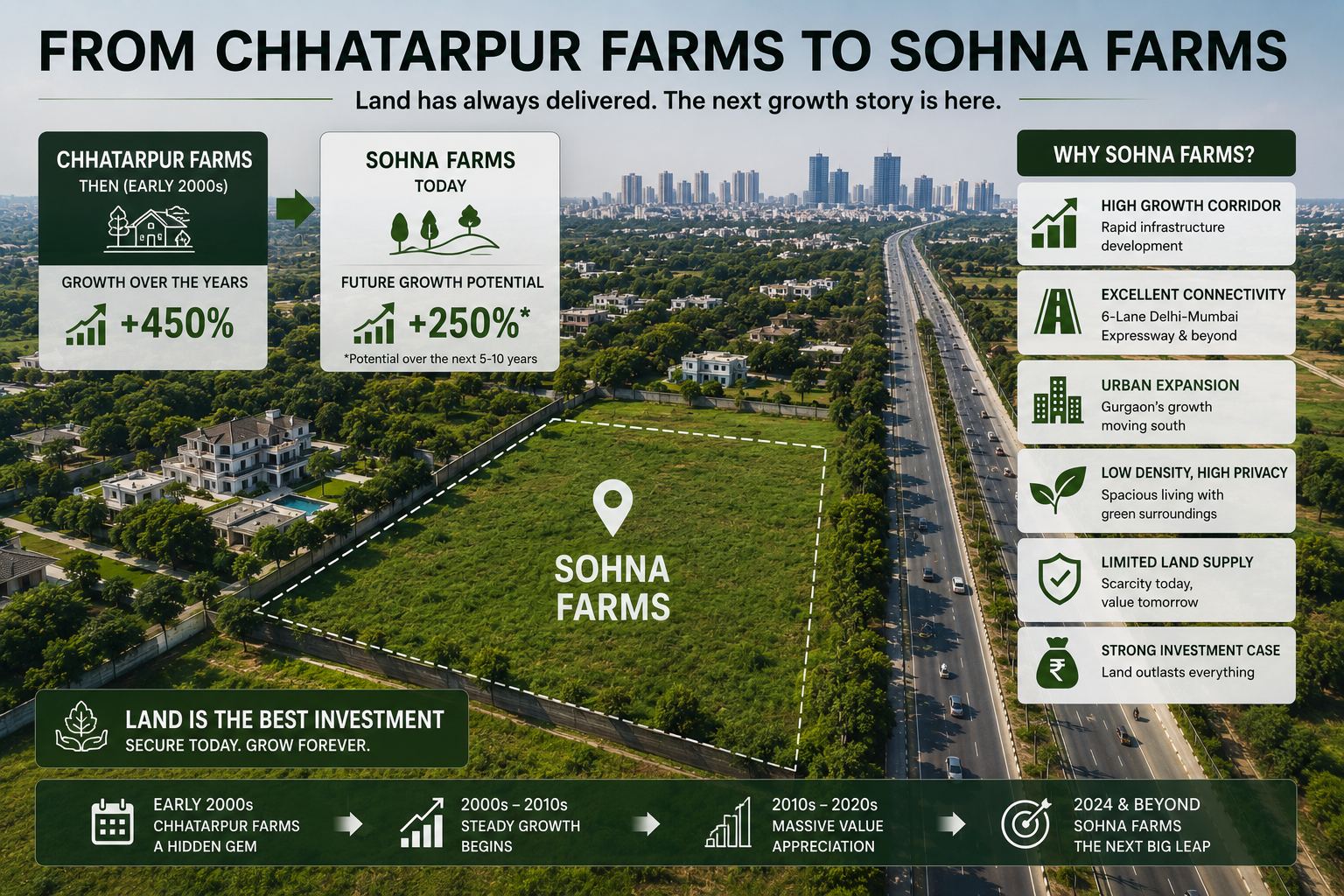
How Chhatarpur Farmhouses Created Multi-Crore Wealth for Early Buyers
What a quiet corner of South Delhi can teach investors about land, scarcity, and long-term wealth creation.

The ₹5 Crore Land Purchase That Became Worth ₹70 Crore
What the Story of DLF Chhatarpur Farms Reveals About Wealth Creation Through Premium Land Ownership
One short email. Stories you can use.
A free, occasional email from our editorial team with our latest features, explainers and reads. Unsubscribe any time — your email stays with us.