Continental Marketplaces Grapple With Cross-Border Frictions Amidst Growth Impulses
Across Europe, established e-commerce platforms and emergent niche players are encountering persistent national fragmentation, even as digital consumption continues its upward trajectory.

Even as Zalando, the Berlin-based fashion giant, asserts its pan-European dominance with quarterly revenues consistently breaching the €2.5 billion mark, its operational reality remains a complex mosaic of distinct national preferences and regulatory frameworks. The ambition for a truly borderless digital single market often collides with deeply embedded logistical, linguistic, and consumer-behavioural particularities, presenting both friction and opportunity for marketplace operators across the continent.
This tension is particularly evident in the grocery sector, where the legacy of national retail champions continues to shape online strategies. While Carrefour and REWE leverage their extensive store networks to underpin click-and-collect and last-mile delivery services in France and Germany, respectively, the attempts by rapid delivery players like Flink and the erstwhile Gorillas to scale quickly across disparate urban markets proved economically unsustainable, leading to consolidation and strategic retreats. Their experiences underscore a crucial lesson: logistics and consumer trust in groceries are inherently local, demanding tailored approaches rather than uniform deployment.
The Endurance of Local Champions
Beyond food, the fragmented landscape persists. Poland's Allegro, boasting over 20 million active buyers, maintains a commanding lead in its home market, with its cultural resonance and payment preferences proving difficult for Amazon to dislodge. Similarly, Bol.com, largely owned by Ahold Delhaize, remains the go-to platform for Dutch and Flemish consumers. These platforms have cultivated unique ecosystems, integrating local payment methods, preferred delivery partners, and even community features that foster strong user loyalty.
The allure of harmonised European e-commerce often overlooks the profound national specificities that drive purchasing decisions.
Cross-border expansion, therefore, is rarely a simple replication. Vinted, the Lithuanian-based second-hand fashion marketplace, achieved considerable success by carefully adapting its user interface and shipping options to individual country requirements, rather than imposing a single model. This granular approach, though resource-intensive, allowed it to tap into distinct fashion cultures and sustainability consciousness from Spain to Germany, demonstrating that deep market understanding trumps a one-size-fits-all strategy.
Regulatory Patches and Consumer Expectations
The regulatory environment further stratifies the market. While the Digital Services Act aims to harmonise online safety and content moderation across the EU, national consumer protection laws, data privacy nuances (beyond GDPR), and tax regimes continue to create a patchwork that complicates seamless cross-border trade for marketplace vendors. A merchant selling from Italy to a customer in Sweden, for instance, navigates a very different set of considerations than a domestic transaction.
Moreover, consumer expectations regarding delivery speed, returns policies, and customer service vary significantly. Northern European consumers, for example, often prioritise punctuality and transparent tracking, while Southern European markets might place a higher premium on flexible delivery slots or cash-on-delivery options. Platforms like Cdiscount in France and smaller, specialised marketplaces are keenly aware of these regional preferences, tailoring their offerings to maintain competitive advantage against global entrants.
The ongoing evolution of the European marketplace landscape suggests a future not of complete homogenisation, but rather one featuring increasingly sophisticated adaptations. Successful platforms will be those that can leverage scale for procurement and technological development, while simultaneously decentralising their approach to cater to the stubbornly distinct preferences and regulatory realities of each national market within the bloc.
News Legacy maintains editorial independence. Some recommendations may contain affiliate links. We earn from qualifying purchases at no additional cost to you. Read our policy.
Read Next

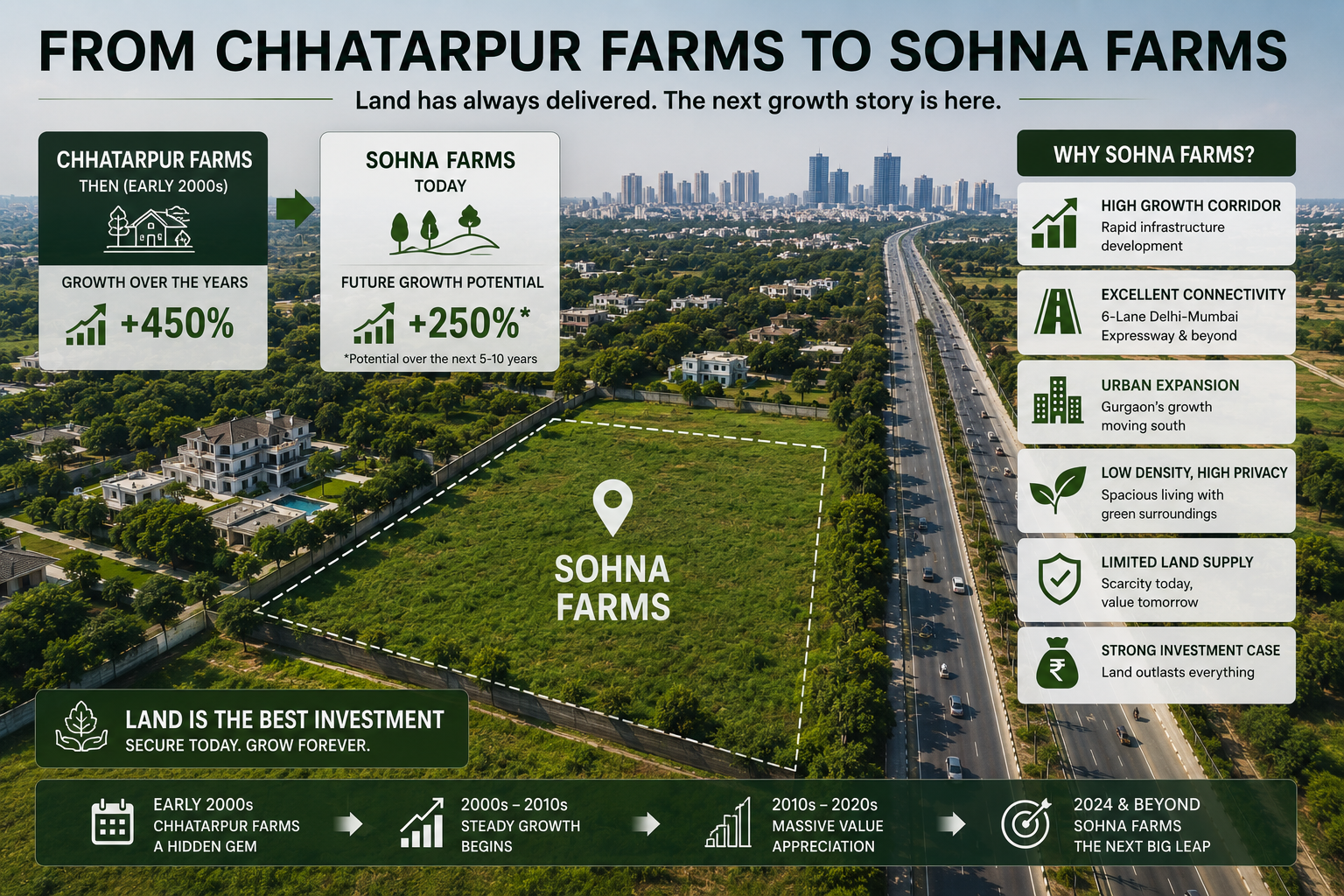
Is Sohna Really the Next Chhatarpur?
Three decades after Chhatarpur redrew South Delhi's map for space, privacy and exclusivity, a familiar pattern is now taking shape further south, and Sohna is where the smart money is beginning to look.
How Chhatarpur Farmhouses Created Multi-Crore Wealth for Early Buyers
What a quiet corner of South Delhi can teach investors about land, scarcity, and long-term wealth creation.

The ₹5 Crore Land Purchase That Became Worth ₹70 Crore
What the Story of DLF Chhatarpur Farms Reveals About Wealth Creation Through Premium Land Ownership
One short email. Stories you can use.
A free, occasional email from our editorial team with our latest features, explainers and reads. Unsubscribe any time — your email stays with us.