Continental Marketplaces Grapple with Fragmented Futures
Europe's e-commerce landscape, once dominated by national champions and global giants, now faces a complex interplay of localisation, cross-border ambition, and the enduring challenge of consumer loyalty.

The recent consolidation in Germany's grocery delivery sector, exemplified by Flink's acquisition of a significant portion of Gorillas' operations, underscores the precarious nature of even well-funded digital ventures in competitive European markets. While the rapid grocery model faced headwinds, the broader trend for marketplaces across the continent reveals a nuanced evolution, far removed from the uniform growth narratives often seen elsewhere. The differing regulatory frameworks, language barriers, and deeply ingrained consumer habits across the EU continue to shape distinct pathways for success and failure.
Companies like Poland's Allegro, a dominant force in its home market, illustrate the power of deep local integration. Its expansion into Czechia, Hungary, and Slovakia, leveraging a familiar model and an existing merchant base, represents a calculated approach to regional growth rather than an immediate frontal assault on Western European incumbents. Similarly, Vinted, originating from Lithuania, achieved considerable success by tapping into a universal demand for second-hand fashion, scaling across multiple EU nations without needing to directly compete with every local retail giant.
The Endurance of National Champions
Despite the allure of pan-European scale, the enduring strength of national players remains a defining characteristic. France's Cdiscount continues to hold significant sway, particularly in categories beyond electronics, while Bol.com maintains its formidable position in the Netherlands and Belgium. These platforms benefit from brand recognition, established logistics networks, and often, a better understanding of local purchasing nuances, which larger global players can sometimes overlook. The challenge for these champions lies in defending their turf against increasingly sophisticated cross-border operators and the omnipresent reach of Amazon.
The apparel sector, however, demonstrates a different dynamic. Zalando, a German enterprise, effectively transcended national borders within fashion, building a strong presence across numerous European countries. Its success stems from a combination of extensive brand selection, efficient logistics, and a customer-centric return policy that resonated widely. This indicates that while general merchandise marketplaces may struggle with fragmentation, niche-focused platforms can achieve broader continental penetration if their value proposition is sufficiently compelling.
The notion of a single 'European consumer' remains largely theoretical when considering purchasing patterns and platform preferences; success often hinges on granular adaptation.
Cross-Border Commerce and Logistics Hurdles
For merchants, the appeal of a unified European market remains potent, offering access to hundreds of millions of consumers. Yet, the practicalities of cross-border selling are complex. Varied VAT regimes, differing consumer protection laws, and the intricate web of last-mile delivery providers create significant operational overheads. Even within the Schengen area, a parcel traversing from a warehouse in Germany to a customer in Spain faces a far more complicated journey than a domestic shipment. This friction point continues to favour platforms that can absorb or simplify these complexities for their sellers.
Traditional retailers are also attempting to adapt. Carrefour and REWE, for instance, are investing in their digital channels, seeking to integrate their vast physical footprints with e-commerce capabilities. Lidl, known for its discount model, is also experimenting with online offerings in certain markets. Their primary battleground remains groceries and everyday essentials, a segment where rapid delivery players like Flink are still carving out sustainable models, often through strategic partnerships or consolidation rather than independent expansion.
The coming years will likely see continued strategic manoeuvres: further consolidation among smaller players, targeted cross-border expansions by strong national champions, and an ongoing refinement of logistics to reduce the friction of intra-EU trade. The vision of a truly seamless European digital marketplace, while closer than a decade ago, still contends with a patchwork of preferences and operational realities that demand tailored, rather than uniform, solutions.
News Legacy maintains editorial independence. Some recommendations may contain affiliate links. We earn from qualifying purchases at no additional cost to you. Read our policy.
Read Next

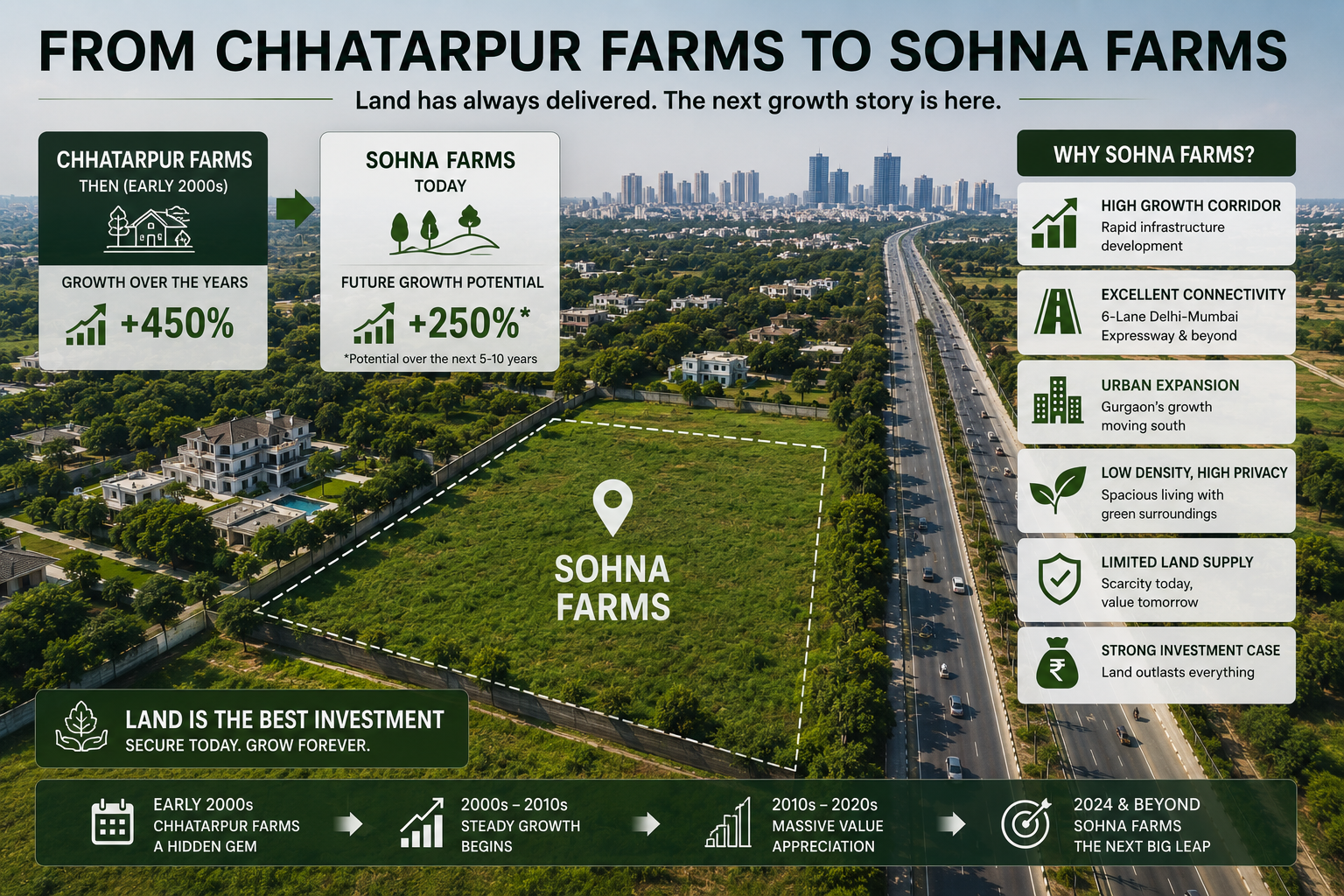
Is Sohna Really the Next Chhatarpur?
Three decades after Chhatarpur redrew South Delhi's map for space, privacy and exclusivity, a familiar pattern is now taking shape further south, and Sohna is where the smart money is beginning to look.
How Chhatarpur Farmhouses Created Multi-Crore Wealth for Early Buyers
What a quiet corner of South Delhi can teach investors about land, scarcity, and long-term wealth creation.

The ₹5 Crore Land Purchase That Became Worth ₹70 Crore
What the Story of DLF Chhatarpur Farms Reveals About Wealth Creation Through Premium Land Ownership
One short email. Stories you can use.
A free, occasional email from our editorial team with our latest features, explainers and reads. Unsubscribe any time — your email stays with us.