Continental Retailers Seek Scale as Borders Blur Electronically
For European e-commerce platforms, the fragmented regulatory and logistical landscape of the continent presents both formidable challenges and substantial opportunities for growth through cross-border expansion.

When a consumer in Berlin orders a dress from Zalando, the transaction might seem straightforward, but behind that click lies a complex web of logistics, payment systems, and data compliance spanning multiple jurisdictions. While Amazon dominates much of the global e-commerce narrative, Europe's own digital champions are quietly building networks that defy national boundaries, often navigating a patchwork of consumer preferences and legal frameworks.
This ambition for scale is driven by the recognition that national markets, even those as large as Germany or France, may not offer sufficient long-term growth potential in an increasingly consolidated digital economy. Companies like Poland's Allegro and the Netherlands' Bol.com, once largely domestic players, are now eyeing or actively pursuing expansion into neighbouring territories, seeking to replicate their localised successes on a broader canvas.
Navigating Regulatory Labyrinths
One of the primary hurdles for any European retailer venturing across borders remains the intricate regulatory environment. Differences in consumer protection laws, data privacy regulations, and taxation rules across the 27 EU member states, compounded by varying national interpretations, demand substantial legal and operational investment. This complexity often favours platforms with deep pockets and sophisticated compliance teams, potentially stifling smaller entrants.
The General Data Protection Regulation (GDPR) offers a unified framework, yet its implementation still sees national distinctions, particularly concerning marketing consents and data retention. Furthermore, product labelling requirements, warranty periods, and return policies can vary significantly, meaning a seamless customer experience requires more than just a translated website.
Logistics present another formidable challenge. While a package can travel from an Italian warehouse to a Spanish door, the 'last mile' delivery infrastructure, cost structures, and consumer expectations differ. Companies like Flink and the now-defunct Gorillas demonstrated the hyper-local sensitivity of rapid grocery delivery, a segment where pan-European standardisation has proven difficult to achieve profitability.
The Appeal of Second-Hand Markets
Beyond new goods, the circular economy is also driving cross-border dynamics. Platforms such as Vinted, headquartered in Lithuania, have achieved considerable success by facilitating the exchange of used clothing across national borders. This model sidesteps some of the complexities of new product distribution, as items are often shipped directly between individual consumers, with the platform primarily managing trust, payments, and dispute resolution. Vinted's substantial user base across France, Germany, and Spain underscores a shared appetite for value and sustainability that transcends traditional retail boundaries.
The true test for European e-commerce leadership lies not just in market share within a single country, but in the ability to deliver consistent value and experience across diverse linguistic and cultural landscapes.
Even traditional brick-and-mortar giants are embracing digital cross-border strategies. Carrefour, with significant physical presences in France and Spain, is leveraging its established brand and supplier networks to expand its e-commerce reach. Similarly, discount retailers like Lidl and REWE are investing in digital infrastructure to complement their physical footprints, aiming for a hybrid model that can cater to both convenience and price-conscious consumers across the continent. These efforts reflect a broader industry convergence where the lines between online and offline, and between national markets, are increasingly indistinct.
The trajectory for European e-commerce appears to favour robust, adaptable platforms capable of navigating regulatory complexities and diverse consumer expectations. The prize is access to a single market of over 440 million people, a scale that promises sustained growth for the most dextrous operators.
News Legacy maintains editorial independence. Some recommendations may contain affiliate links. We earn from qualifying purchases at no additional cost to you. Read our policy.
Read Next

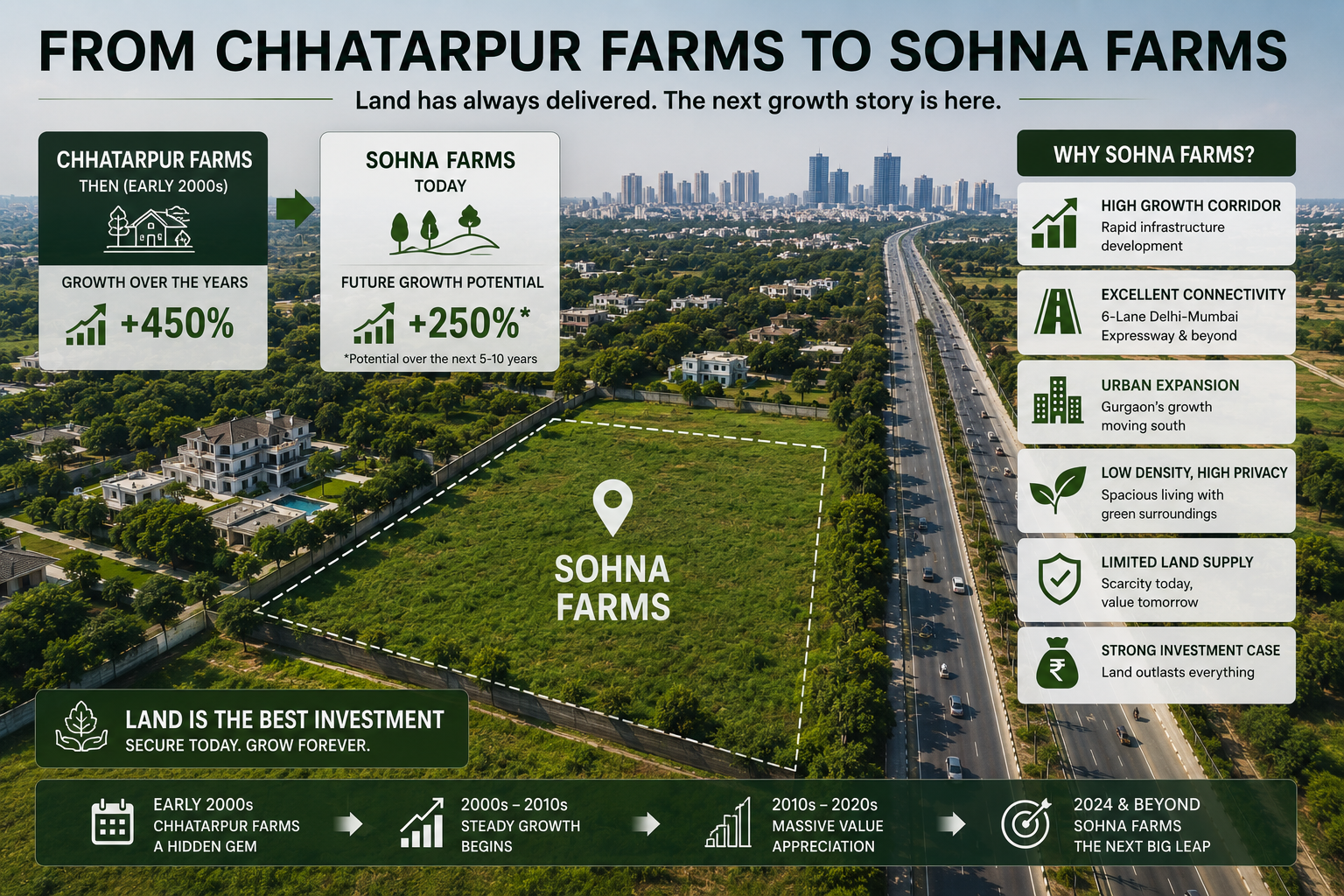
Is Sohna Really the Next Chhatarpur?
Three decades after Chhatarpur redrew South Delhi's map for space, privacy and exclusivity, a familiar pattern is now taking shape further south, and Sohna is where the smart money is beginning to look.
How Chhatarpur Farmhouses Created Multi-Crore Wealth for Early Buyers
What a quiet corner of South Delhi can teach investors about land, scarcity, and long-term wealth creation.

The ₹5 Crore Land Purchase That Became Worth ₹70 Crore
What the Story of DLF Chhatarpur Farms Reveals About Wealth Creation Through Premium Land Ownership
One short email. Stories you can use.
A free, occasional email from our editorial team with our latest features, explainers and reads. Unsubscribe any time — your email stays with us.