Discount Churn: How British Retailers Are Rewriting the Affiliate Contract
Faced with persistent margin pressure, high-street stalwarts and grocers are paring back standard cashback bounties in favour of rigorous first-party attribution.

In the final stretch before checkout, British online shoppers have long observed a familiar ritual: opening a secondary browser tab to search for an active voucher code. For Marks & Spencer, Next, and online grocer Ocado, that split-second hesitation has become an expensive friction point. Rather than generating incremental demand, affiliate networks anchored to cashback portals and coupon-scraping browser extensions have increasingly claimed fees on purchases already bound for the till. In response, Britain's largest retail boardrooms are systematically overhauling their performance marketing agreements, cutting baseline commissions to passive aggregators and redirecting funds toward verified creator channels and closed-loop media networks.
The arithmetic behind the shift is unforgiving. With food and apparel input costs remaining sticky and domestic consumer confidence subdued, operating margins across British retail continue to face structural headwinds. Disbursing a 3% to 6% bounty on an online basket—particularly when the shopper was initially acquired through direct app traffic or paid search—represents an avoidable drain on gross profit. Retailers have begun amending their affiliate schedules, introducing stringent deduplication rules and ring-fencing discounted clearance stock from commission eligibility entirely.
Dismantling the Coupon Tollbooth
The primary casualties of this recalibration are the long-standing voucher and cashback intermediaries that grew to prominence over the past fifteen years. While these portals delivered substantial gross merchandise value during the early expansion of British e-commerce, modern multi-touch attribution modelling has laid bare the nature of that traffic. A substantial proportion of shoppers arriving via voucher hubs were found to be post-intent: their baskets were already filled on sites such as ASOS or Sainsbury's before they initiated an affiliate referral to secure a small cash rebate.
For years, voucher aggregators functioned as an effective private tollbooth on shoppers who were already standing at the digital cash register.
To curb this revenue leakage, retailers are enforcing far tighter technical boundaries. Next, widely regarded across the City as a bellwether for disciplined operational cost control, has steadily refined its digital partner tiers to penalise non-incremental referrals. Transactions completed via automated browser plug-ins are increasingly subject to zero-commission rules. Convenience and delivery operators such as Deliveroo and Just Eat have enacted comparable restrictions, curbing commission payouts when promotional codes leak beyond their intended audience.
The Shift to First-Party Precision
The budgets pulled from legacy voucher aggregators are rarely being banked as pure savings; instead, they are funding a migration toward high-touch creator commerce and retail media. Rather than broad-brush discounts, Marks & Spencer and John Lewis are striking direct performance contracts with lifestyle creators and micro-influencers whose content prompts specific product discoveries. These agreements carry granular commission structures, offering higher yields on full-price premium lines while paying minimal percentages on commodity goods.
Simultaneously, the aggressive rollout of in-house retail media networks by Tesco and Sainsbury's has raised the standard of commercial attribution. By anchoring promotional exposure to Clubcard and Nectar transactional data, grocers can demonstrate to consumer brands exactly which online touchpoint produced a sale. Against this backdrop of verifiable first-party metrics, the traditional affiliate model of untargeted discounting appears increasingly difficult for British commercial directors to justify.
News Legacy maintains editorial independence. Some recommendations may contain affiliate links. We earn from qualifying purchases at no additional cost to you. Read our policy.
Read Next

Is Sohna Really the Next Chhatarpur?
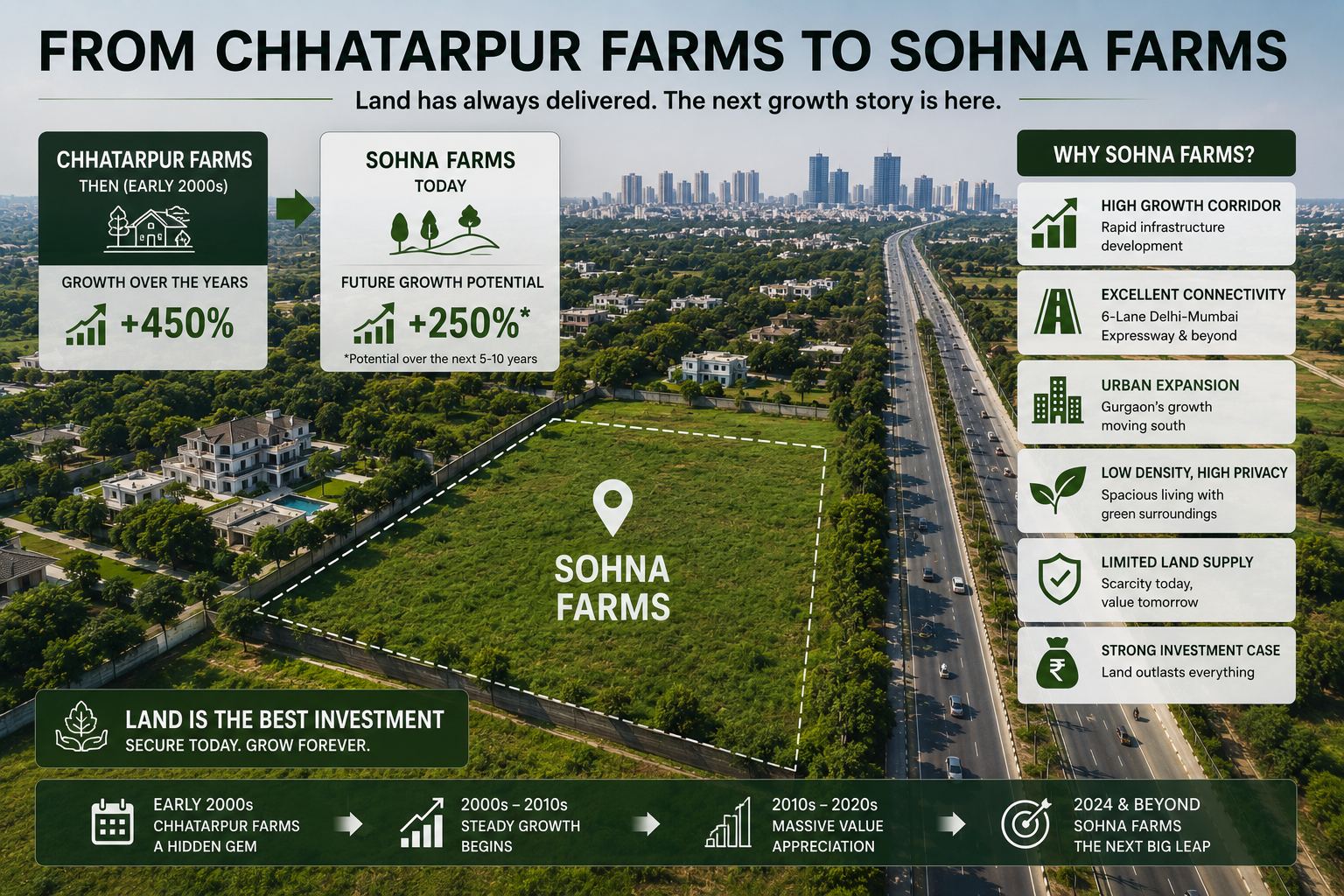
Three decades after Chhatarpur redrew South Delhi's map for space, privacy and exclusivity, a familiar pattern is now taking shape further south, and Sohna is where the smart money is beginning to look.
How Chhatarpur Farmhouses Created Multi-Crore Wealth for Early Buyers
What a quiet corner of South Delhi can teach investors about land, scarcity, and long-term wealth creation.

The ₹5 Crore Land Purchase That Became Worth ₹70 Crore
What the Story of DLF Chhatarpur Farms Reveals About Wealth Creation Through Premium Land Ownership
One short email. Stories you can use.
A free, occasional email from our editorial team with our latest features, explainers and reads. Unsubscribe any time — your email stays with us.