European Retail Tech Abandons the Front Door to Rebuild the Supermarket Back Office
As venture capital spurns consumer delivery subsidies, a disciplined cohort of continental software ventures is securing steady revenue inside the distribution hubs of Carrefour, REWE and Allegro.

Inside REWE's automated distribution centre outside Cologne, the contrast with the speculative frenzy of three years ago could hardly be sharper. Gone are the branded electric mopeds and street-level micro-hubs that defined the rapid-delivery bubble; in their place sit automated parcel-routing gantries and dynamic replenishment software licensed from early-stage European developers. Having burnt billions subsidising on-demand groceries, the continent's venture capital community has decisively reoriented its retail thesis towards enterprise infrastructure. For the engineering talent and founders who survived the collapse of standalone quick-commerce models like Gorillas and the retrenchment of Flink, the path to solvency runs directly through the back offices of traditional grocery and marketplace incumbents.
The geographic logic of this retreat reflects the structural realities of European commerce. Unlike the contiguous American market, an e-commerce startup scaling across France, Germany, Spain, and Poland confronts an archipelago of disparate labour laws, consumer payment conventions, and entrenched national supermarket champions. Where Carrefour commands the French hypermarket perimeter and Lidl's parent, Schwarz Group, dominates low-cost supply networks across Central Europe, foreign challengers attempting to capture front-end consumer loyalty face punitive customer acquisition costs. Consequently, retail software startups are turning themselves into specialised infrastructure layers designed to modernise legacy inventory networks rather than displace them.
The Infrastructure Dividend
Much of this operational pivot concentrates on fulfillment orchestration and returns mitigation. In cross-border apparel, where platforms such as Zalando and Vinted have reshaped wardrobe turnover from Scandinavia to Iberia, return rates frequently surpass 40 per cent in markets like Germany, where open-invoice billing remains customary. Startups offering algorithmic returns routing, automated multi-carrier aggregation, and automated inspection systems are securing multi-year enterprise contracts. Instead of financing consumer churn, venture funds are backing ventures whose code shaves single-digit percentages off the cost of restocking a rejected garment across internal European borders. Commerce tech has ceased to be an exercise in lifestyle branding and has become an industrial optimization discipline.
Marketplace enablement represents a second durable front. In Warsaw, Allegro's dominance has forced regional merchants to standardise cataloguing and multi-currency pricing across the Czech Republic and Slovakia. Similarly, in the Benelux, Bol's third-party merchant ecosystem relies on an emerging tier of software providers to synchronise stock across small warehouses in Flanders and North Rhine-Westphalia. These tooling providers sidestep the punishing working-capital requirements of direct inventory holding, generating recurring enterprise fees from the tens of thousands of mid-sized sellers competing across fragmented national channels.
The Sovereign Alternative to Global Cloud Stacks
Capital that once chased 15-minute delivery promises has migrated to the duller, far more durable mechanics of enterprise inventory orchestration.
This enterprise shift also aligns with an acute desire among European supermarket operators to insulate themselves from American platform dependencies. Grocers like Carrefour in France and Ahold Delhaize in the Netherlands have grown increasingly wary of yielding sensitive purchasing data to global hyperscalers that operate competing retail divisions. European software ventures pitching local data residency, strict adherence to European Union data governance frameworks, and deep integration into proprietary warehouse management systems are finding an audience among legacy boardrooms that were previously indifferent to venture-backed software.
The discipline imposed on European retail tech is severe, but it has produced far healthier balance sheets. Valuations have reset to sensible multiples of net revenue, and cash-flow positive unit economics are now non-negotiable for Series A and B funding rounds across Paris, Berlin, and Stockholm. The ambition to create a pan-European consumer super-app has given way to an unglamorous, highly technical effort to modernise the lorries, pallets, and sorting hubs that actually keep continental commerce solvent.
News Legacy maintains editorial independence. Some recommendations may contain affiliate links. We earn from qualifying purchases at no additional cost to you. Read our policy.
Read Next

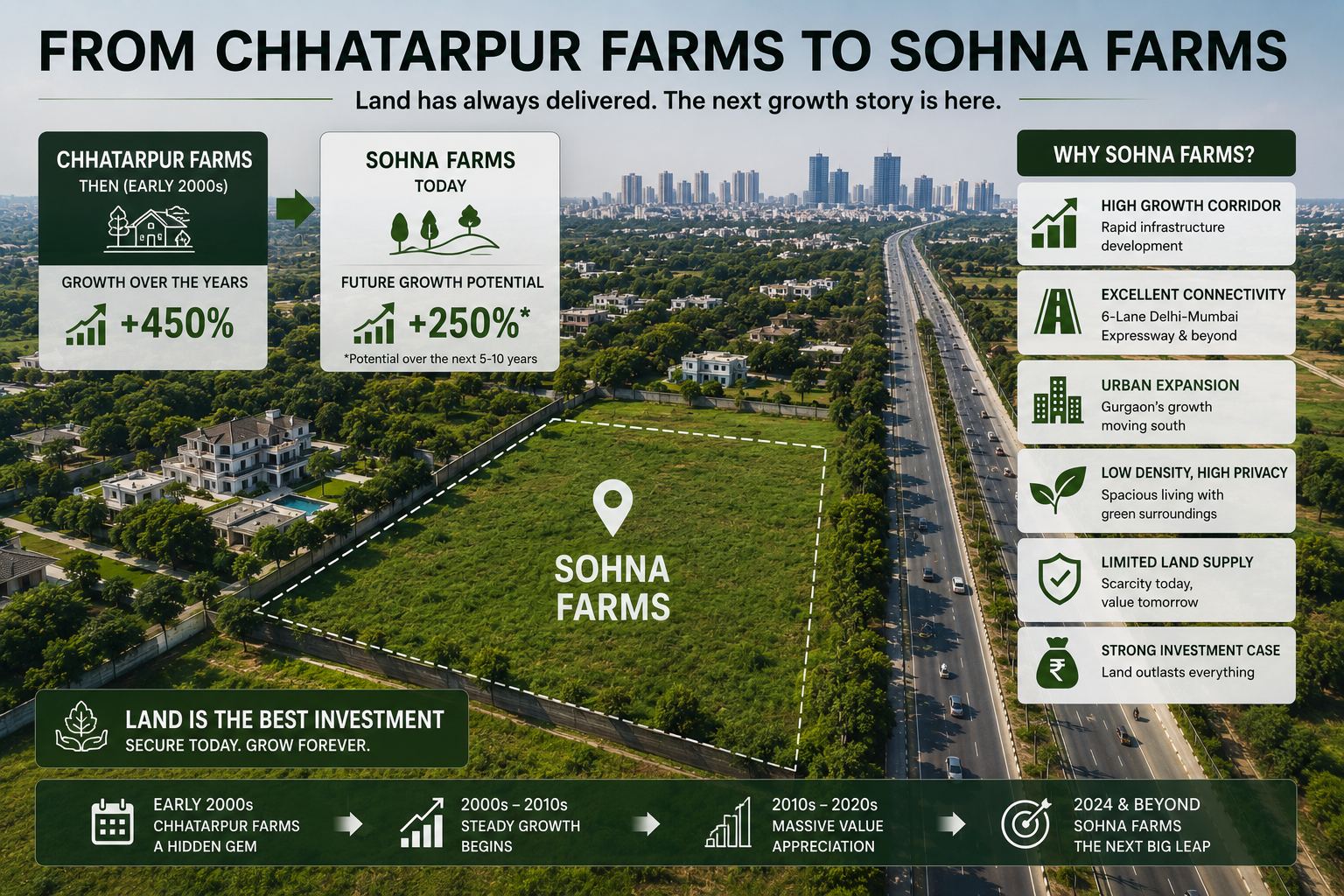
Is Sohna Really the Next Chhatarpur?
Three decades after Chhatarpur redrew South Delhi's map for space, privacy and exclusivity, a familiar pattern is now taking shape further south, and Sohna is where the smart money is beginning to look.
How Chhatarpur Farmhouses Created Multi-Crore Wealth for Early Buyers
What a quiet corner of South Delhi can teach investors about land, scarcity, and long-term wealth creation.

The ₹5 Crore Land Purchase That Became Worth ₹70 Crore
What the Story of DLF Chhatarpur Farms Reveals About Wealth Creation Through Premium Land Ownership
One short email. Stories you can use.
A free, occasional email from our editorial team with our latest features, explainers and reads. Unsubscribe any time — your email stays with us.