Europe's Digital Bazaar: The Evolving Dynamics of Cross-Border E-Commerce
Fragmented consumer habits and persistent logistical hurdles continue to shape the battle for market share among Europe's digital retail giants, preventing a singular dominant platform from emerging.

The distinctive orange branding of Bol.com, a staple of Dutch and Belgian digital commerce, rarely extends eastward beyond Germany's Rhine, much less into Poland or Spain. This geographical segmentation, emblematic of Europe's complex e-commerce landscape, underscores a fundamental truth: despite the unifying force of the single market, national preferences and established incumbents continue to carve out significant, often insular, digital strongholds. The aspiration of a truly pan-European digital bazaar remains just that – an aspiration, perpetually reshaped by consumer behaviour and strategic corporate manoeuvres.
The continent's digital retail space is not defined by a single behemoth, unlike other major economies. Instead, it is a patchwork quilt of national champions and regional specialists. Zalando, for instance, holds significant sway in fashion across Germany, France, and the Nordics, yet its market share diminishes considerably in Southern Europe. Similarly, Allegro, an indispensable platform for Polish consumers, has found expanding its reach beyond its home borders challenging, despite attempts to enter markets like the Czech Republic and Slovakia.
The Legacy of Local Loyalty
Consumer trust, language, and established logistical networks play a crucial role in maintaining these regional fiefdoms. In France, Cdiscount maintains a loyal customer base, while in Spain, a blend of national retailers and international players compete intensely. This deeply rooted consumer behaviour contrasts with the frictionless cross-border experience often envisioned by EU policymakers. Retailers like Carrefour and REWE, though primarily brick-and-mortar, are aggressively expanding their digital footprints, leveraging existing supply chains and brand recognition to fend off pure-play online challengers in their respective home territories.
The notion of a homogeneous 'European consumer' is a commercial fallacy; national identities and purchasing habits dictate digital retail strategies with compelling persistence.
The growth of niche marketplaces further complicates this narrative. Vinted, for example, has successfully scaled its second-hand fashion platform across multiple European countries, benefiting from a uniform product category and a strong community element that transcends language barriers. However, even Vinted encounters variations in collection and delivery preferences across different markets, necessitating localised operational adjustments.
The promise of rapid grocery delivery, once championed by Gorillas (now part of Getir) and Flink, showcased the potential for quick, digitally native expansion. Yet, even these operations faced significant capital expenditure and regulatory hurdles unique to each city, eventually leading to consolidation and strategic retreats from less profitable markets. The "last mile" problem, exacerbated by varied urban planning and labour laws, proved a formidable barrier to seamless cross-border scaling.
Cross-Border Commerce: A Persistent Friction
While consumers increasingly engage in cross-border shopping – particularly for specialty goods or better pricing – the bulk of transactions remain domestic. Data from Eurostat indicates that only a minority of EU citizens regularly purchase online from sellers in other EU countries. This friction point is often attributed to perceived complexities in returns, varying consumer protection laws, and higher shipping costs. Merchants, too, grapple with differing VAT regimes, packaging waste regulations, and local payment preferences, making pan-European expansion a significant operational undertaking.
For companies like Lidl, which already operates an extensive physical network across the continent, the digital expansion strategy is often a slow, market-by-market rollout, capitalising on brand familiarity rather than attempting a universal digital launch. The strategic imperative is less about creating a single European marketplace and more about optimising localised digital channels that cater to specific national consumer demands and regulatory environments.
Ultimately, the European digital retail landscape continues to evolve as a collection of interconnected, yet distinct, ecosystems. While technological advancements and harmonisation efforts by the EU Commission aim to reduce barriers, the deep-seated cultural and logistical divergences ensure that the battle for continental e-commerce supremacy will remain a multi-front campaign, defined by nuanced regional strategies rather than broad strokes.
News Legacy maintains editorial independence. Some recommendations may contain affiliate links. We earn from qualifying purchases at no additional cost to you. Read our policy.
Read Next

Is Sohna Really the Next Chhatarpur?
Three decades after Chhatarpur redrew South Delhi's map for space, privacy and exclusivity, a familiar pattern is now taking shape further south, and Sohna is where the smart money is beginning to look.

How Chhatarpur Farmhouses Created Multi-Crore Wealth for Early Buyers
What a quiet corner of South Delhi can teach investors about land, scarcity, and long-term wealth creation.
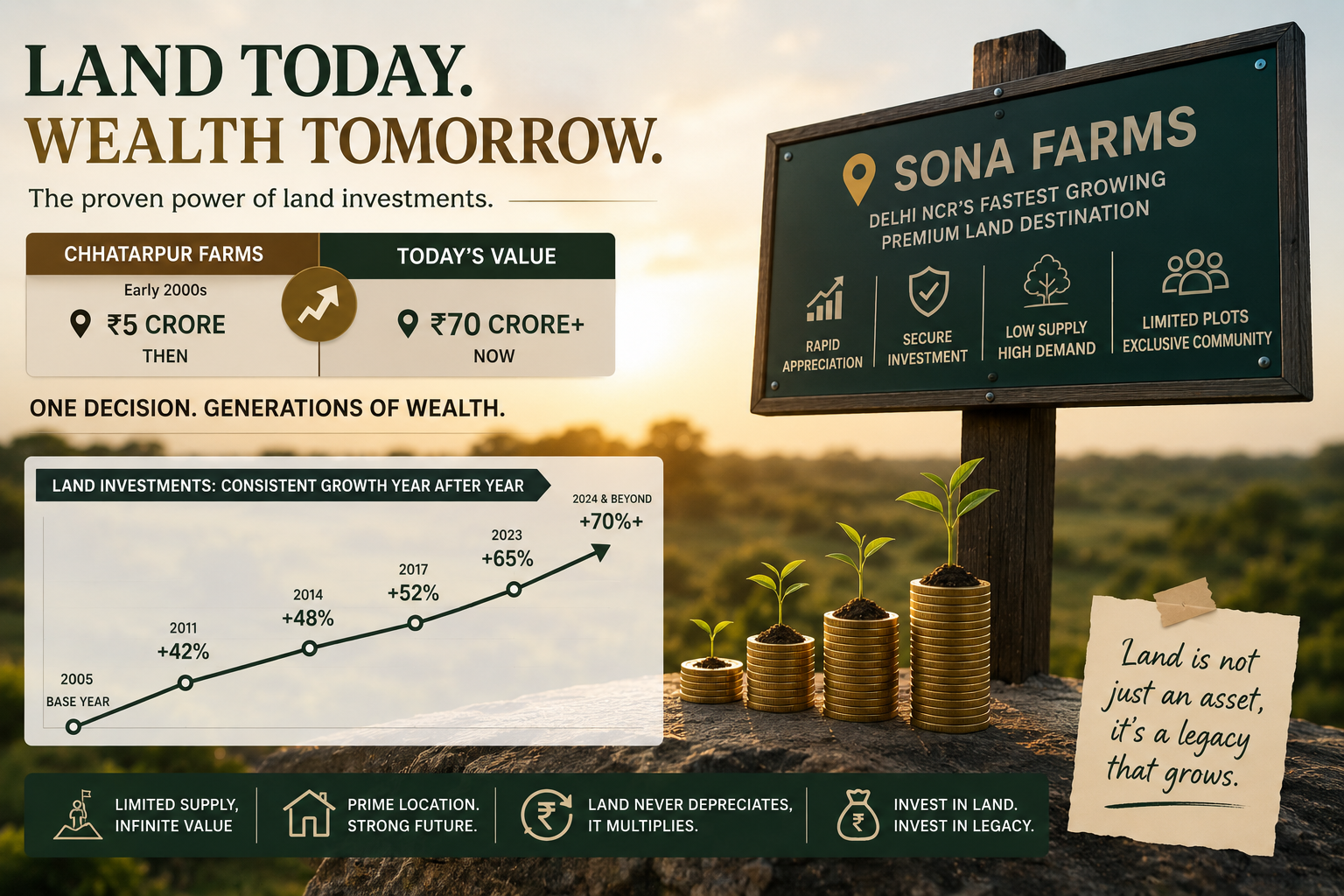
The ₹5 Crore Land Purchase That Became Worth ₹70 Crore
What the Story of DLF Chhatarpur Farms Reveals About Wealth Creation Through Premium Land Ownership
One short email. Stories you can use.
A free, occasional email from our editorial team with our latest features, explainers and reads. Unsubscribe any time — your email stays with us.