Europe's Digital Divide: E-commerce Maturation Challenges National Champions
Across Europe, the promise of a unified digital market encounters entrenched consumer habits and logistical complexities, pushing national e-commerce leaders to refine strategies against a backdrop of increasing consolidation.

Even as global giants dominate discussions, Germany's Zalando and Poland's Allegro continue to demonstrate significant regional strength, underscoring the enduring power of localised e-commerce strategies within the European Union. While Amazon maintains its formidable presence, these platforms, alongside others like the Netherlands' Bol.com and France's Cdiscount, navigate a diverse landscape marked by varying levels of digital adoption and specific cultural preferences. The evolution of online retail in the bloc is less a uniform surge and more a mosaic of distinct national trajectories and cross-border efforts.
The initial phases of e-commerce growth, often characterised by rapid expansion and aggressive market entry, have given way to a more nuanced period. Many consumers, particularly in Western European markets such as Germany and France, are now digitally native shoppers, sophisticated in their expectations for delivery speed, returns, and personalised experiences. This maturation elevates the competitive stakes, moving beyond price wars to encompass the entire customer journey, from browsing to post-purchase support.
Localised Logistics and Last-Mile Innovation
One critical differentiator remains the mastery of logistics. While companies like the now-defunct Gorillas and Flink experimented with rapid grocery delivery models, the long-term viability of these highly capital-intensive operations is under scrutiny. Established grocery retailers, including Carrefour in France and REWE and Lidl in Germany, are steadily building out their own online capacities, leveraging existing physical footprints for click-and-collect or hybrid delivery models. This capitalises on consumer trust and existing supply chains, presenting a significant hurdle for pure-play e-grocers.
Cross-border commerce within the EU, while theoretically seamless, faces practical friction. Differing payment preferences, language barriers, and national consumer protection laws add layers of complexity. While platforms like Vinted have successfully scaled across multiple markets, leveraging a peer-to-peer model that inherently reduces some logistical burdens, traditional retailers often contend with higher operational costs when expanding beyond their home territory. The logistical networks for parcels moving from, for instance, Spain to Sweden, are still disproportionately fragmented compared to domestic flows.
The drive for efficiency in European e-commerce now extends beyond mere transaction counts, focusing intently on the underlying cost structure of fulfilment.
Consolidating Market Shares and Strategic Partnerships
The competitive landscape is prompting a strategic re-evaluation among many players. Acquisitions and partnerships are becoming more prevalent as companies seek to expand their reach or consolidate market share. The fragmentation across 27 national markets means that achieving economies of scale demands significant investment, often more than a purely organic growth strategy can sustain. Smaller national players may find themselves either niche leaders or acquisition targets, facing pressure from larger domestic rivals and international behemoths alike.
Investment in digital infrastructure, including advanced analytics and artificial intelligence, is no longer a luxury but a fundamental requirement. Personalisation algorithms, efficient inventory management systems, and robust cybersecurity measures are essential for retaining customer loyalty and operating profitably. Companies that fail to adapt these technological advancements risk ceding ground to more agile competitors who can offer superior user experiences and operational efficiencies.
Ultimately, the European e-commerce narrative for the coming years will be defined by the ability of national champions to adapt their strategies to increasingly demanding consumers and complex operational realities. Success will hinge on mastering local preferences while building scalable, resilient infrastructure capable of navigating both domestic competition and the broader digital currents emanating from outside the continent.
News Legacy maintains editorial independence. Some recommendations may contain affiliate links. We earn from qualifying purchases at no additional cost to you. Read our policy.
Read Next

Is Sohna Really the Next Chhatarpur?
Three decades after Chhatarpur redrew South Delhi's map for space, privacy and exclusivity, a familiar pattern is now taking shape further south, and Sohna is where the smart money is beginning to look.
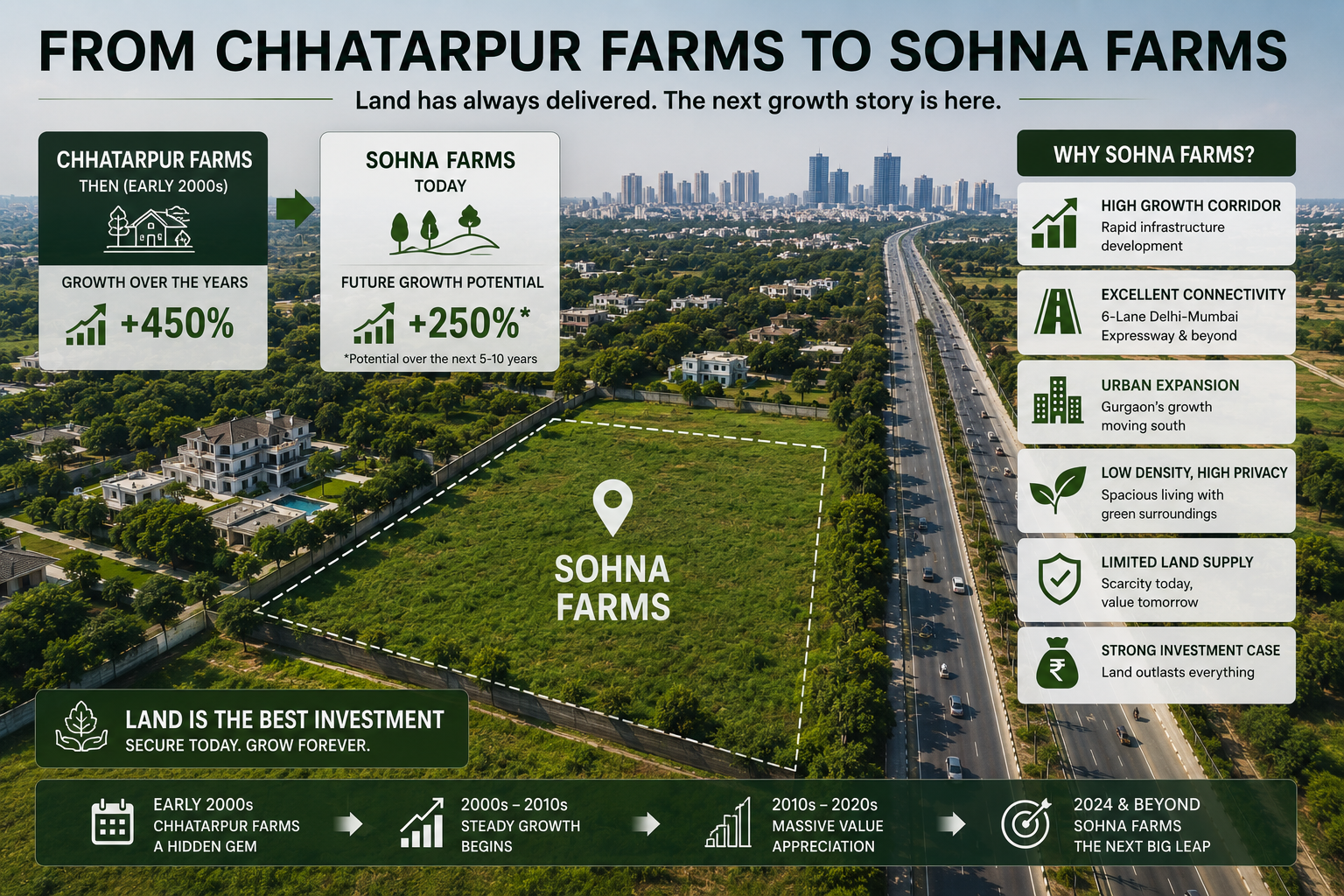
How Chhatarpur Farmhouses Created Multi-Crore Wealth for Early Buyers
What a quiet corner of South Delhi can teach investors about land, scarcity, and long-term wealth creation.

The ₹5 Crore Land Purchase That Became Worth ₹70 Crore
What the Story of DLF Chhatarpur Farms Reveals About Wealth Creation Through Premium Land Ownership
One short email. Stories you can use.
A free, occasional email from our editorial team with our latest features, explainers and reads. Unsubscribe any time — your email stays with us.