Europe's Digital Retail Mosaic: Cross-Border Ambition Meets Localised Realities
While the European Union offers a theoretically frictionless market, the aspiration for a unified digital retail landscape continues to navigate a complex array of national consumer preferences, regulatory frameworks, and logistical intricacies.

The recent financial adjustments at Zalando, Europe’s largest online fashion retailer, including workforce reductions and a recalibration of growth forecasts, underscore a significant shift in the continent’s digital commerce trajectory. What was once seen as an unstoppable ascent for online platforms is now confronting a mature market characterised by heightened competition, economic headwinds, and the persistent fragmentation of consumer behaviours across distinct national borders. This environment necessitates a granular understanding of each market's specific dynamics.
For years, the narrative surrounding European e-commerce centred on its vast, untapped potential relative to more unified markets like the United States or China. Companies like Poland’s Allegro and the Netherlands' Bol.com have built formidable presences within their home territories, demonstrating the power of a localised approach. However, scaling these successes across the entire bloc often proves more challenging than anticipated, requiring substantial investment in infrastructure, language capabilities, and nuanced marketing strategies.
Consider the grocery sector, a segment undergoing rapid digital transformation. While platforms like Gorillas and Flink, though now largely acquired or restructured, initially promised pan-European rapid delivery, their ultimate struggles highlighted the difficulty of standardising such services. Traditional grocers like France’s Carrefour and Germany’s REWE and Lidl are now investing heavily in their own online channels, often leveraging existing physical footprints to offer click-and-collect or local delivery options. These incumbents possess established supply chains and brand recognition that newer entrants often lacked.
The Lingering Pull of the Local
Consumer behaviour across the Eurozone remains remarkably diverse. A shopper in Spain might prioritise instant gratification and low prices, while their counterpart in Germany might value data privacy and a wider selection, and a French consumer may place emphasis on brand heritage or sustainability. This mosaic complicates the strategy for a 'one-size-fits-all' online retail experience. Even within seemingly similar product categories, purchasing habits diverge significantly; Vinted's robust growth in second-hand fashion across multiple markets illustrates that even niche segments require tailored engagement.
The logistics of cross-border fulfilment also present a substantial hurdle. Navigating different customs procedures, VAT regulations, and consumer return policies from Warsaw to Rome or Stockholm to Lisbon adds layers of operational complexity and cost. While large carriers provide pan-European services, the 'last mile' delivery often relies on domestic partners, introducing variability in service quality and efficiency. This friction often makes direct-to-consumer sales from a single European hub less efficient than establishing regional operations.
One industry analyst observes that true European digital leadership will be defined not merely by scale, but by the agility to adapt to national particularities while maintaining a coherent brand identity.
Investment Flows and Market Consolidation
Investment patterns reflect this evolving understanding. While venture capital once flowed freely into ambitious, continent-spanning start-ups, the focus has increasingly shifted towards companies demonstrating sustainable unit economics and proven market fit within specific geographies. This has led to consolidation, such as Cdiscount’s continued dominance in France, facing competition less from aspiring pan-European giants and more from established players or niche specialists.
The long-term outlook suggests a more mature, perhaps less explosive, growth trajectory for European e-commerce. Success will likely belong to those entities capable of combining technological prowess with deep cultural insights, offering localised customer experiences that resonate profoundly within each market. The vision of a truly single digital market persists, but its realisation continues to be a gradual, iterative process, shaped by a nuanced appreciation for Europe's inherent diversity, rather than a simplistic pursuit of scale.
For businesses operating across the continent, this implies a strategic imperative: to view Europe not as a monolithic entity, but as a collection of distinct, albeit interconnected, commercial ecosystems, each demanding specific attention and strategic deployment of resources.
News Legacy maintains editorial independence. Some recommendations may contain affiliate links. We earn from qualifying purchases at no additional cost to you. Read our policy.
Read Next

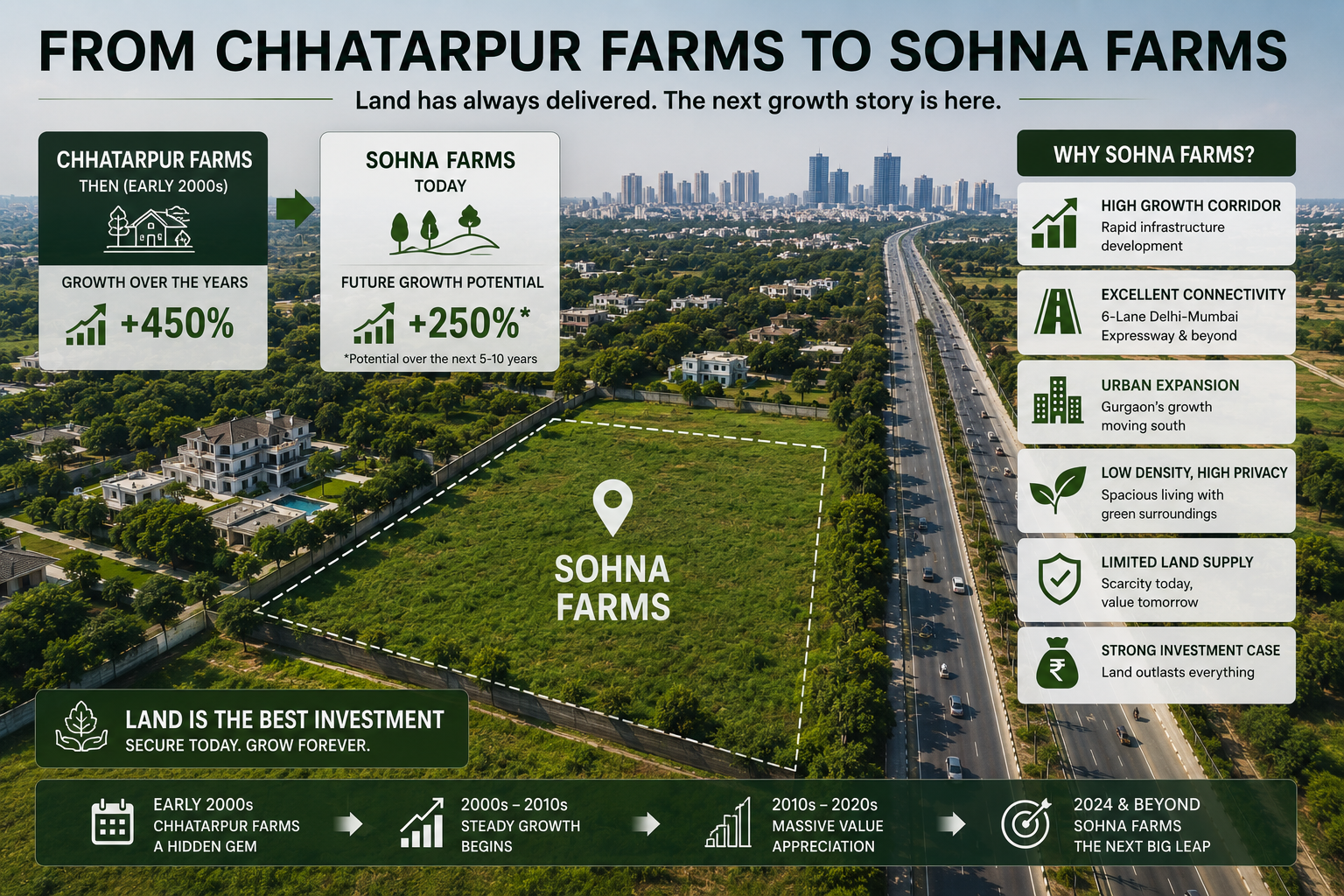
Is Sohna Really the Next Chhatarpur?
Three decades after Chhatarpur redrew South Delhi's map for space, privacy and exclusivity, a familiar pattern is now taking shape further south, and Sohna is where the smart money is beginning to look.
How Chhatarpur Farmhouses Created Multi-Crore Wealth for Early Buyers
What a quiet corner of South Delhi can teach investors about land, scarcity, and long-term wealth creation.

The ₹5 Crore Land Purchase That Became Worth ₹70 Crore
What the Story of DLF Chhatarpur Farms Reveals About Wealth Creation Through Premium Land Ownership
One short email. Stories you can use.
A free, occasional email from our editorial team with our latest features, explainers and reads. Unsubscribe any time — your email stays with us.