Europe's E-commerce Fragmentation: A Persistent Challenge for Cross-Border Scale
Despite a unified currency and political ambition, the European digital retail landscape remains a mosaic of national preferences and regulatory hurdles, hindering the full potential of cross-border trade.

Even as Zalando, Europe's largest online fashion retailer, continues its expansion into new markets like Croatia and Lithuania, the broader narrative of European e-commerce is one of persistent fragmentation. While platforms such as Allegro in Poland or Bol.com in the Netherlands dominate their domestic territories, their ability to replicate that success seamlessly across the continent encounters significant friction. This structural reality dictates strategic choices for retailers and challenges the very notion of a 'single digital market'.
The vision of a frictionless European retail space, where a consumer in Marseille can effortlessly purchase from a vendor in Munich with the same ease as a domestic transaction, has yet to fully materialise. Operational realities, from diverse consumer expectations to disparate logistics networks and varying payment preferences, create substantial barriers. This complex environment forces even large players to adopt nuanced, country-specific approaches rather than a blanket strategy.
Consider the grocery sector, where local giants like Carrefour in France, REWE in Germany, and Lidl across multiple nations navigate highly competitive and domestically focused markets. Their digital initiatives often reflect national habits, making a pan-European e-commerce grocery operation an exceptionally complex undertaking. The short-lived meteoric rise and subsequent acquisition or contraction of rapid delivery services like Gorillas and Flink underscored the difficulty of scaling quickly across diverse urban environments and regulatory frameworks, even with significant venture capital backing.
Navigating the Regulatory Patchwork
The regulatory landscape itself presents a labyrinth. Each member state retains autonomy over key aspects of consumer law, data protection, and taxation, creating a patchwork that complicates cross-border operations. For a retailer aiming to serve customers from Lisbon to Helsinki, understanding and complying with each nation's specific requirements, from warranty periods to privacy policies, adds considerable overhead. This overhead often disproportionately affects smaller and medium-sized enterprises, limiting their ambition beyond national borders.
Logistics represents another formidable hurdle. While infrastructure investment has improved, last-mile delivery costs and efficiency vary significantly between, for instance, a densely populated German city and a more rural region in Spain. Moreover, returns management, a critical component of e-commerce, becomes exponentially more complicated and costly across international lines, directly impacting profitability.
The promise of a single digital market within the EU is often overshadowed by the practicalities of operating across twenty-seven distinct consumer cultures and legal systems.
Despite these challenges, certain segments demonstrate strong cross-border potential. The resale market, exemplified by platforms like Vinted, thrives on a pan-European user base. Consumers are often willing to absorb longer shipping times for unique items or better deals on pre-owned goods, indicating that value proposition can, to an extent, override some logistical friction. However, even these platforms must invest heavily in localised payment options, customer support, and marketing to resonate effectively.
The implication for retailers and technology providers is clear: a one-size-fits-all approach to European e-commerce is largely impractical. Success often hinges on strategic market entry, either through acquisition of established local players or by building robust, adaptable infrastructure capable of accommodating national specificities. The aspiration for a seamless European digital storefront remains, but the path to achieving it continues to be paved with national distinctiveness, demanding granular attention to detail from those who seek to conquer it.
News Legacy maintains editorial independence. Some recommendations may contain affiliate links. We earn from qualifying purchases at no additional cost to you. Read our policy.
Read Next

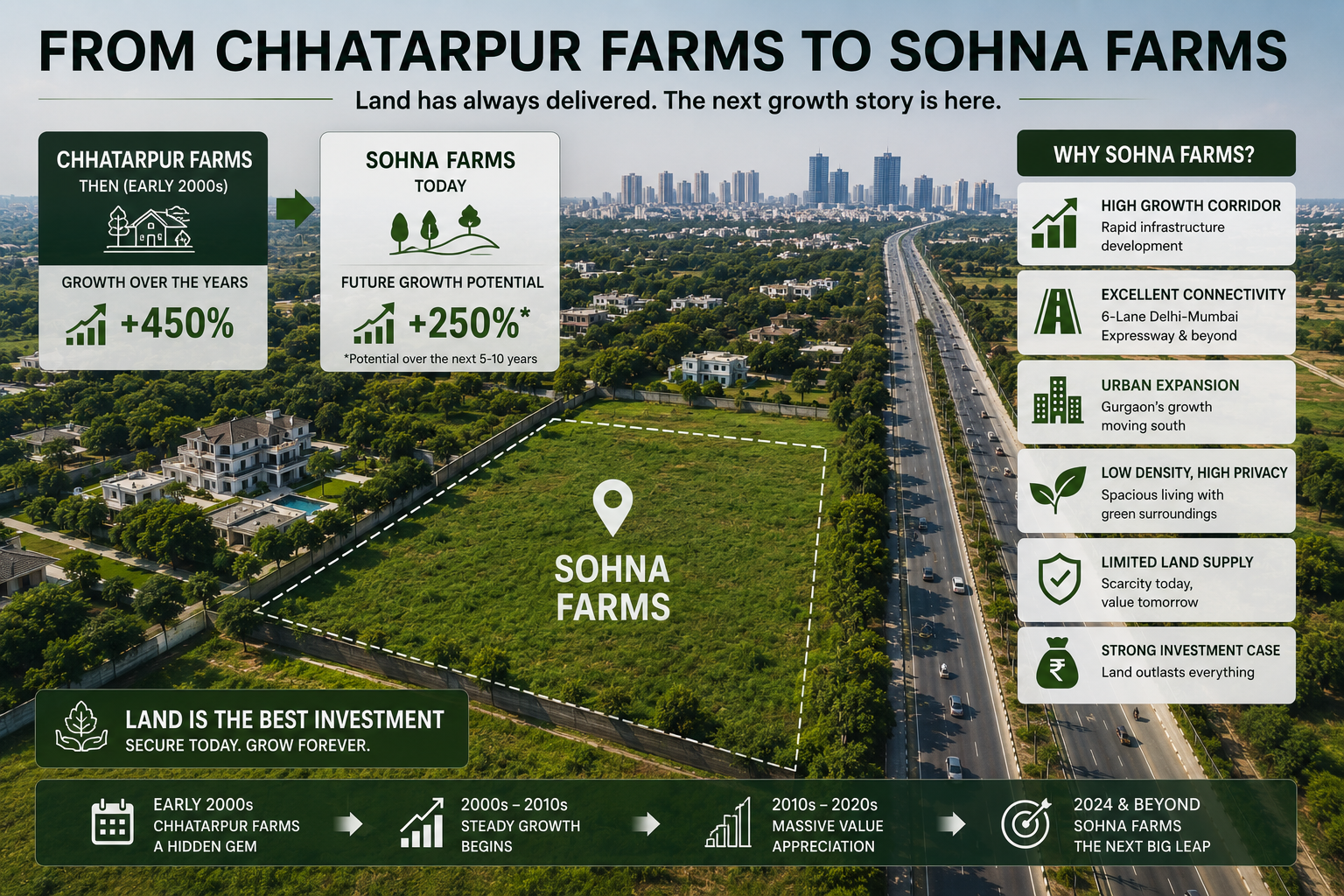
Is Sohna Really the Next Chhatarpur?
Three decades after Chhatarpur redrew South Delhi's map for space, privacy and exclusivity, a familiar pattern is now taking shape further south, and Sohna is where the smart money is beginning to look.
How Chhatarpur Farmhouses Created Multi-Crore Wealth for Early Buyers
What a quiet corner of South Delhi can teach investors about land, scarcity, and long-term wealth creation.

The ₹5 Crore Land Purchase That Became Worth ₹70 Crore
What the Story of DLF Chhatarpur Farms Reveals About Wealth Creation Through Premium Land Ownership
One short email. Stories you can use.
A free, occasional email from our editorial team with our latest features, explainers and reads. Unsubscribe any time — your email stays with us.