Europe's E-commerce Logistics Wrestle with Fragmentation and Scale
The continental European e-commerce landscape, characterised by diverse national markets and complex consumer preferences, presents a formidable challenge for logistics providers aiming for unified efficiency and cost-effectiveness.

The vast automated sorting facilities of Zalando, stretching across multiple German and Polish sites, exemplify the scale e-commerce requires, yet they also underscore the inherent fragmentation of the European market. Despite the common currency and open borders within the EU, the operational reality for retailers and their logistics partners is one of distinct national silos, each with its own regulatory nuances, consumer behaviours, and last-mile intricacies. This patchwork impedes the seamless, cost-optimised flow of goods that pure-play e-commerce demands, forcing a constant recalibration of strategy.
For instance, Allegro, Poland's dominant online marketplace, benefits from a relatively homogenous domestic market but faces considerable hurdles when expanding its logistics footprint into, say, the more dispersed German or Czech landscapes. Similarly, Cdiscount, a major French player, has refined its distribution networks for the hexagonal market, but replicating that efficiency into Spain or Italy involves significant capital expenditure and adaptation to local carrier ecosystems.
The Burden of National Variance
Each European nation presents its own set of logistical constraints. Germany's robust infrastructure and high consumer expectations for rapid delivery contrast with Italy's more fragmented last-mile solutions and Spain's geographic spread. The Nordics, with their lower population densities, necessitate different delivery models altogether. This means a one-size-fits-all fulfilment strategy is largely unworkable, compelling retailers to either build out expensive bespoke networks or rely on a constellation of local partners, introducing complexity and potential inconsistencies in service levels.
The promise of a single European market often evaporates when container loads hit the national borders and encounter distinct labour laws, language barriers, and consumer return expectations.
The rise of quick commerce players, such as the legacy operations of Gorillas and Flink, exacerbated these challenges by pushing the boundaries of urban micromobility and ultra-fast delivery. While their rapid expansion demonstrated a demand for immediacy, their operational model often struggled with profitability, partly due to the highly localised and asset-heavy nature of their distribution within dense urban centres across various countries simultaneously. Their experiences highlight the financial perils of scaling complex logistics across dissimilar geographies without robust underlying infrastructure.
Traditional retailers like Carrefour and REWE are making inroads into online grocery, leveraging their existing store networks for click-and-collect or local delivery. This hybrid model offers an inherent advantage in last-mile reach, but also introduces complexities in inventory management and order picking alongside traditional in-store retail operations. The operational integration of these divergent channels presents a substantial internal logistics hurdle.
Cross-Border Momentum and Returns
Consumer expectations for cross-border shopping continue to rise. Platforms like Vinted, facilitating peer-to-peer second-hand sales across borders, exemplify this demand. However, the reverse logistics of returns, particularly for fashion items from players like Zalando, add another layer of complexity and cost. Managing returns from a customer in Milan to a warehouse in Erfurt, Germany, involves intricate processes for shipping, customs clearance (if applicable, for non-EU origins), and quality checks, all contributing to the environmental footprint and operational overhead.
The sheer capital investment required to build out automated fulfilment centres, coupled with the ongoing operational costs of a multi-country distribution network, acts as a significant barrier to entry for smaller players and a continuous expenditure for established ones. Even giants like Amazon, while having extensive European operations, still navigate these national distinctions, often relying on a combination of in-house capabilities and partnerships with local carriers to ensure coverage from Lisbon to Helsinki. The strategic impetus remains firmly on achieving economies of scale while simultaneously mastering local nuances – a perpetual balancing act in European e-commerce.
News Legacy maintains editorial independence. Some recommendations may contain affiliate links. We earn from qualifying purchases at no additional cost to you. Read our policy.
Read Next

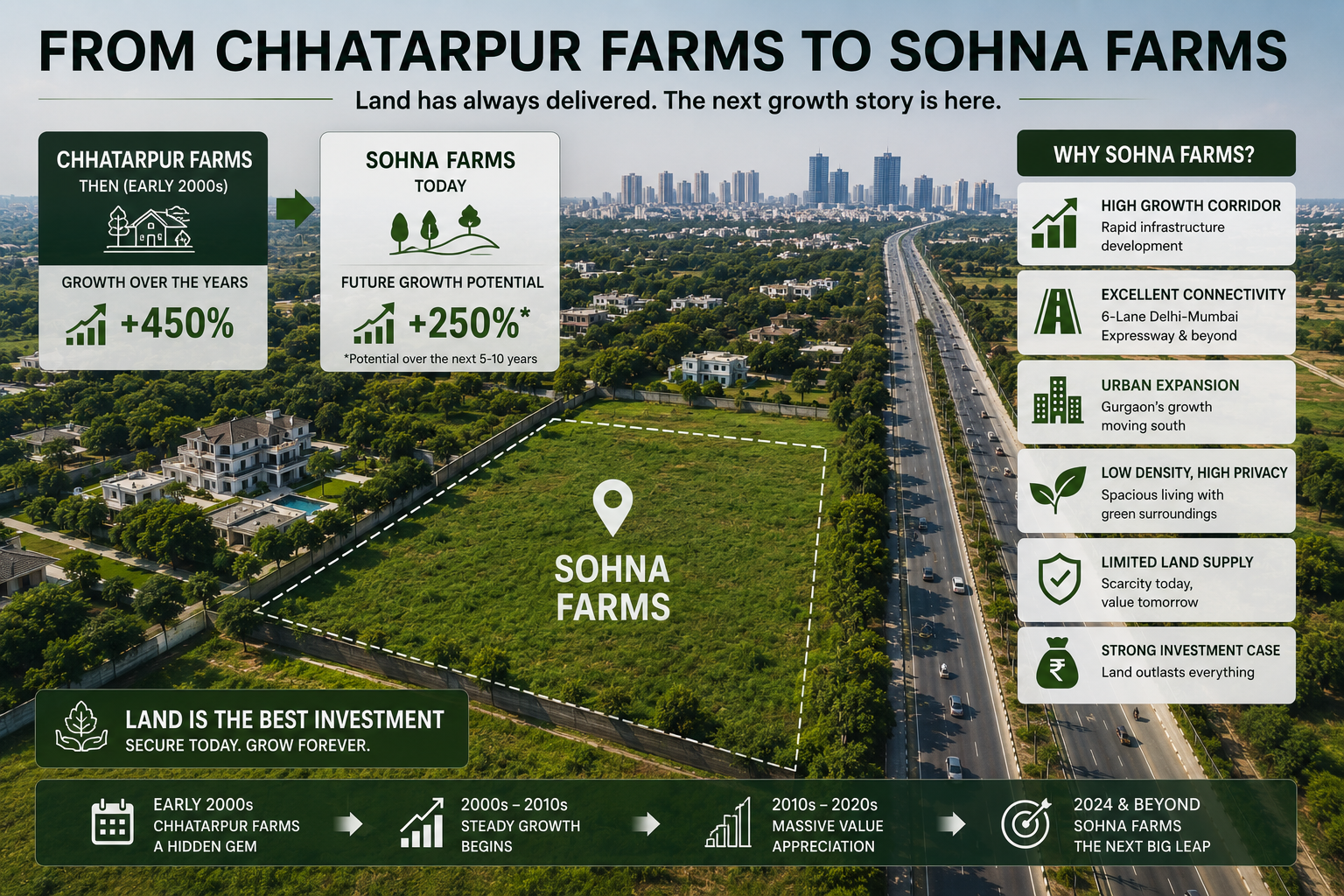
Is Sohna Really the Next Chhatarpur?
Three decades after Chhatarpur redrew South Delhi's map for space, privacy and exclusivity, a familiar pattern is now taking shape further south, and Sohna is where the smart money is beginning to look.
How Chhatarpur Farmhouses Created Multi-Crore Wealth for Early Buyers
What a quiet corner of South Delhi can teach investors about land, scarcity, and long-term wealth creation.

The ₹5 Crore Land Purchase That Became Worth ₹70 Crore
What the Story of DLF Chhatarpur Farms Reveals About Wealth Creation Through Premium Land Ownership
One short email. Stories you can use.
A free, occasional email from our editorial team with our latest features, explainers and reads. Unsubscribe any time — your email stays with us.