Europe's Quick Commerce Sector Consolidates Amidst Economic Headwinds
The rapid delivery market across continental Europe is undergoing a significant transformation, moving beyond its initial growth-at-all-costs phase to embrace efficiency and profitability in a more constrained economic environment.

From the bustling boulevards of Paris, where Carrefour continues to expand its urban delivery hubs, to the digital marketplaces operated by Allegro in Poland, the European quick commerce landscape is undeniably shifting. Initial ventures, often characterised by aggressive expansion and substantial venture capital inflows, are now recalibrating their strategies. This evolution reflects a broader maturity in how consumers and investors perceive the viability of instant gratification logistics.
The early chapters of European quick commerce were defined by firms like Gorillas and Flink, which captured significant market share with promises of ultra-fast grocery delivery within minutes. While these services introduced a novel convenience, their operating models frequently ran at considerable losses, sustained by venture capital eager to back rapid scale. The subsequent economic shifts, including rising inflation and increased interest rates, have compelled a re-evaluation of this growth paradigm, leading to mergers, acquisitions, and a stronger focus on sustainable unit economics.
The Scramble for Viability
This consolidation is particularly evident in the grocery segment. Following Gorillas' acquisition by Getir, the market tightened further, highlighting the formidable challenge of achieving profitability in a sector with high operational costs and thin margins. Even established retailers, such as REWE in Germany and Lidl across multiple European markets, have found it necessary to adapt their own digital delivery infrastructures, often through partnerships, to compete with these agile newcomers without fully replicating their capital-intensive models.
Beyond groceries, the broader e-commerce arena also exhibits this dynamic. Major regional players like Bol in the Netherlands and Cdiscount in France are refining their fulfillment networks, seeking to balance speed with cost-effectiveness. Their established customer bases and integrated logistics offer inherent advantages over pure-play quick commerce startups, which frequently struggle with customer acquisition and retention in a competitive, price-sensitive market.
The quick commerce proposition, once a novelty, now requires a more sophisticated integration into existing retail ecosystems to prove its enduring value.
Cross-border dynamics further complicate the picture. While platforms like Zalando have successfully navigated a pan-European strategy for fashion, the logistical complexities of rapid delivery for everyday essentials vary significantly by national market. Regulatory frameworks, consumer expectations, and labour costs differ from Spain to the Nordics, necessitating tailored approaches rather than a uniform strategy. This fragmentation presents both barriers and opportunities for agile operators.
However, the sector is not solely about grocery and general merchandise. Niche quick commerce models are also finding traction. Vinted, for instance, has demonstrated how a second-hand fashion marketplace can thrive across diverse European nations, leveraging efficient, though not instant, logistics to facilitate transactions between individual sellers and buyers. This suggests that 'quick' does not always mean 'minutes', but rather a significant acceleration compared to traditional retail channels.
The ongoing adaptation will likely see a continued trend towards hybrid models, where brick-and-mortar retailers integrate rapid delivery services, and digital natives seek strategic alliances or more robust vertical integration. The initial 'land grab' phase is largely over; the current imperative is to build scalable, profitable operations that resonate with evolving European consumer habits while navigating a tightening economic reality.
News Legacy maintains editorial independence. Some recommendations may contain affiliate links. We earn from qualifying purchases at no additional cost to you. Read our policy.
Read Next

Is Sohna Really the Next Chhatarpur?
Three decades after Chhatarpur redrew South Delhi's map for space, privacy and exclusivity, a familiar pattern is now taking shape further south, and Sohna is where the smart money is beginning to look.
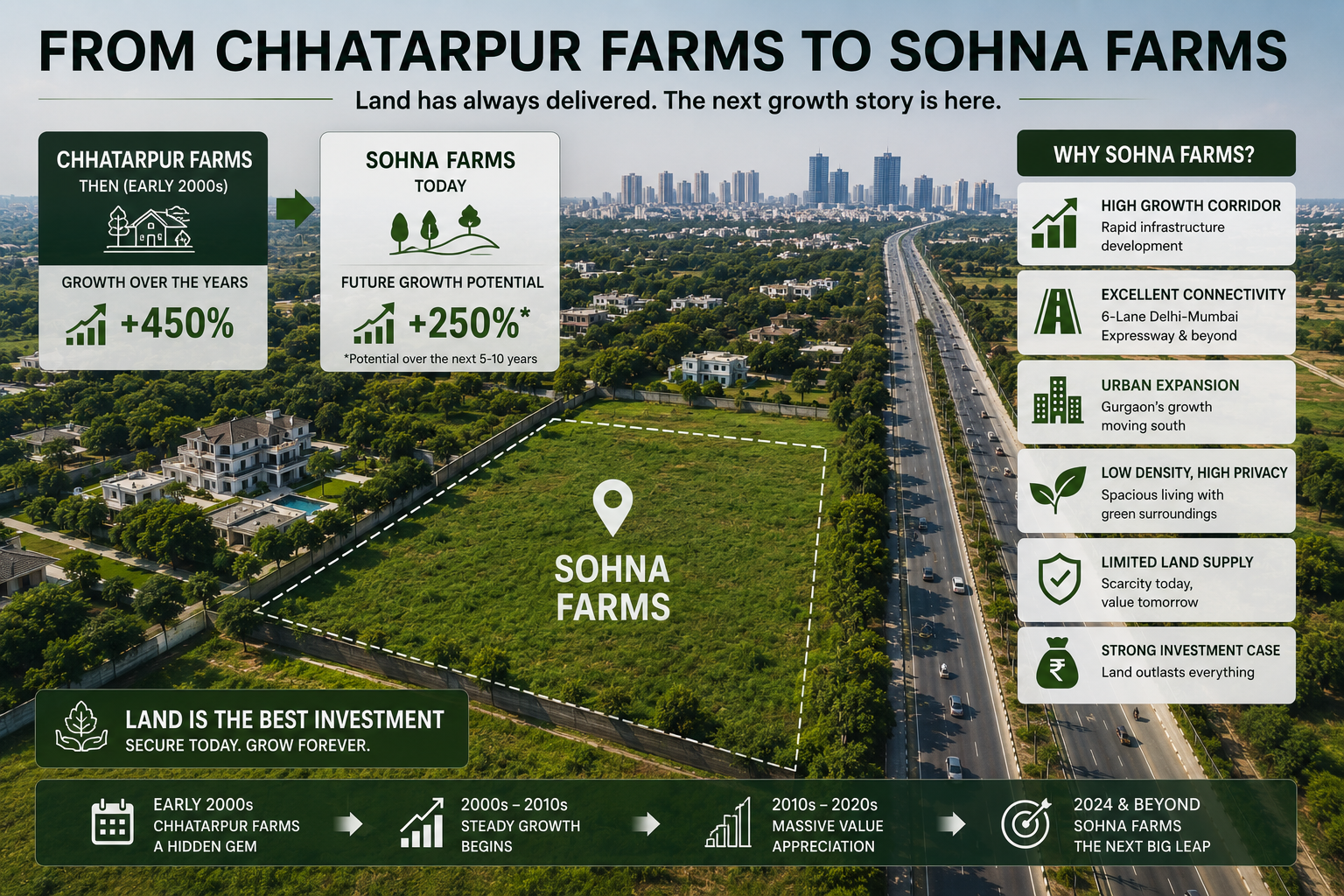
How Chhatarpur Farmhouses Created Multi-Crore Wealth for Early Buyers
What a quiet corner of South Delhi can teach investors about land, scarcity, and long-term wealth creation.
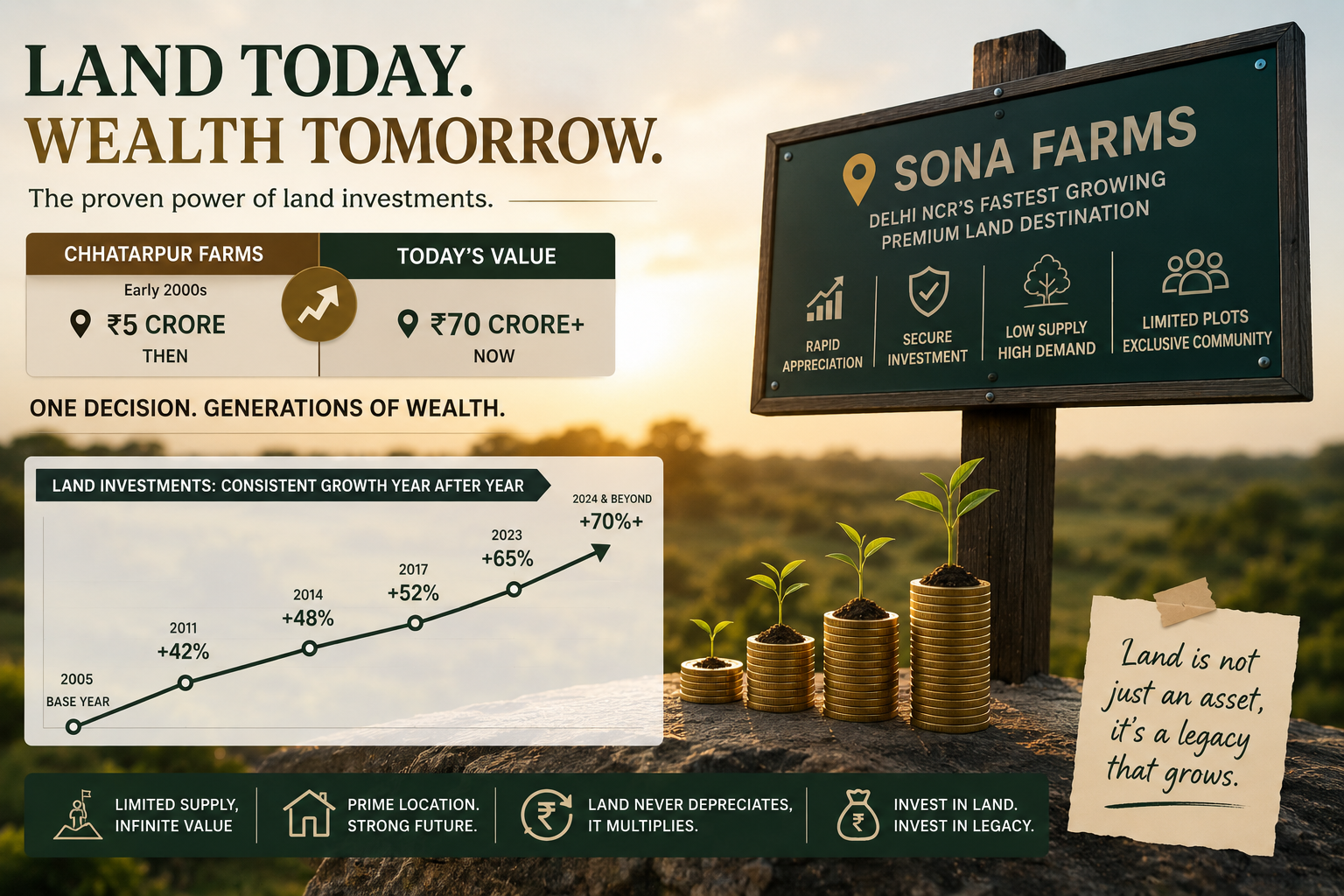
The ₹5 Crore Land Purchase That Became Worth ₹70 Crore
What the Story of DLF Chhatarpur Farms Reveals About Wealth Creation Through Premium Land Ownership
One short email. Stories you can use.
A free, occasional email from our editorial team with our latest features, explainers and reads. Unsubscribe any time — your email stays with us.