Europe's Retail Consolidation Navigates a Fragmented Digital Landscape
Despite a wave of investment and innovation, the European retail sector remains largely a patchwork of national champions and niche players, resisting the continent-wide dominance seen in other global markets. This dynamic presents both formidable challenges and unique opportunities for startups and incumbents alike.

The recent integration of Polish e-commerce giant Allegro's Mall Group acquisition across Central and Eastern Europe illustrates a persistent challenge for digital retail in the continent. While the ambition was to create a regional powerhouse, the process of standardising operations and customer experience across disparate national markets, each with its own consumer preferences and regulatory nuances, proved complex. This endeavour highlights that even well-capitalised consolidators face significant hurdles in achieving seamless cross-border scale within the European Union.
Europe's retail environment stands apart from the more unified markets of the United States or China. Historical consumer behaviours, diverse linguistic landscapes, and varied logistical infrastructures contribute to a highly fractured digital ecosystem. Companies like Germany's Zalando and France's Cdiscount have achieved considerable scale within their primary markets and adjacent regions, yet a truly pan-European general merchandise retailer remains elusive.
The rapid grocery delivery sector provides another vivid illustration of this fragmentation. Companies such as Gorillas and Flink, though attracting substantial venture capital and achieving high valuations, found scaling beyond dense urban centres to be capital-intensive and fraught with local operational complexities. The eventual acquisition of Gorillas by Getir, alongside broader industry retrenchment, underscored the difficulty of replicating a successful model across diverse European cities.
Cross-Border Commerce and Customer Acquisition Costs
Expanding into new EU member states often means contending with differing payment preferences, varying return policies, and the necessity of localised customer support. This significantly inflates customer acquisition costs and operational overheads for retailers attempting to build a multi-national footprint. For instance, a direct-to-consumer brand thriving in Germany might find its marketing strategies ineffective in Italy or Spain without substantial adaptation.
Conversely, this fragmentation has allowed for the emergence of robust national or regional leaders. Bol.com dominates the Benelux region, while Scandinavian markets are served by a distinct set of digital players. Even within grocery, giants like Carrefour, REWE, and Lidl operate predominantly on national or regional strategies, leveraging deep local supply chains and brand recognition rather than aiming for an integrated continental digital presence in general merchandise.
The resilience of national retail champions in Europe often stems from deeply embedded trust and an understanding of local cultural nuances that larger, more generalised platforms struggle to replicate.
Second-hand fashion marketplace Vinted, headquartered in Lithuania, represents a notable success story in navigating this landscape. By focusing on a specific vertical and building strong community features, Vinted has managed to expand across numerous European countries, including France, Germany, and Poland. Its success demonstrates that a targeted approach, coupled with strong user engagement, can overcome some of the inherent difficulties of cross-border expansion.
Regulatory Harmonisation and Its Limits
Efforts towards greater regulatory harmonisation within the EU, such as the Digital Services Act and the Digital Markets Act, aim to create a more level playing field. While these initiatives simplify certain aspects of cross-border trade and competition, they do not fundamentally alter deep-seated consumer habits or the intricate logistics networks required for efficient delivery across diverse geographies. These factors continue to present significant barriers to entry and scaling for new retail ventures.
The challenge for future European retail startups lies in finding niches that can either leverage existing national strengths or offer compelling value propositions that transcend traditional borders without incurring unsustainable expansion costs. The market remains ripe for innovation, but scale will likely continue to be achieved through selective regional dominance or highly specialised cross-border solutions, rather than through a single, all-encompassing continental platform.
News Legacy maintains editorial independence. Some recommendations may contain affiliate links. We earn from qualifying purchases at no additional cost to you. Read our policy.
Read Next

Is Sohna Really the Next Chhatarpur?
Three decades after Chhatarpur redrew South Delhi's map for space, privacy and exclusivity, a familiar pattern is now taking shape further south, and Sohna is where the smart money is beginning to look.

How Chhatarpur Farmhouses Created Multi-Crore Wealth for Early Buyers
What a quiet corner of South Delhi can teach investors about land, scarcity, and long-term wealth creation.
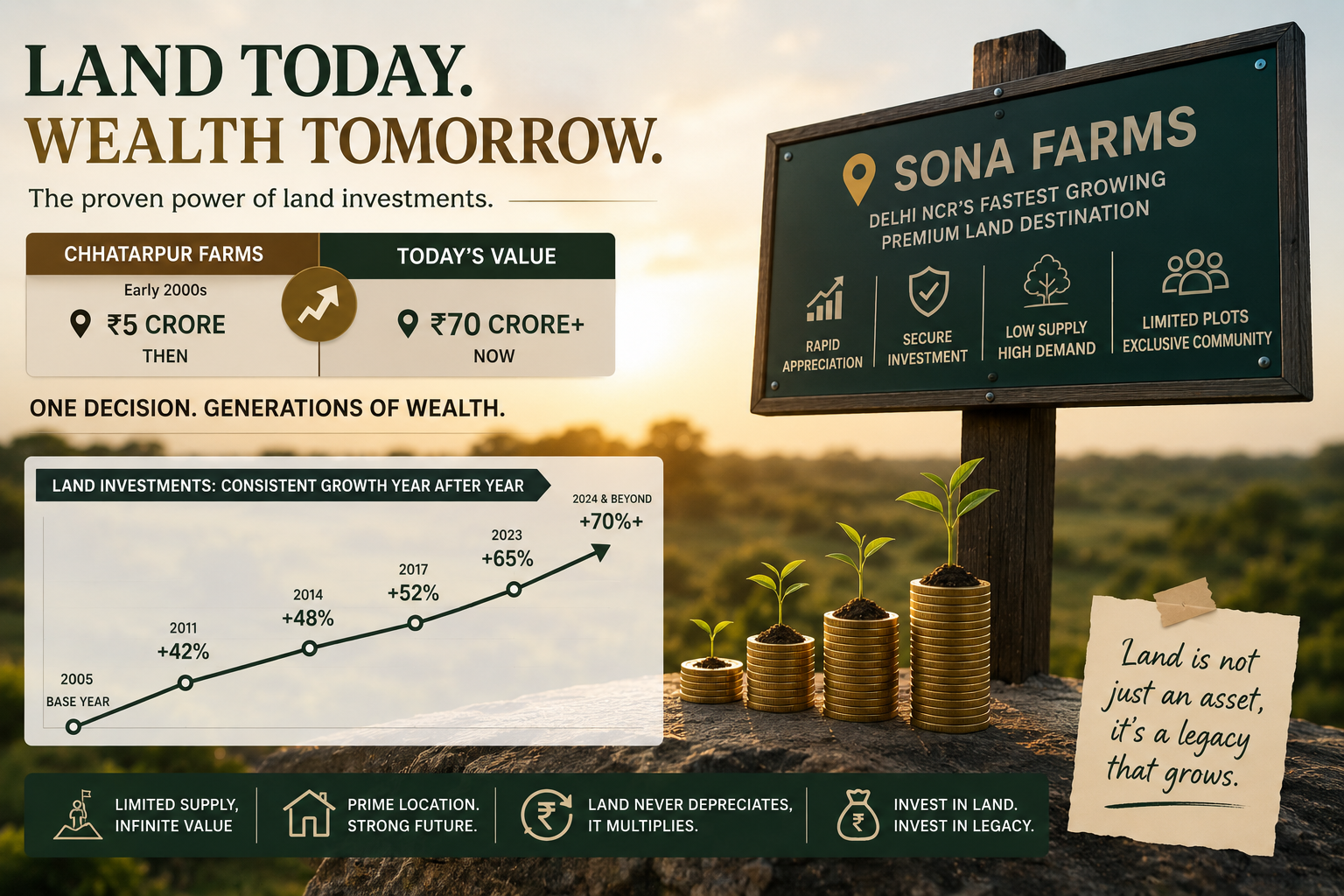
The ₹5 Crore Land Purchase That Became Worth ₹70 Crore
What the Story of DLF Chhatarpur Farms Reveals About Wealth Creation Through Premium Land Ownership
One short email. Stories you can use.
A free, occasional email from our editorial team with our latest features, explainers and reads. Unsubscribe any time — your email stays with us.