Fortress Fulfilment: How Europe’s Domestic E-Commerce Titans Are Rewiring Cross-Border Logistics
Faced with persistent cross-border shipping frictions and sluggish consumer demand, regional marketplace operators from Berlin to Warsaw are converting captive warehouse networks into shared commercial infrastructure.

At Zalando’s multi-tier distribution facility in Lahr, near the Franco-German frontier, autonomous shuttles sort apparel destined not only for the retailer’s own storefronts, but increasingly for competitive fashion outlets across France, Austria, and Switzerland. What originated as a bespoke network designed to absorb notoriously high domestic return rates has turned into an independent logistics enterprise. Across continental Europe, the operational calculus of online retail is moving away from purely digital differentiation toward direct control over physical throughput.
The European Single Market guarantees the frictionless movement of goods in law, yet pan-European parcel distribution remains operationally fragmented. National carriers still dominate their respective territories—DHL in Germany, La Poste’s Colissimo in France, InPost in Poland, and Correos in Spain. For multi-market operators, relying on fragmented handoffs between legacy postal authorities creates systemic margin leakage and unpredictable delivery windows. In response, regional champions are building alternatives that bypass standard international shipping networks altogether. Poland’s Allegro, having fortified its home market with expansive automated parcel-locker networks, has pushed fulfillment capacity into the Czech Republic and Slovakia, while the Netherlands’ Bol continues to tighten cross-border links across the Benelux corridor.
The B2B pivot for warehouse capacity
This friction has accelerated the commercialisation of captive distribution assets. Zalando’s expansion of its ZEOS logistics arm—which opens its multi-country warehousing and returns infrastructure to third-party brands across varied sales channels—typifies the strategy. Modern automated sorting hubs demand unrelenting operational throughput to dilute amortisation costs, particularly as post-pandemic online retail volumes settle into single-digit expansion rates. A parallel trajectory is evident in France, where Cdiscount monetises its heavy physical assets through Octopia, supplying turnkey logistics to external merchants across southern Europe.
Lithuania’s Vinted has adopted a similar trajectory via Vinted Go, establishing dedicated locker networks in urban hubs like Paris to reduce the unit economics of peer-to-peer shipping. By managing the middle mile between cross-border collection points directly, platforms can insulate themselves from courier rate volatility while capturing margin that historically went to national postal groups.
In an operating climate where customer acquisition costs remain stubbornly elevated, European retail moats are being rebuilt along the middle mile.
Grocery automation and the quick-commerce retreat
The discipline now governing cross-border distribution forms a sharp contrast with the venture-backed delivery experiments of recent years. The retreat of hyper-local quick commerce across Western Europe—underlined by the collapse of the Gorillas network and the retrenchment of Flink—proved that micro-fulfillment dark stores in premium city centres rarely achieve sustainable margins without substantial basket sizes. The capital expenditure of pure-play rapid delivery has effectively yielded to the structural balance sheets of established grocers.
Instead, food retail giants such as Carrefour in France and REWE in Germany are channelling capital into centralised, highly automated distribution nodes. These hubs serve a dual purpose: supporting high-efficiency store replenishment alongside regional curbside collection and scheduled home delivery grids. Meanwhile, discount operators such as Lidl continue to expand expansive distribution compounds across central Poland and Spain, fortifying overland supply chains against persistent fuel and wage inflation.
With the European Union tightening directives on packaging waste, carbon auditing for road transport, and courier working conditions, redundant transit routes are becoming an intolerable balance-sheet risk. The platform winners across the continent over the coming decade will not simply be the brands with the most responsive search interfaces, but those that establish operational control over Europe's shared, automated distribution spine.
News Legacy maintains editorial independence. Some recommendations may contain affiliate links. We earn from qualifying purchases at no additional cost to you. Read our policy.
Read Next
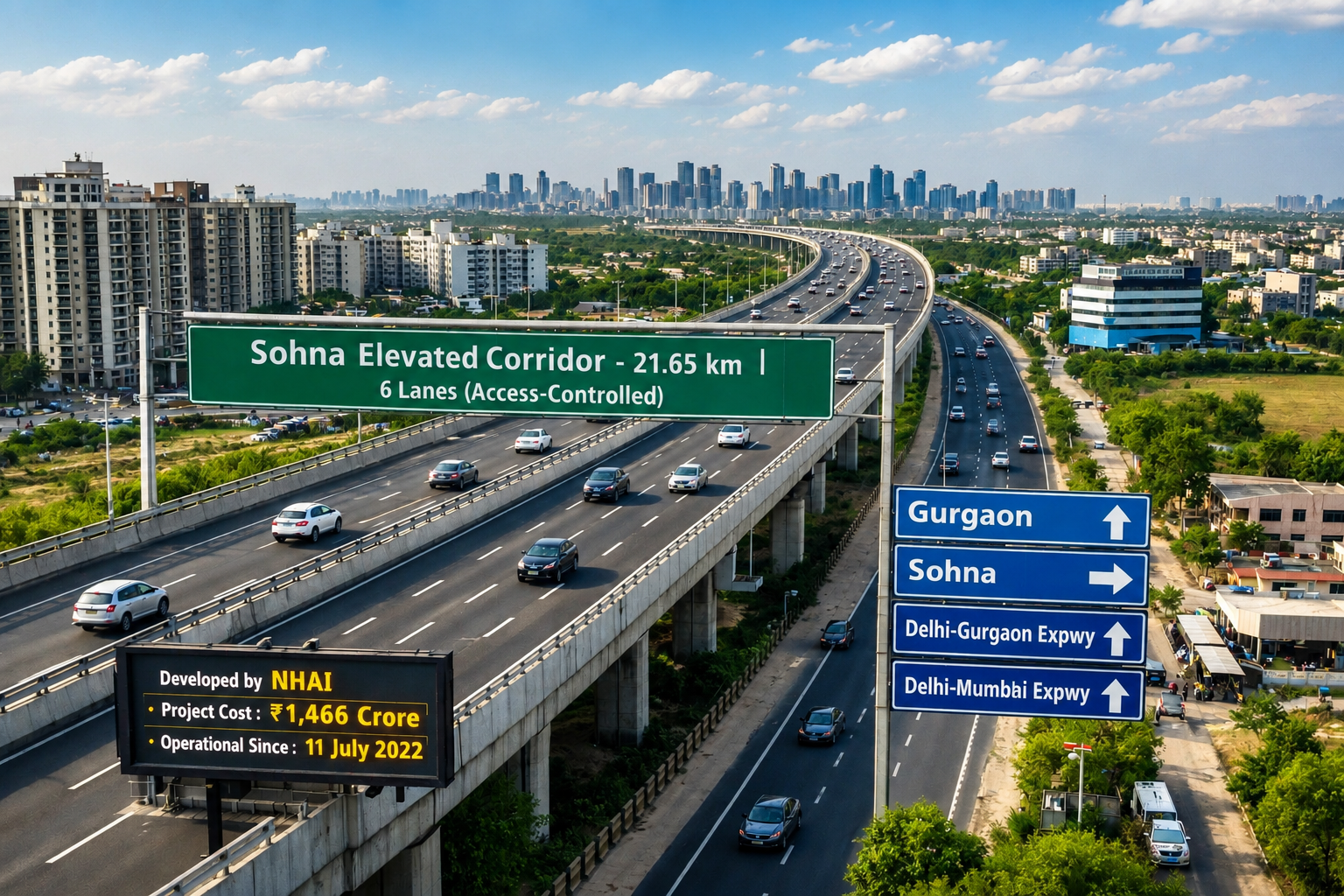
Is Sohna Really the Next Chhatarpur?
Three decades after Chhatarpur redrew South Delhi's map for space, privacy and exclusivity, a familiar pattern is now taking shape further south, and Sohna is where the smart money is beginning to look.
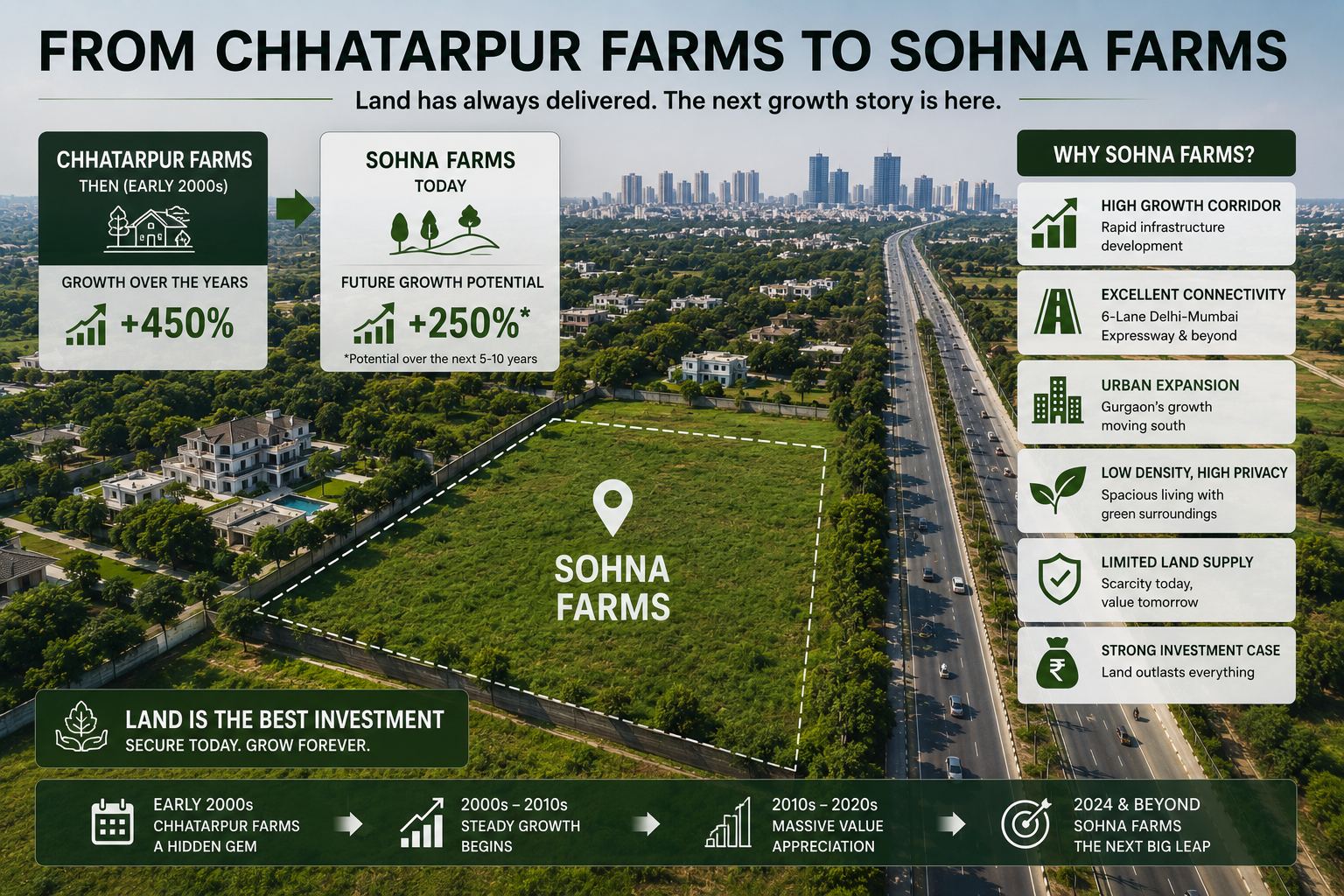
How Chhatarpur Farmhouses Created Multi-Crore Wealth for Early Buyers
What a quiet corner of South Delhi can teach investors about land, scarcity, and long-term wealth creation.

The ₹5 Crore Land Purchase That Became Worth ₹70 Crore
What the Story of DLF Chhatarpur Farms Reveals About Wealth Creation Through Premium Land Ownership
One short email. Stories you can use.
A free, occasional email from our editorial team with our latest features, explainers and reads. Unsubscribe any time — your email stays with us.