Grocery's Digital Crossroads: Europe's Uneven E-commerce Embrace
Despite pandemic-driven acceleration, the continental European grocery market remains a fragmented landscape for online penetration, presenting both opportunity and significant operational hurdles for established players and nascent disruptors.

The recent struggles of rapid grocery delivery firms like Gorillas, now absorbed by Getir, and Flink, which has significantly scaled back operations in several markets, underscore a persistent challenge in European e-commerce: the enduring resilience of traditional grocery retail. While venture capital flowed freely into these models, promising a transformative shift in how Europeans acquire daily necessities, the economic realities of last-mile logistics and price sensitivity have proved formidable. This uneven digital adoption across the continent reveals deeper structural differences in consumer behaviour and retail infrastructure that continue to shape market evolution.
Across the Atlantic, online grocery penetration in the United States and the United Kingdom has reached double-digit percentages, driven by a combination of established large-format retailers and dedicated online grocers. In contrast, mainland Europe lags. Germany, for instance, still sees less than 5% of its grocery sales occurring online, a figure that has shown only modest growth even through periods of accelerated digital uptake. Southern European markets like Italy and Spain exhibit similar patterns, with consumers largely favouring in-store experiences for fresh produce and daily staples.
Local Flavours, Global Ambitions
This regional disparity is not merely a matter of technological adoption; it is deeply rooted in cultural preferences and existing retail density. French consumers, for example, continue to embrace click-and-collect services from hypermarkets like Carrefour and Leclerc, valuing the convenience of online ordering paired with the immediacy of local pickup. In the Nordics, sophisticated logistical networks and a higher propensity for digital engagement have fostered a more robust online grocery segment, though still not reaching the peaks seen in Anglo-Saxon markets. The Dutch market, with players like Bol.com expanding into groceries and Albert Heijn's extensive delivery network, represents a more mature e-grocery environment.
The challenge for pure-play online grocers and traditional retailers alike lies in economically scaling operations within a continent characterised by diverse regulatory frameworks, language barriers, and fragmented consumer expectations. While large e-commerce platforms like Zalando have successfully navigated cross-border apparel retail and Allegro dominates in Poland, the perishability and low margins of groceries introduce complexities that defy easy replication. Fulfilment costs, particularly in densely populated urban centres and sparsely populated rural areas, often erode potential profitability, making expansion a capital-intensive endeavour.
The economics of delivering a basket of groceries across varied European geographies remain fundamentally different from shipping a non-perishable parcel.
The Hybrid Imperative
Traditional grocery giants like Germany's REWE and Lidl have acknowledged the digital shift, but their strategies often involve a more cautious, hybrid approach. This typically entails enhancing in-store digital tools, offering limited click-and-collect options, and experimenting with delivery in select urban hubs. Their vast physical footprints provide a significant competitive advantage, enabling them to leverage existing infrastructure for online order fulfilment without the need for entirely new, costly dark stores or warehouses.
The second-hand market, exemplified by platforms like Vinted, offers a contrasting perspective. While not directly grocery, its success in building a pan-European network for pre-owned goods demonstrates the potential for digital marketplaces to thrive when logistical challenges are manageable and consumer demand is robust. The ability to aggregate supply and demand across borders without the immediate perishability constraint provides a model of scalability that grocery e-commerce has yet to fully achieve.
Looking forward, the European online grocery sector will likely continue its incremental growth, driven by a combination of sustained investment in automation, more efficient last-mile delivery solutions, and a gradual shift in consumer habits. The path will probably diverge from the high-growth, venture-backed models that briefly dominated headlines, instead favouring a more integrated approach that leverages existing retail infrastructure and meticulously addresses the unique demands of each regional market. Profitability, rather than sheer scale, will define success.
News Legacy maintains editorial independence. Some recommendations may contain affiliate links. We earn from qualifying purchases at no additional cost to you. Read our policy.
Read Next

Is Sohna Really the Next Chhatarpur?
Three decades after Chhatarpur redrew South Delhi's map for space, privacy and exclusivity, a familiar pattern is now taking shape further south, and Sohna is where the smart money is beginning to look.
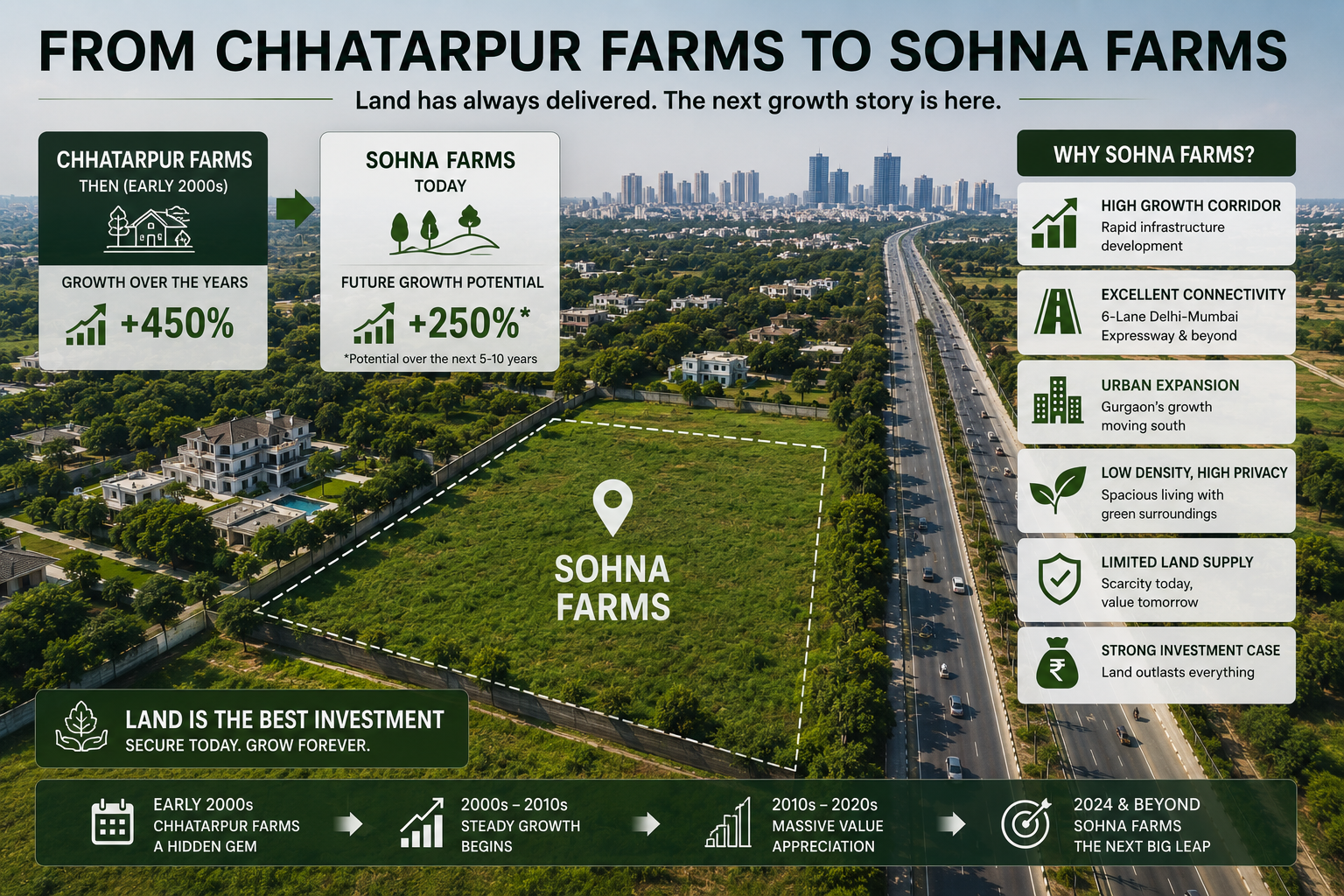
How Chhatarpur Farmhouses Created Multi-Crore Wealth for Early Buyers
What a quiet corner of South Delhi can teach investors about land, scarcity, and long-term wealth creation.
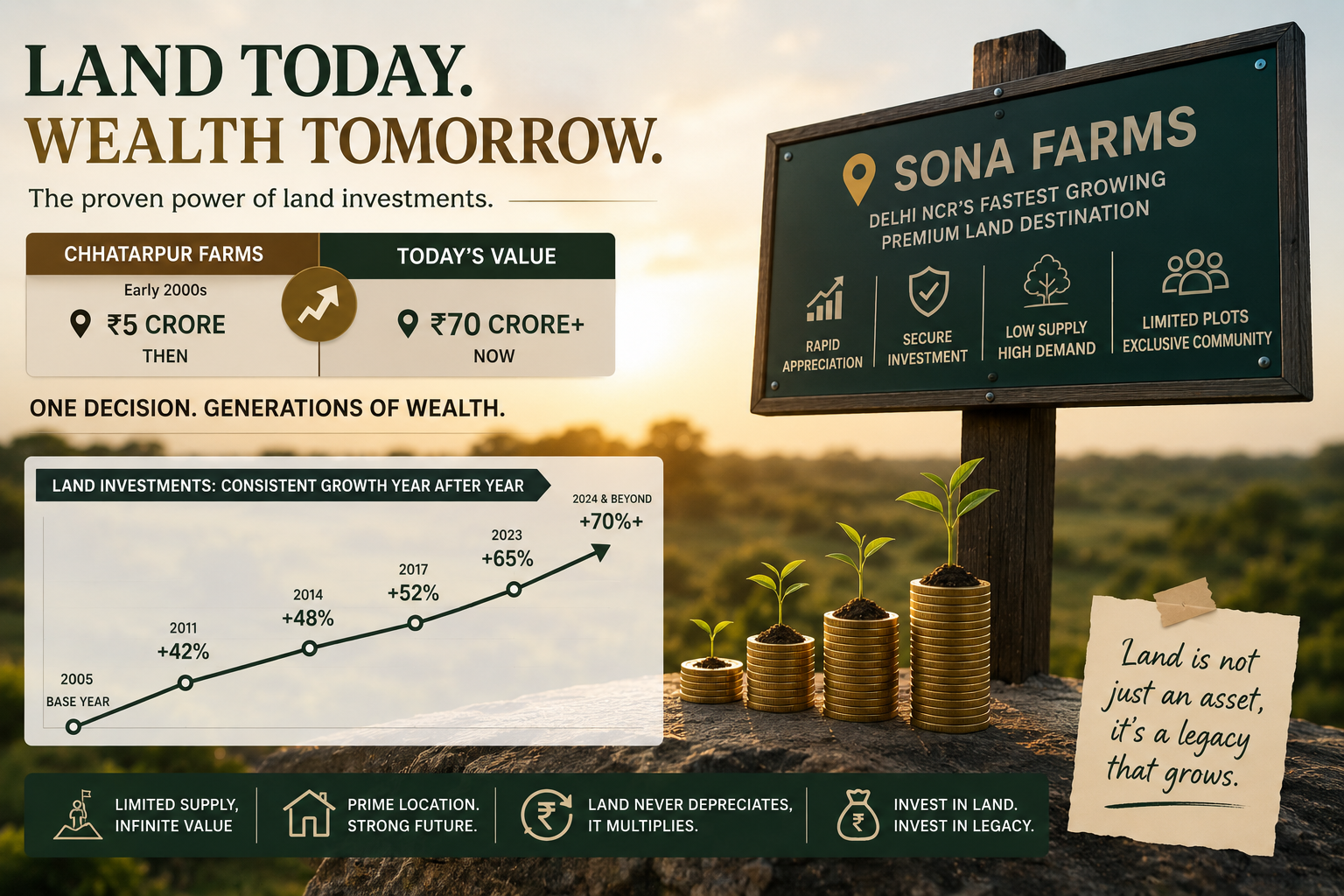
The ₹5 Crore Land Purchase That Became Worth ₹70 Crore
What the Story of DLF Chhatarpur Farms Reveals About Wealth Creation Through Premium Land Ownership
One short email. Stories you can use.
A free, occasional email from our editorial team with our latest features, explainers and reads. Unsubscribe any time — your email stays with us.