High-Street Brands Rethink Social Checkouts as British Creators Turn Merchant Hubs
As digital marketing costs climb across the domestic market, British retailers from ASOS to Marks & Spencer are weighing the conversion power of creator storefronts against the erosion of their customer data.

Inside the digital trading rooms of London’s retail core, an operational shift has moved from peripheral experimentation to line-item scrutiny. Faced with stubbornly high digital advertising costs and a domestic consumer who remains intensely price-sensitive, legacy British names are recalibrating how their products are surfaced online. Where apparel sellers once spent millions on generic social feed placements, firms like ASOS and Marks & Spencer are increasingly embedding independent creators directly into their commercial distribution chains, transforming internet tastemakers into decentralised department store concessions.
The arithmetic behind the pivot is straightforward. The cost of acquiring a purchasing customer through standard paid search and algorithmic display networks in the United Kingdom has risen steeply over the past three years. At the same time, the return on traditional television sponsorships has degraded as younger demographics migrate entirely to short-form mobile video. In response, retailers are offering affiliate rev-shares reaching as high as 12 to 15 per cent to fashion and lifestyle creators who can shepherd a transaction from discovery to checkout within a matter of taps.
The Squeeze on Traditional Acquisition
This dynamic is no longer confined to low-ticket cosmetic goods and fast fashion. Grocery and rapid-delivery providers are exploring parallel avenues. Deliveroo and Just Eat have trialled direct creator partnerships to promote niche restaurant exclusives, while Ocado and Sainsbury’s have seen third-party recipe developers drive tangible spikes in specific larder staples by linking ingredients directly to digital shopping baskets. Rather than browsing an online aisle, an expanding cohort of British consumers now arrives at an online checkout with a pre-populated basket dictated entirely by an individual social media account.
Yet the surrender of discovery to non-corporate actors introduces distinct margin liabilities. The creator model operates on a performance commission that, while nominally cheaper than speculative ad spend, acts as a structural discount on gross margin. For businesses already navigating high domestic wage floors, elevated utility bills, and persistent logistics overheads, surrendering two-digit cuts on each order tightens an already compressed operating envelope.
Custody of the Basket
For British retailers, outsourcing product discovery to independent online voices offers immediate conversion at the compounding expense of proprietary consumer custody.
The strategic rift dividing British retail leadership centres on who retains custody of the relationship. Next, long admired in the City for the mechanical efficiency of its Total Platform logistics and proprietary customer database, has taken a notoriously guarded approach to third-party social ecosystems. Its leadership has historically preferred to pull traffic into a closed, high-converting portal where basket data, repeat behaviour, and return liabilities can be comprehensively tracked and modelled internally.
ASOS, by contrast, operates in a younger, more fluid apparel segment where social commerce platforms are moving rapidly from ad brokers to sovereign transactional environments. If a consumer browses, selects, and pays for an item inside an external app via a creator’s curated showcase, the retailer risks being downgraded to a mere fulfillment utility. Moreover, the creator economy introduces operational friction to the reverse supply chain. Stylised try-on hauls and impulse-driven creator sales routinely correlate with higher return rates—a punishing cost for British retailers that have already been forced to end free postal returns in an effort to stem logistics bleed.
As the Advertising Standards Authority tightens enforcement on commercial transparency and the domestic market settles into a low-growth rhythm, the leverage is shifting. Retailers cannot afford to ignore the reach of creator-led commerce, but many now recognise that trading their native digital real estate for third-party affiliate sales could permanently dilute their direct relationships with British households.
News Legacy maintains editorial independence. Some recommendations may contain affiliate links. We earn from qualifying purchases at no additional cost to you. Read our policy.
Read Next

Is Sohna Really the Next Chhatarpur?
Three decades after Chhatarpur redrew South Delhi's map for space, privacy and exclusivity, a familiar pattern is now taking shape further south, and Sohna is where the smart money is beginning to look.
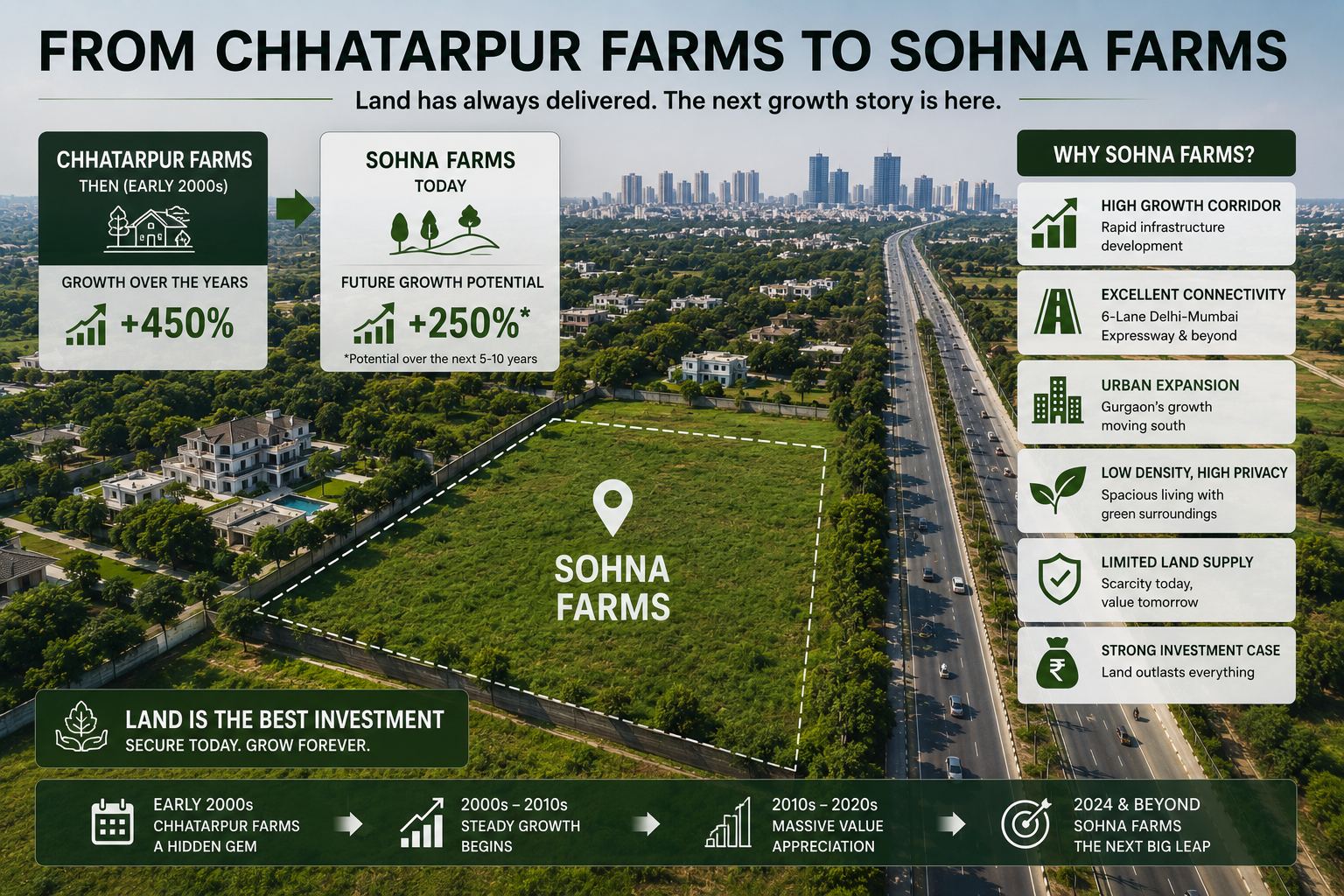
How Chhatarpur Farmhouses Created Multi-Crore Wealth for Early Buyers
What a quiet corner of South Delhi can teach investors about land, scarcity, and long-term wealth creation.

The ₹5 Crore Land Purchase That Became Worth ₹70 Crore
What the Story of DLF Chhatarpur Farms Reveals About Wealth Creation Through Premium Land Ownership
One short email. Stories you can use.
A free, occasional email from our editorial team with our latest features, explainers and reads. Unsubscribe any time — your email stays with us.