Last-Mile Limbo: European Quick Commerce Firms Eye Broader Retail Horizons Amid Profit Pressures
Europe's rapid grocery delivery pioneers, once valued in the billions, are recalibrating their strategies, moving beyond narrow niches towards a more expansive definition of urban retail logistics to survive in a capital-constrained environment.

The distinctive green and purple bags of Gorillas, once ubiquitous across Berlin, Paris, and London, have largely vanished, absorbed into the larger Turkish competitor Getir. This consolidation marks a definitive shift in Europe's quick commerce landscape, where the initial venture capital exuberance has given way to a stark reality: ultra-fast delivery of convenience goods, while popular with consumers, struggles to generate sustainable profits at scale. The remaining players, including Getir and Flink, are now navigating a fiercely competitive market, forcing them to re-evaluate their fundamental value propositions.
The early quick commerce model predicated success on high order volumes and minimal basket sizes, leveraging gig-economy labour for rapid fulfilment. This proved effective in capturing market share, but less so in achieving profitability. Operational costs, particularly for rider wages and urban micro-fulfilment centres, consistently outstripped gross margins. The strategic pivots now underway reflect a belated recognition that pure quick commerce, as initially conceived, may not be a viable long-term business model without significant evolution.
Diversifying the Basket: Beyond Groceries
Many quick commerce firms are expanding their product categories beyond perishable groceries. This involves stocking a wider array of household essentials, over-the-counter pharmaceuticals, and even small electronics. The rationale is clear: increase average order value (AOV) and reduce the frequency of low-margin, small-basket deliveries. This move brings them into more direct competition with established e-commerce giants like Amazon and national retailers such as Carrefour in France or REWE in Germany, which possess vastly superior purchasing power and logistical infrastructures.
Another emerging strategy involves leveraging existing dark store networks for purposes beyond immediate consumer delivery. Some are exploring partnerships with local businesses, offering their rapid delivery capabilities as a white-label service for restaurants or specialist shops. This 'logistics-as-a-service' model seeks to monetise their otherwise underutilised operational capacity during off-peak hours or in less dense urban zones.
The potential for integration with larger retail ecosystems is also being explored. For example, a quick commerce entity could serve as the express delivery arm for a mainstream online grocer like Ocado or even an omnichannel player such as Ahold Delhaize's Bol.com in the Netherlands. This could provide a lifeline, offering access to broader customer bases and sharing the burden of expensive last-mile operations.
Cross-Border Challenges and Opportunities
Operating across diverse European markets presents both significant challenges and opportunities. Regulatory frameworks for gig workers, vehicle types, and urban logistics vary considerably from France to Spain, and from Germany to the Nordics. This fragmentation necessitates tailored operational models and substantial legal investment. The initial pan-European ambitions of some players have been curtailed by these realities.
However, a harmonised approach to technology and supply chain management could yield efficiencies across borders. Companies like Poland's Allegro, a dominant marketplace in Central Europe, demonstrate the potential for regional consolidation and leveraging a strong local brand. Even as quick commerce firms retrench from some markets, the underlying consumer demand for convenience persists, indicating that a refined, more capital-efficient model could still find traction. Vinted, the Lithuanian second-hand fashion platform, offers a different lesson: build a strong community and scale carefully, rather than aggressively pursuing growth at all costs.
The quick commerce sector is undergoing a necessary metamorphosis, shifting from a pure convenience play to a more integrated urban logistics provider. This evolution is critical for long-term survival.
The future for Europe's quick commerce sector is unlikely to involve a return to the unfettered expansion seen in 2021. Instead, the landscape will probably be characterised by fewer, more robust players, integrated more deeply into the broader retail and logistics fabric. Profitability, rather than growth at any cost, has become the paramount objective, driving innovation in operational efficiency and a more sophisticated understanding of urban consumer demand.
News Legacy maintains editorial independence. Some recommendations may contain affiliate links. We earn from qualifying purchases at no additional cost to you. Read our policy.
Read Next

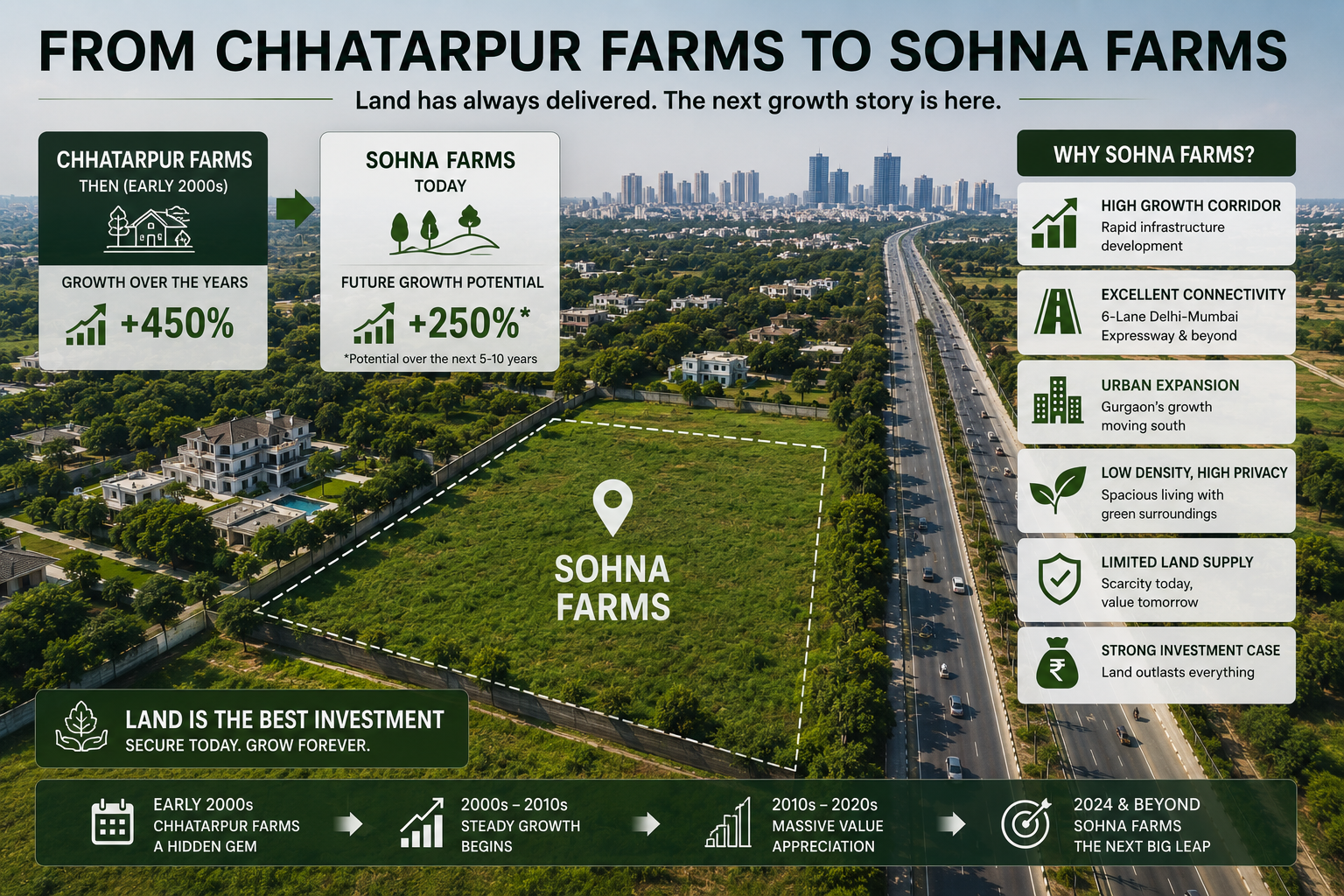
Is Sohna Really the Next Chhatarpur?
Three decades after Chhatarpur redrew South Delhi's map for space, privacy and exclusivity, a familiar pattern is now taking shape further south, and Sohna is where the smart money is beginning to look.
How Chhatarpur Farmhouses Created Multi-Crore Wealth for Early Buyers
What a quiet corner of South Delhi can teach investors about land, scarcity, and long-term wealth creation.

The ₹5 Crore Land Purchase That Became Worth ₹70 Crore
What the Story of DLF Chhatarpur Farms Reveals About Wealth Creation Through Premium Land Ownership
One short email. Stories you can use.
A free, occasional email from our editorial team with our latest features, explainers and reads. Unsubscribe any time — your email stays with us.