Last-Mile Logistical Fractures Emerge in Europe's Consolidated E-commerce
While major European e-commerce platforms expand their dominion, the underlying logistics infrastructure reveals persistent fragmentation, challenging profit margins and delivery expectations across the continent.

A parcel leaving a Zalando distribution centre near Erfurt destined for an apartment in Rome or Warsaw might traverse several national borders, each crossing representing another layer of complexity in Europe's variegated logistical landscape. Despite the aspirations for a unified digital single market, the reality of last-mile delivery across the EU remains a patchwork, marked by disparate regulations, varying labour costs, and an array of local carriers that hinder seamless, cost-effective cross-border fulfilment.
The inherent geographical and structural differences within European nations present a significant hurdle. Germany benefits from a highly developed road network and a concentrated consumer base, facilitating efficient delivery for players like Otto and a resurgent Amazon. In contrast, markets like Italy and Spain, with more dispersed populations and often challenging urban topographies, demand a more granular, often less automated, approach to final distribution. These regional distinctions directly impact the operational models and profitability of pan-European retailers.
Eastern European markets, spearheaded by platforms such as Poland's Allegro, demonstrate their own set of unique characteristics. While adoption of e-commerce is robust, particularly for household goods and electronics, the infrastructure investment in highly automated sorting centres and extensive last-mile networks has lagged behind their Western counterparts. Consequently, these regions often rely more heavily on traditional postal services or a denser network of pick-up points, adjusting consumer expectations regarding delivery speed.
The Cost of Fragmentation
The economic implications of this fragmentation are substantial. Each national boundary often necessitates a change of carrier or at least a recalibration of delivery protocols. This 'handover' process introduces friction, increases the likelihood of delays, and adds incremental costs. For a retailer like Carrefour or REWE attempting to scale their online grocery offerings across multiple EU countries, the absence of a truly unified logistical backbone means optimising a series of national solutions rather than deploying a single, efficient continental model. This often translates to higher per-package delivery costs, particularly for smaller basket sizes.
The acquisition spree in the quick commerce sector, exemplified by the rapid expansion and subsequent restructuring of entities like Gorillas and Flink, underscored the capital intensity required to build out hyper-local fulfilment networks. While the immediate promise of grocery delivery within minutes faded for many, the underlying challenge of efficient, urban last-mile logistics persists. These operations, even at reduced scale, highlight the ongoing investment needed to serve increasingly granular consumer demands, particularly in dense metropolitan areas like Paris, Berlin, or Stockholm.
The ideal of a frictionless single market for goods often collides with the practicalities of physical distribution, creating a friction tax for cross-border e-commerce.
The consumer expectation for rapid, often free, delivery continues to rise, placing further pressure on logistics providers. Platforms such as Bol.com in the Netherlands or Cdiscount in France must balance competitive delivery promises with the underlying operational expenses. The success of marketplaces like Vinted, which leverage peer-to-peer shipping often through drop-off points, demonstrates an alternative model that externalises some of these logistical complexities and associated costs to the consumer.
Technology as a Mitigator
Technological advancements, particularly in route optimisation, warehouse automation, and predictive analytics, offer some mitigation against these challenges. Robotics and AI in distribution centres can accelerate sorting and packing, while sophisticated algorithms can plan optimal delivery routes, reducing fuel consumption and driver hours. However, the initial capital expenditure for such technologies can be prohibitive for smaller players, further entrenching the advantage of larger enterprises capable of significant investment.
Ultimately, the European e-commerce landscape is moving towards further consolidation, both among platforms and the logistics providers that serve them. Increased scale allows for greater negotiation power with carriers, more efficient network planning, and the justification for substantial investments in automated infrastructure. Yet, the deep-seated national specificities in regulation, geography, and consumer behaviour ensure that a 'one-size-fits-all' logistical solution for Europe remains an elusive prospect for the foreseeable future, maintaining a complex web of national and regional approaches within a nominally unified market.
News Legacy maintains editorial independence. Some recommendations may contain affiliate links. We earn from qualifying purchases at no additional cost to you. Read our policy.
Read Next

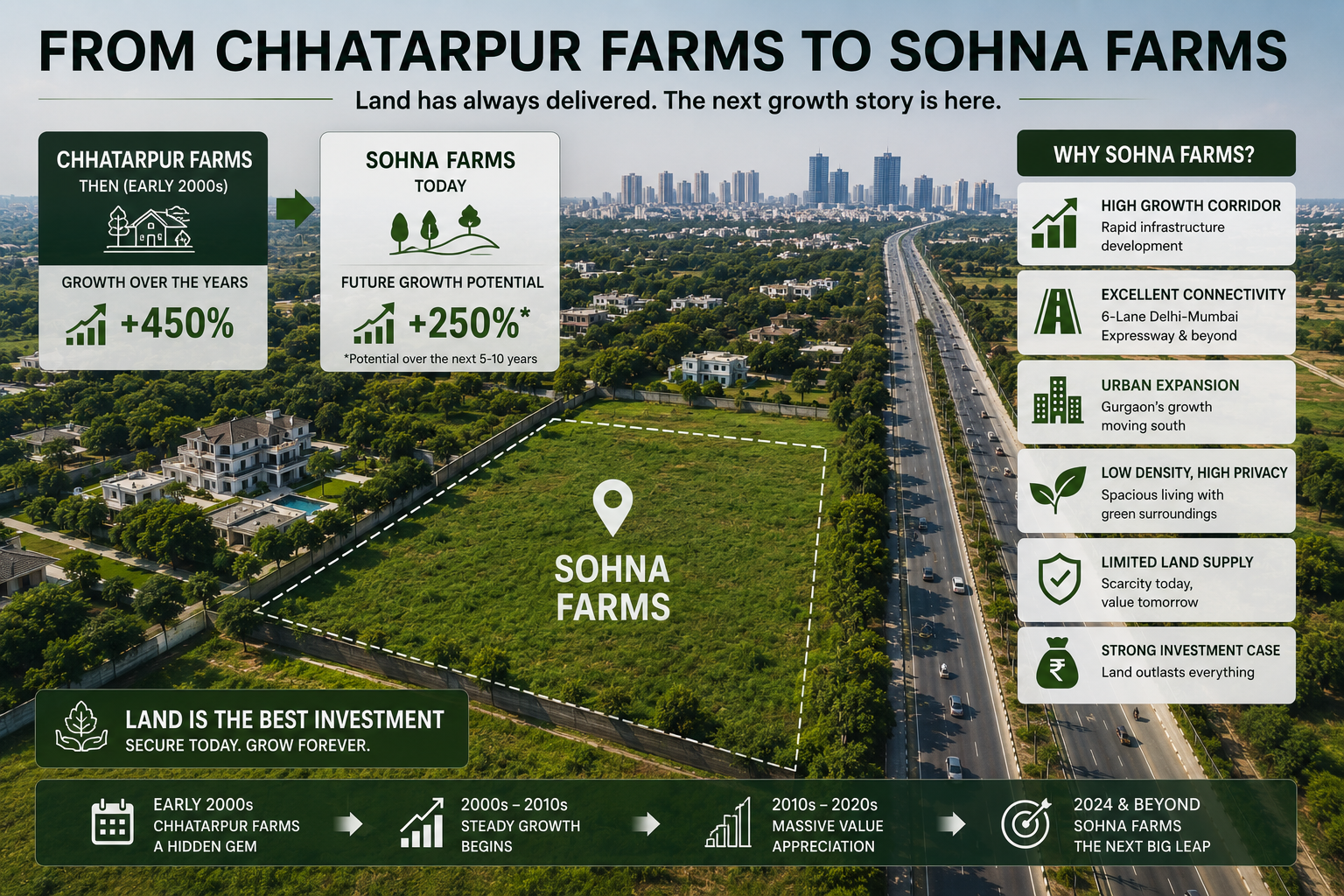
Is Sohna Really the Next Chhatarpur?
Three decades after Chhatarpur redrew South Delhi's map for space, privacy and exclusivity, a familiar pattern is now taking shape further south, and Sohna is where the smart money is beginning to look.
How Chhatarpur Farmhouses Created Multi-Crore Wealth for Early Buyers
What a quiet corner of South Delhi can teach investors about land, scarcity, and long-term wealth creation.

The ₹5 Crore Land Purchase That Became Worth ₹70 Crore
What the Story of DLF Chhatarpur Farms Reveals About Wealth Creation Through Premium Land Ownership
One short email. Stories you can use.
A free, occasional email from our editorial team with our latest features, explainers and reads. Unsubscribe any time — your email stays with us.