Ocado’s Software Strategy Faces UK Stress Test as Retailers Weigh Digital Futures
While Ocado Technology powers a global network of grocers, its domestic market presents a distinct challenge, as UK retailers navigate shifting consumer habits and intense competition for digital dominance.

The distinctive green vans of Ocado Group remain a familiar sight across UK suburbs, emblematic of a pioneering online grocery proposition. However, behind this consumer-facing operation lies Ocado Technology, a sophisticated automation and software division that has become the company's primary growth engine. This technological arm, which licenses its proprietary Smart Platform to international retailers like Kroger in the United States and Auchan in France, now faces a critical juncture in its home territory. The advanced automation and AI-driven logistics solutions developed by Ocado are increasingly scrutinised by British retailers, many of whom are grappling with the escalating costs and complexities of their own digital transformations.
The UK retail sector, characterised by its mature e-commerce penetration and the competitive pressures exerted by established giants such as Tesco and Sainsbury's, presents a unique proving ground. These traditional grocers have invested heavily in their own online infrastructure, often relying on store-pick models or a hybrid approach. The question for many is whether Ocado's capital-intensive, highly automated customer fulfilment centres (CFCs) represent the indispensable future, or merely one expensive option among several evolving digital strategies.
The Appeal of Automation in a Tight Market
The promise of Ocado's technology is clear: reduced labour costs, improved picking accuracy, and enhanced delivery efficiency. For retailers operating on historically thin margins, particularly in grocery, these efficiencies can translate into significant competitive advantages. However, the upfront investment required to build a single CFC, potentially running into hundreds of millions of pounds, represents a substantial barrier to entry. This investment risk is being weighed against the continued expansion of quick commerce players like Deliveroo and Just Eat, which are redefining customer expectations for immediacy, albeit with a different economic model and product offering.
Data from the British Retail Consortium consistently highlights the growing proportion of non-food retail sales occurring online, now often exceeding 35%. While grocery lags slightly, its digital growth trajectory remains robust. This persistent shift compels retailers like Marks & Spencer and Next to evaluate every aspect of their supply chain and fulfilment, seeking efficiencies that can sustain profitability in an omnichannel world. For non-food categories, where batch picking and centralised distribution have long been standard, the move towards robotics and advanced warehouse management systems is less about novelty and more about scaling existing best practices.
Ocado's platform offers not just hardware, but an end-to-end software suite that manages inventory, forecasting, and last-mile delivery. This integrated approach can be attractive to retailers seeking to avoid the complexities of stitching together disparate systems. One industry analyst observes that: "The real power lies not just in the robots, but in the orchestrating intelligence that optimises everything from warehouse flow to delivery route planning."
The challenge for many UK retailers is determining if the bespoke, large-scale automation offered by Ocado provides a sufficiently superior return on investment compared to more agile, lower-capex solutions, especially in a market where real estate is at a premium and consumer demands are hyper-local.
Diversifying Digital Investments
Beyond grocery, the applicability of Ocado's specific CFC model to fashion or general merchandise retailers like ASOS remains less obvious. While ASOS operates highly automated distribution centres, its model relies more on volume processing of smaller, varied items rather than the complex, temperature-controlled environment required for groceries. These companies are exploring automated guided vehicles (AGVs) and robotic picking solutions, but often from a wider array of specialist providers, tailored to their specific product SKUs and order profiles.
Ultimately, the success of Ocado's software division in the UK will hinge on its ability to demonstrate compelling long-term value against a backdrop of evolving consumer behaviour and increasingly diverse technological alternatives. The high street continues to transform, and the digital infrastructure retailers choose today will dictate their competitive standing for the foreseeable future. The UK market, with its demanding consumers and innovative competitors, offers a crucial test case for the global scalability of Ocado's vision.
News Legacy maintains editorial independence. Some recommendations may contain affiliate links. We earn from qualifying purchases at no additional cost to you. Read our policy.
Read Next

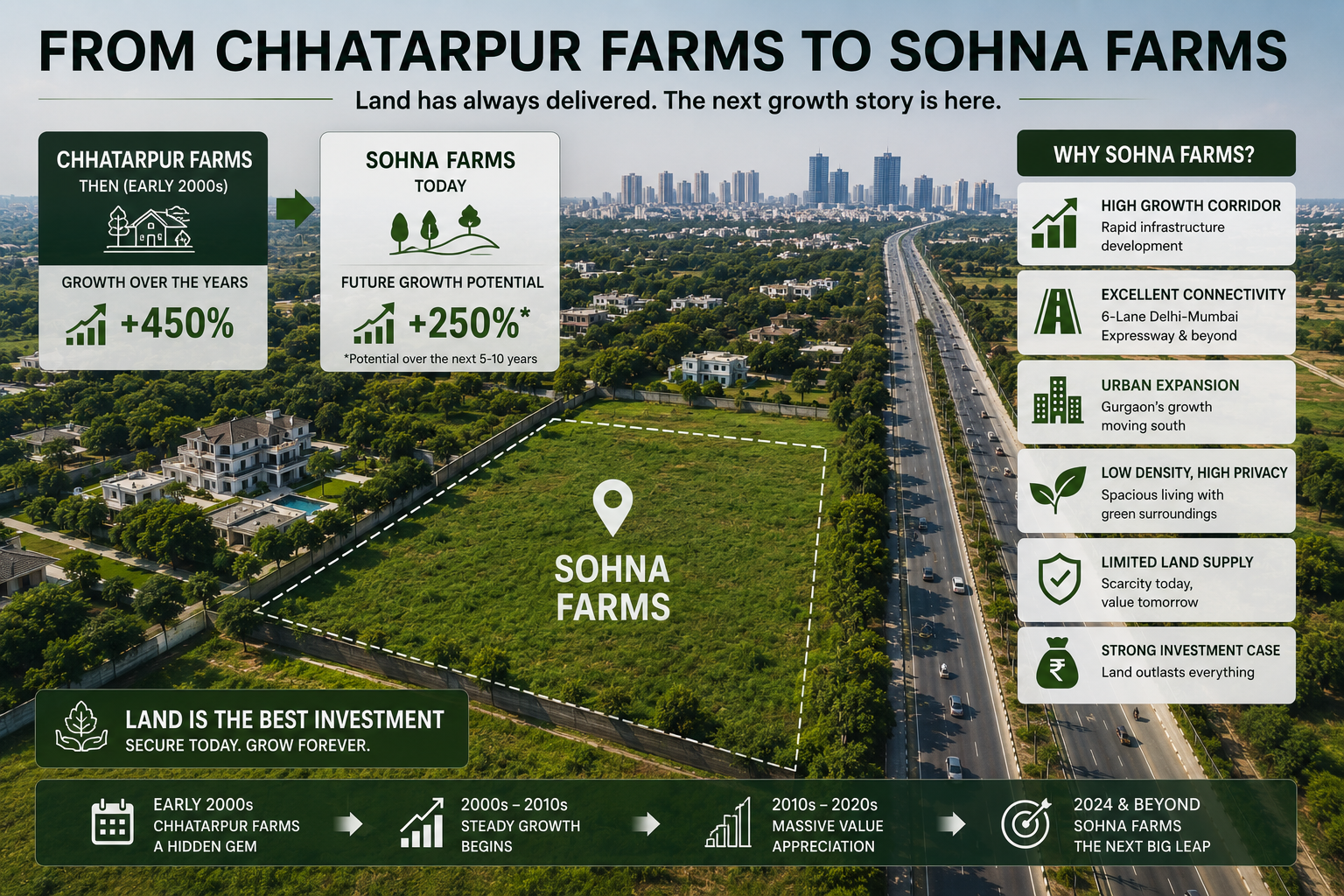
Is Sohna Really the Next Chhatarpur?
Three decades after Chhatarpur redrew South Delhi's map for space, privacy and exclusivity, a familiar pattern is now taking shape further south, and Sohna is where the smart money is beginning to look.
How Chhatarpur Farmhouses Created Multi-Crore Wealth for Early Buyers
What a quiet corner of South Delhi can teach investors about land, scarcity, and long-term wealth creation.

The ₹5 Crore Land Purchase That Became Worth ₹70 Crore
What the Story of DLF Chhatarpur Farms Reveals About Wealth Creation Through Premium Land Ownership
One short email. Stories you can use.
A free, occasional email from our editorial team with our latest features, explainers and reads. Unsubscribe any time — your email stays with us.