Quick Commerce Consolidates: The European Battle for Last-Mile Profitability
European quick commerce players are shifting from rapid expansion to a strategic focus on sustainable unit economics, signalling a maturation of a sector once defined by venture capital injections and aggressive market entry.

A Flink delivery rider navigating the narrow cobbled streets of a central Berlin district exemplifies the operational reality of quick commerce in Europe. While the scene has become ubiquitous in major urban centres, the underlying business model is undergoing significant re-evaluation. The industry's initial land-grab phase, characterised by substantial capital outlays and an emphasis on market share over immediate profit, is giving way to a more disciplined approach focused on supply chain efficiency, customer retention, and targeted geographical expansion. This transformation is pivotal for the sector's long-term viability across the diverse European landscape.
The early narrative saw companies like Gorillas and Flink raise hundreds of millions in euros, promising groceries delivered in under 15 minutes. This attracted intense competition and a price war, often subsidised by venture funding. However, the subsequent market corrections, including Gorillas' acquisition by Getir and other players either scaling back or exiting markets, underscore the inherent challenges of achieving profitability in a highly fragmented, low-margin business. The cost of 'dark stores', rider wages, and inventory management proved difficult to offset with typical order values.
Traditional retailers and established e-commerce platforms are also asserting their presence, leveraging existing infrastructure and brand recognition. Carrefour and REWE, for instance, have integrated rapid delivery options, often through partnerships or proprietary services, utilising their extensive physical store networks as micro-fulfilment centres. This hybrid model offers a significant advantage, reducing the capital expenditure associated with dedicated dark stores and allowing for a more flexible inventory strategy.
Operational Realities and Market Specialisation
The quick commerce landscape is not uniform across Europe. In Germany, where consumer preference for discounters like Lidl remains strong, the pressure on pricing is particularly acute. French consumers, conversely, exhibit a strong loyalty to traditional hypermarkets, making market penetration for pure-play quick commerce more challenging. Southern Europe, including Spain and Italy, presents opportunities in denser urban environments but also higher operational costs in certain city centres due to traffic and infrastructure. The Nordics, with their generally higher labour costs, necessitate a greater emphasis on automation and higher average order values to reach profitability.
Companies are increasingly specialising their offerings or targeting specific demographics. Vinted, while not a quick commerce pure-play, demonstrates the success of a niche, high-engagement model within the broader European e-commerce space, focusing on second-hand fashion. Other platforms, like Bol.com in the Netherlands and Belgium, and Allegro in Poland, dominate their respective general merchandise e-commerce markets, and while not focused on rapid grocery delivery, they influence consumer expectations for delivery speed in other categories.
The quick commerce sector's evolution hinges on its ability to convince consumers that speed justifies a premium, or to radically innovate its cost structure.
Cross-border dynamics also play a role, albeit a complex one. While some larger players might harbour pan-European ambitions, the reality of varying regulatory frameworks, labour laws, and consumer habits often makes a 'one-size-fits-all' approach impractical. Cdiscount in France, for example, primarily serves its domestic market, while Zalando, a fashion giant, has successfully scaled across multiple European countries by meticulously adapting its logistics and marketing to local preferences.
The focus for the immediate future appears to be on optimising existing operations rather than aggressive new market entries. This includes leveraging data analytics to predict demand more accurately, reducing waste, and improving rider efficiency through sophisticated routing algorithms. Some operators are also exploring subscription models or minimum order values to enhance unit economics and customer lifetime value.
The trajectory of quick commerce in Europe suggests a move away from the speculative growth model of its inception towards a more pragmatic, financially disciplined phase. Success will likely be defined by a delicate balance of speed, cost efficiency, and customer value proposition, rather than simply by the velocity of capital deployment.
News Legacy maintains editorial independence. Some recommendations may contain affiliate links. We earn from qualifying purchases at no additional cost to you. Read our policy.
Read Next

Is Sohna Really the Next Chhatarpur?
Three decades after Chhatarpur redrew South Delhi's map for space, privacy and exclusivity, a familiar pattern is now taking shape further south, and Sohna is where the smart money is beginning to look.
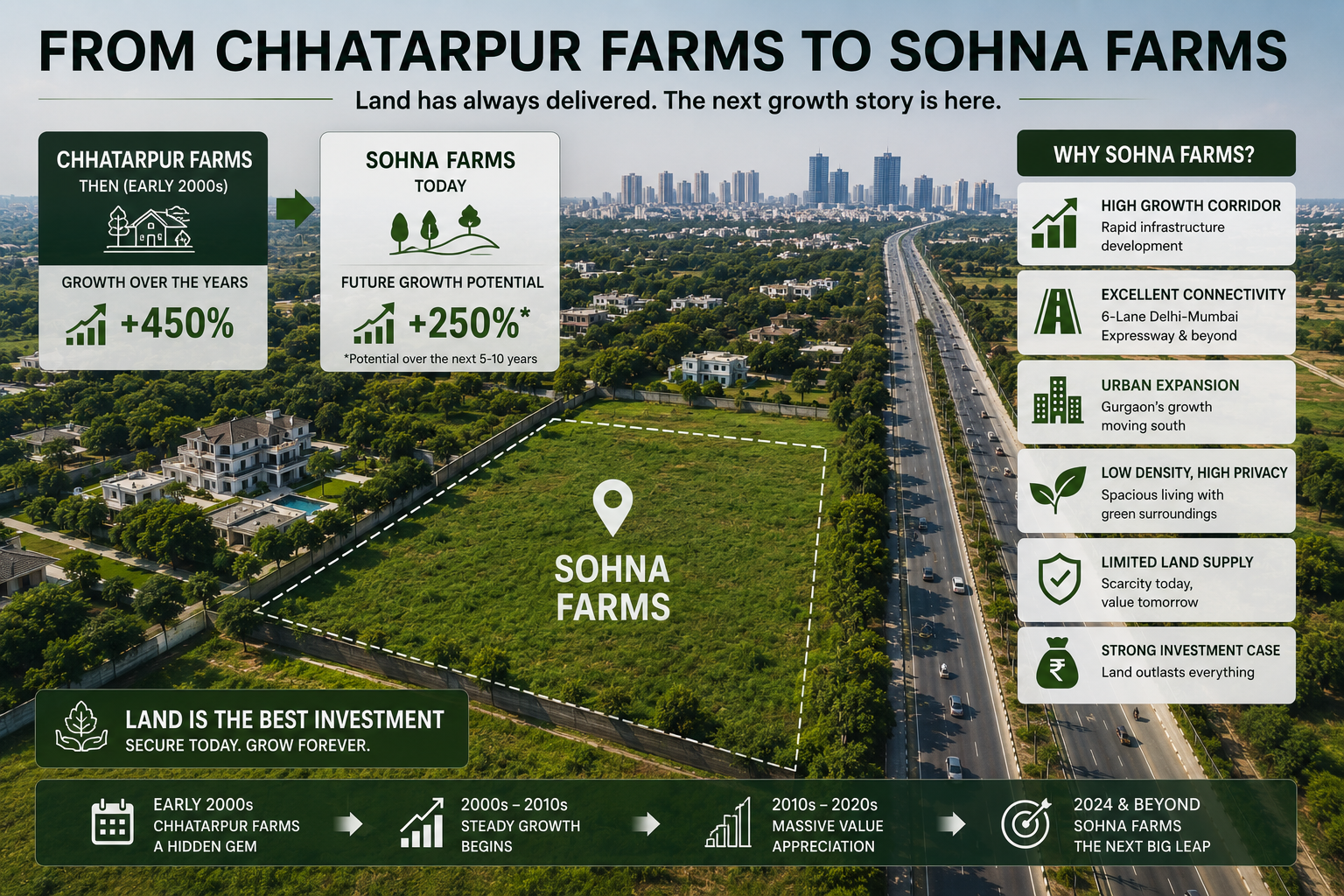
How Chhatarpur Farmhouses Created Multi-Crore Wealth for Early Buyers
What a quiet corner of South Delhi can teach investors about land, scarcity, and long-term wealth creation.
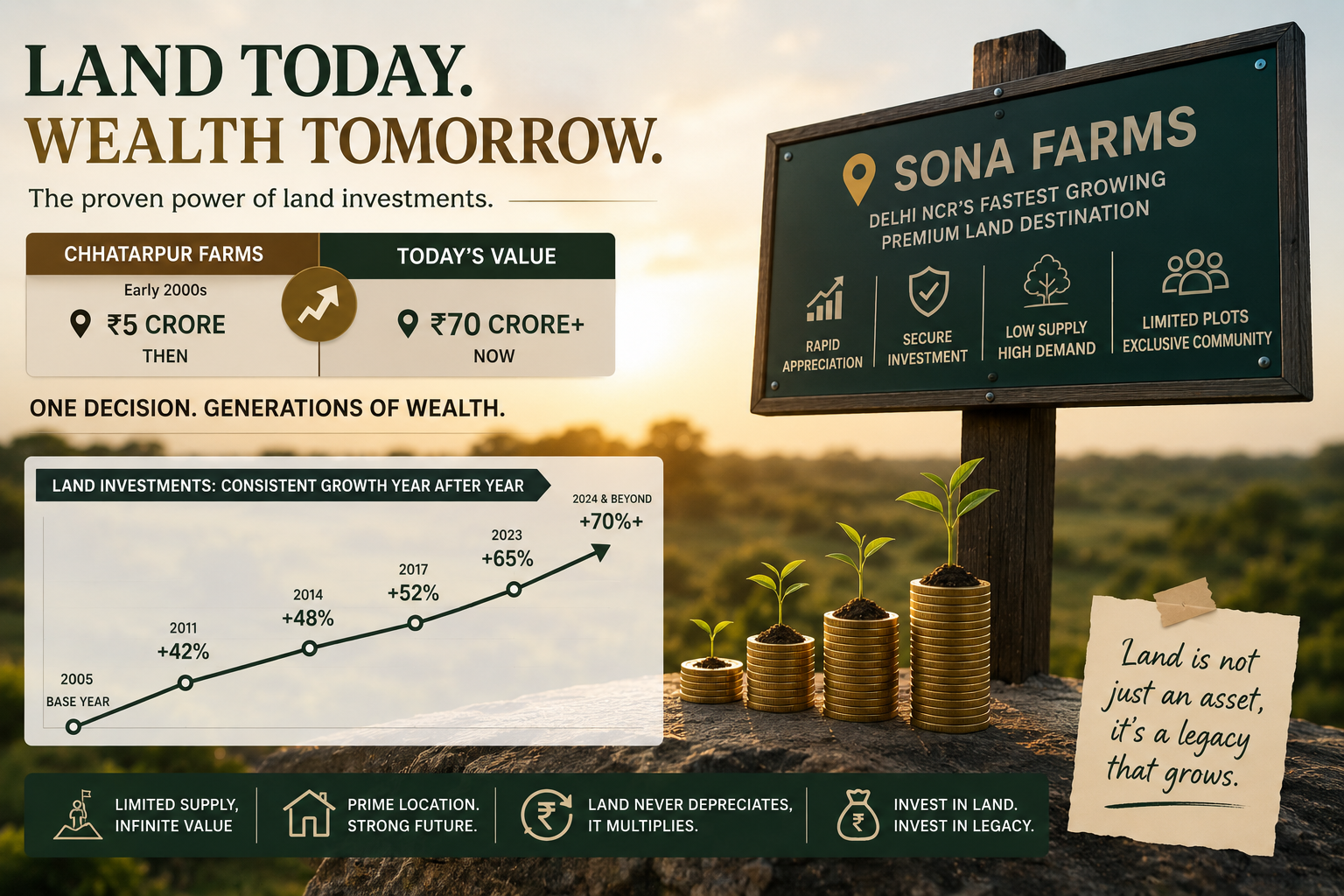
The ₹5 Crore Land Purchase That Became Worth ₹70 Crore
What the Story of DLF Chhatarpur Farms Reveals About Wealth Creation Through Premium Land Ownership
One short email. Stories you can use.
A free, occasional email from our editorial team with our latest features, explainers and reads. Unsubscribe any time — your email stays with us.