Retailers Grapple With the Attention Deficit Economy
Merchants are navigating a fragmented consumer landscape, where purchasing decisions are increasingly swayed by fleeting digital interactions rather than traditional brand loyalty, presenting a significant operational and strategic challenge.

At a recent investor call, Walmart executives detailed their aggressive push into digital content and influencer marketing, a stark contrast to the Bentonville giant's long-standing focus on everyday low prices and efficient logistics. This strategic pivot underscores a broader reality confronting American retailers: the battle for consumer dollars is now inextricably linked to the battle for consumer attention, a resource proving ever scarcer and more volatile.
The proliferation of platforms like TikTok Shop and Amazon Live, alongside the established presence of social media giants, has created an ecosystem where discovery and purchase can occur almost simultaneously. This shift compels retailers to evolve beyond static product listings, demanding dynamic, engaging content that captures interest within seconds. The imperative is not merely to be seen, but to interrupt the scroll, offering an experience compelling enough to convert. One industry analyst observes that the digital consumer's journey has become less a funnel and more a pinball machine, with purchase intent bouncing between myriad stimuli.
The Fickle Scroll: Attention as a Commodity
Consumer attention, once a largely passive byproduct of advertising reach, has become an active commodity. Platforms such as TikTok incentivize creators to produce short-form video content that, by design, cycles rapidly, continuously refreshing the user's feed. For retailers, this means traditional marketing campaigns with extended lifecycles are often insufficient. Success hinges on a perpetual content machine, churning out material that resonates culturally and captures trending narratives, even if those trends are ephemeral. Brands are now expected to be 'always on,' not just in their availability but in their cultural relevance.
This environment disadvantages companies relying solely on established brand equity or conventional search optimization. A small, unknown direct-to-consumer brand can achieve viral success overnight if its product or message aligns with a fleeting digital trend, momentarily eclipsing the marketing might of legacy players. Instacart, for example, is exploring how shoppable recipes and integrated cooking content can keep users engaged beyond the immediate grocery list, demonstrating the cross-platform content imperative.
The economic implications are substantial. Marketing budgets are shifting dramatically, with a greater allocation towards influencer partnerships, content creation teams, and performance marketing on social platforms. Retailers are also investing in sophisticated analytics to track the often-circuitous path from initial digital exposure to final purchase, a process that frequently involves multiple touchpoints across various applications. The cost of acquiring new customers, particularly in competitive sectors like apparel and beauty, continues to climb as brands vie for finite attention.
Operational Strain and Strategic Shifts
Operational models are also under pressure. The demand for immediate gratification, fueled by rapid content cycles, translates into heightened expectations for fulfillment speed. Companies like Amazon, with their extensive logistics networks, are well-positioned, yet even they are constantly refining same-day and next-day delivery options. Other retailers, including Target and Costco, are experimenting with in-store pickup and local delivery partnerships to bridge the gap between digital discovery and physical acquisition. The supply chain must now respond not just to predictable demand patterns but also to sudden, unpredictable spikes driven by viral content.
The challenge for retailers is no longer just selling products, but orchestrating compelling narratives that can pierce through the cacophony of digital noise.
Shopify, a platform empowering millions of merchants, has observed this shift firsthand. Their tools now integrate more deeply with social commerce channels, providing businesses with the infrastructure to sell directly within TikTok or Instagram feeds. This integration signifies a recognition that the point of sale is no longer fixed; it resides wherever the consumer's attention happens to be focused. This distributed commerce model demands robust inventory management and flexible fulfillment capabilities to prevent stockouts and manage returns efficiently, irrespective of the initial sales channel.
The sustained fragmentation of consumer attention indicates a long-term trend, rather than a transient phase. Retailers that can adapt their strategies to consistently engage, entertain, and convert audiences within this attention-scarce economy will likely secure a competitive advantage in the coming years. Those who rely on outdated models risk being overshadowed in an increasingly noisy marketplace.
News Legacy maintains editorial independence. Some recommendations may contain affiliate links. We earn from qualifying purchases at no additional cost to you. Read our policy.
Read Next

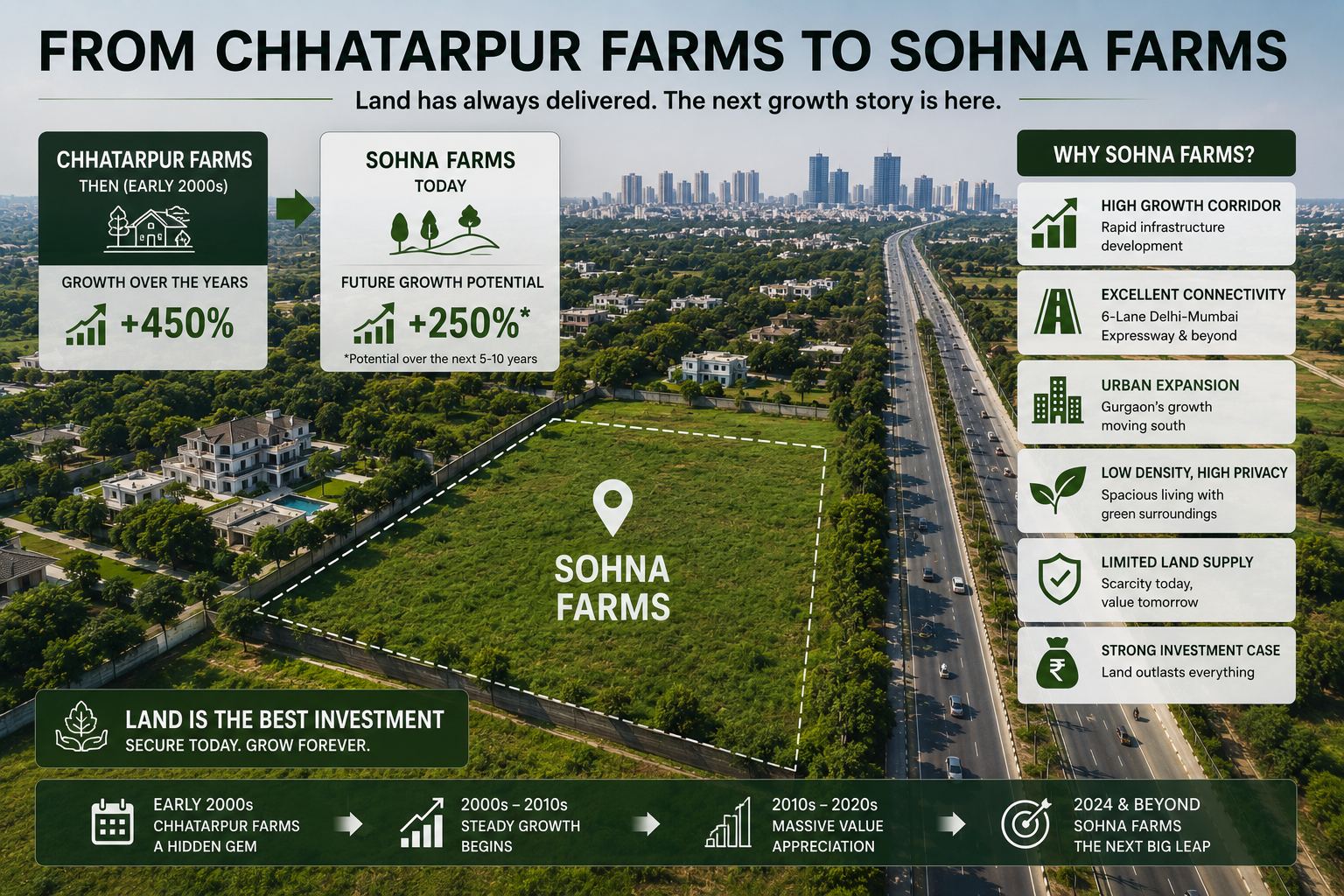
Is Sohna Really the Next Chhatarpur?
Three decades after Chhatarpur redrew South Delhi's map for space, privacy and exclusivity, a familiar pattern is now taking shape further south, and Sohna is where the smart money is beginning to look.
How Chhatarpur Farmhouses Created Multi-Crore Wealth for Early Buyers
What a quiet corner of South Delhi can teach investors about land, scarcity, and long-term wealth creation.

The ₹5 Crore Land Purchase That Became Worth ₹70 Crore
What the Story of DLF Chhatarpur Farms Reveals About Wealth Creation Through Premium Land Ownership
One short email. Stories you can use.
A free, occasional email from our editorial team with our latest features, explainers and reads. Unsubscribe any time — your email stays with us.