Shopify's Reckoning: Vertical Integration and the Imperative of Cost Control
The digital commerce platform, once known for enabling entrepreneurial agility, faces renewed pressure to prove its long-term viability against retail behemoths as the economics of online selling continue to shift.

Even as TikTok Shop aggressively courts American sellers with steep discounts and promotional financing, Shopify, the incumbent enabler of independent online stores, grapples with a foundational challenge: balancing merchant empowerment with operational efficiency. The company's recent strategic adjustments, including the divestment of its logistics arm to Flexport and a renewed focus on its core software offerings, signal a broader recalibration toward profitability in a market increasingly dominated by scale and vertical integration. This shift reflects a maturing digital retail landscape where capital efficiency, not just growth at all costs, dictates long-term survival.
For years, Shopify championed an ecosystem where direct-to-consumer (DTC) brands could flourish, unburdened by the complexities of enterprise-level infrastructure. This approach resonated deeply with a generation of entrepreneurs, fostering the growth of countless small and medium-sized businesses. However, the operational reality of managing inventory, fulfillment, and last-mile delivery proved more challenging than many anticipated. The capital intensity of building out a comprehensive logistics network, as Amazon demonstrated early on, requires immense investment and expertise, often exceeding the capabilities or strategic priorities of a pure software provider.
The Fading Promise of Pure Play DTC
The initial allure of the DTC model for many brands was the promise of direct customer relationships and higher margins, bypassing traditional wholesale channels. Yet, the cost of customer acquisition, driven by escalating digital advertising rates on platforms like Meta and Google, began eroding these theoretical advantages. Brands discovered that building a sustainable customer base required not just a compelling product, but also sophisticated marketing, efficient fulfillment, and robust customer service – functions that often required substantial investment in technology and personnel. The 'pure play' DTC era, characterized by lean operations and outsourced infrastructure, reached its limitations.
Walmart and Target, while slower to adapt to e-commerce initially, have leveraged their vast physical footprints and existing supply chains to offer competitive fulfillment options, including buy-online-pickup-in-store (BOPIS) and rapid local delivery. Their inherent scale allows for cost efficiencies in warehousing and transportation that smaller, independent merchants struggle to replicate. Amazon, by contrast, continues to refine its fulfillment network, introducing innovations like drone delivery and highly automated sortation centers, setting an increasingly high bar for delivery speed and cost.
Shopify's decision to offload its logistics operations, despite its earlier ambitions to rival Amazon's fulfillment capabilities, was a pragmatic acknowledgment of these market realities. The move allows the company to concentrate on what it does best: providing a robust, scalable e-commerce platform. This strategic pivot aims to enhance financial performance by divesting capital-intensive assets and focusing on high-margin software subscriptions, mirroring a similar trajectory seen in other platform businesses that have refined their core value proposition.
The ongoing consolidation in digital retail suggests that scale and efficiency will increasingly separate enduring enterprises from ephemeral ventures.
Reshaping the Merchant Value Proposition
Indeed, the evolving landscape compels Shopify to redefine its value proposition for merchants. Simply offering a storefront and payment processing is no longer sufficient when behemoths like Amazon and TikTok are integrating discovery, transaction, and fulfillment into single, seamless experiences. Shopify must articulate how its ecosystem can still provide a competitive edge, perhaps by emphasizing unique customization options, superior analytics tools, or specialized integrations that foster deeper brand-customer connections impossible on third-party marketplaces.
For instance, Instacart's recent diversification beyond grocery delivery into broader retail categories indicates a move towards becoming a comprehensive fulfillment and logistics partner for a wider array of businesses. This encroaches on territory Shopify might have considered its own for independent retailers. The pressure mounts on Shopify to justify its share of merchant expenditure, particularly as retailers scrutinize every operational cost in a climate of persistent inflation and consumer caution. The company’s ability to offer tangible pathways to profitability for its merchants, beyond just facilitating sales, will be paramount.
The coming years will test Shopify's ability to navigate this competitive terrain. Its core platform remains powerful, but strategic alliances and a relentless focus on merchant success metrics, such as improved conversion rates and reduced operational overhead, will be critical. The path forward involves a delicate balance: continuing to empower a federated merchant ecosystem while simultaneously providing the tools and insights necessary to compete effectively against increasingly vertically integrated market leaders.
News Legacy maintains editorial independence. Some recommendations may contain affiliate links. We earn from qualifying purchases at no additional cost to you. Read our policy.
Read Next

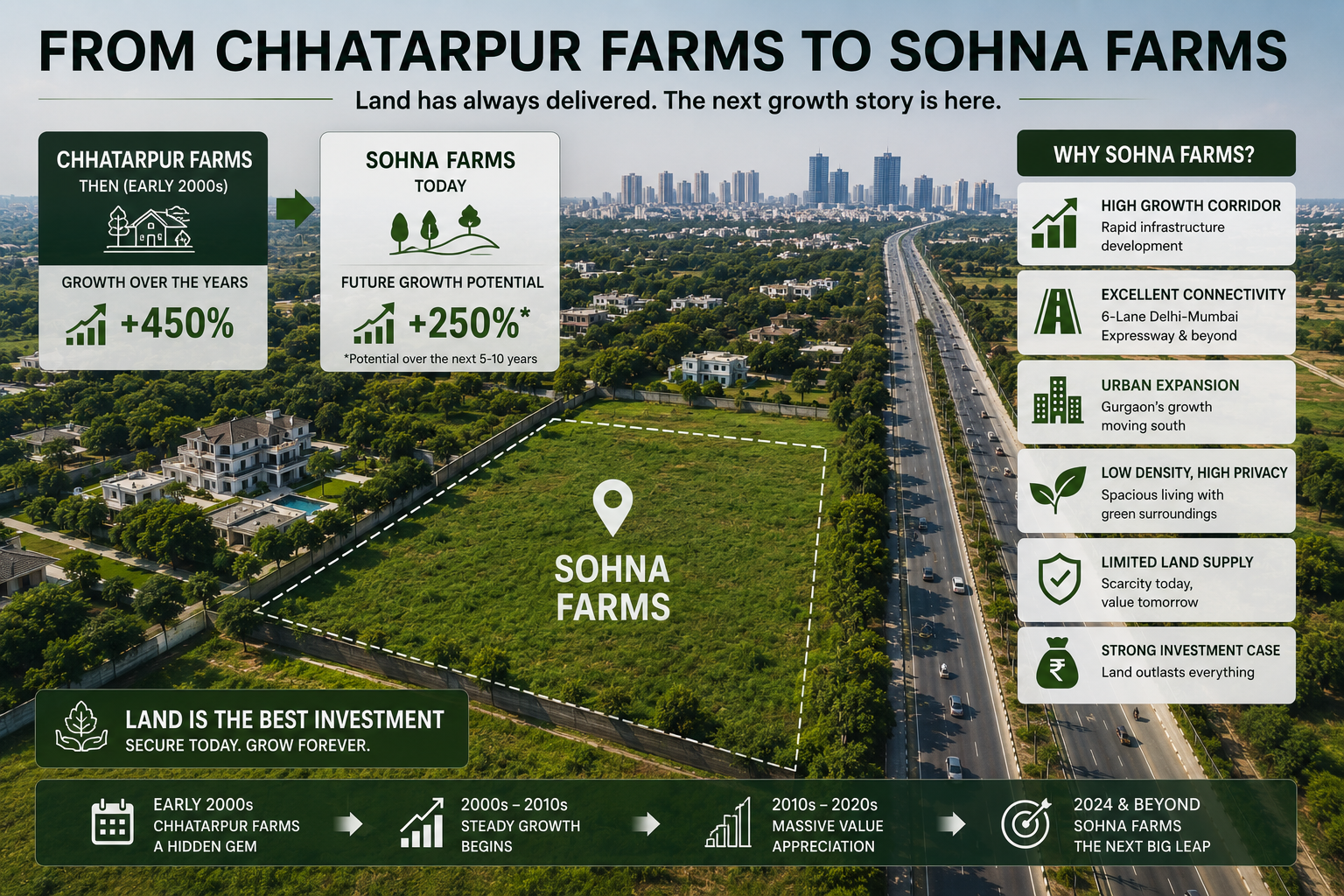
Is Sohna Really the Next Chhatarpur?
Three decades after Chhatarpur redrew South Delhi's map for space, privacy and exclusivity, a familiar pattern is now taking shape further south, and Sohna is where the smart money is beginning to look.
How Chhatarpur Farmhouses Created Multi-Crore Wealth for Early Buyers
What a quiet corner of South Delhi can teach investors about land, scarcity, and long-term wealth creation.

The ₹5 Crore Land Purchase That Became Worth ₹70 Crore
What the Story of DLF Chhatarpur Farms Reveals About Wealth Creation Through Premium Land Ownership
One short email. Stories you can use.
A free, occasional email from our editorial team with our latest features, explainers and reads. Unsubscribe any time — your email stays with us.