Shrinking Baskets: UK Consumers Rethink The Weekly Shop Amid Economic Strain
Persistent inflationary pressures and a stagnant economic outlook are fundamentally altering long-held British grocery shopping habits, forcing retailers to adapt their strategies for a more discerning and cost-conscious consumer.

At a Tesco Extra in south London, the once ubiquitous large trolley is increasingly giving way to smaller baskets and quick self-checkout transactions. This observable shift reflects a broader behavioural transformation across the UK's grocery landscape, where households are strategically adjusting their purchasing patterns in response to sustained economic headwinds. The traditional 'big weekly shop' is being disaggregated, with implications for everything from supply chain logistics to marketing campaigns.
Data from market research firms like Kantar consistently shows a marked increase in shopping frequency but a corresponding reduction in basket size. Consumers are now more inclined to visit multiple stores, often discounters, tocherry-pick promotions and reduce their overall expenditure on essentials. This 'promotional promiscuity' erodes brand loyalty and places greater pressure on established supermarkets like Sainsbury's and Morrisons to compete on price, a domain where they historically struggled against players such as Aldi and Lidl.
The Scramble for Value
The competitive response from incumbent players has been multifaceted. Tesco, for instance, has ramped up its 'Clubcard Prices' initiatives, offering personalised discounts that aim to retain customers within its ecosystem. Similarly, Sainsbury's 'Nectar Prices' operate on a similar principle, attempting to create perceived value and exclusive benefits for its loyalty programme members. These strategies are a direct acknowledgement that the era of passively capturing market share through convenience and breadth of assortment alone has receded.
Beyond loyalty schemes, the wider retail sector is witnessing a recalibration of product offerings. Own-brand labels, once seen as a budget alternative, are now being actively promoted as comparable in quality to national brands but at a lower price point. Marks & Spencer, known for its premium food offering, has even expanded its 'Remarksable Value' range, directly addressing the need for more affordable options without compromising its brand promise entirely. This signals a fundamental shift in how even premium retailers perceive their core market.
The food delivery sector, exemplified by Deliveroo and Just Eat, is also feeling the pinch. While convenience remains a selling point, the elevated costs associated with delivery fees and meal mark-ups are increasingly being scrutinised by consumers with tighter budgets. Reports suggest a deceleration in volume growth for these platforms, particularly in higher-frequency, lower-value orders, as households opt for home cooking or direct supermarket trips.
Digital Adaptation and Supply Chain Strain
The fragmentation of the shopping basket necessitates a more agile response from retailers, both in-store and online, demanding flexible inventory management and targeted promotional strategies.
Ocado, a pioneer in online grocery, faces the dual challenge of high operating costs and increased price sensitivity. While its automation provides efficiency, the underlying economics of delivering smaller, more frequent orders can be less favourable than large weekly drops. The ongoing refinement of its routing algorithms and warehouse picking strategies becomes crucial in maintaining profitability while catering to evolving consumer preferences.
This seismic shift isn't limited to food. Fashion retailers like ASOS and Next are grappling with consumers delaying discretionary purchases. While online convenience remains important, the emphasis repeatedly falls on value proposition and enduring quality rather than transient trends. Returns data, a key metric for online fashion, provides a direct insight into the purchasing confidence of a consumer base now less willing to take risks on non-essential items.
The cumulative effect of these changes suggests a new equilibrium in British retail. Retailers are no longer merely adapting to a temporary dip; they are restructuring for a market where consumer frugality is a persistent force, fundamentally altering purchasing dynamics and demanding continuous innovation in value delivery.
News Legacy maintains editorial independence. Some recommendations may contain affiliate links. We earn from qualifying purchases at no additional cost to you. Read our policy.
Read Next

Is Sohna Really the Next Chhatarpur?
Three decades after Chhatarpur redrew South Delhi's map for space, privacy and exclusivity, a familiar pattern is now taking shape further south, and Sohna is where the smart money is beginning to look.
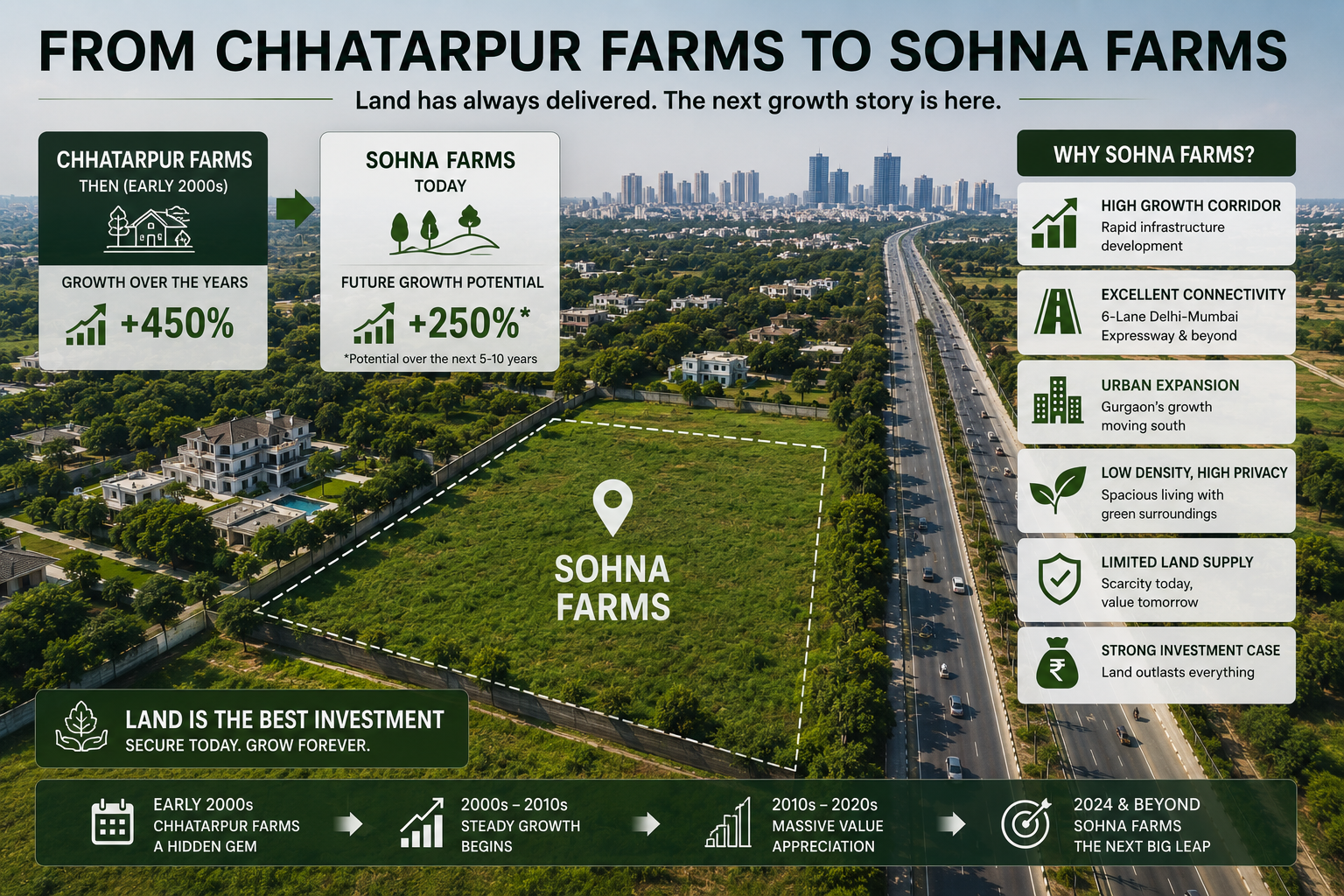
How Chhatarpur Farmhouses Created Multi-Crore Wealth for Early Buyers
What a quiet corner of South Delhi can teach investors about land, scarcity, and long-term wealth creation.

The ₹5 Crore Land Purchase That Became Worth ₹70 Crore
What the Story of DLF Chhatarpur Farms Reveals About Wealth Creation Through Premium Land Ownership
One short email. Stories you can use.
A free, occasional email from our editorial team with our latest features, explainers and reads. Unsubscribe any time — your email stays with us.