The Algorithmic High Street: How AI is Reshaping British Retail's Next Decade
Artificial intelligence is quietly recalibrating the operational mechanics and customer interfaces of the UK's retail sector. Its pervasive influence promises to redefine market competitiveness and consumer expectations across the nation.

A casual observer strolling through a Tesco Extra might notice little outward change, yet beneath the surface, sophisticated algorithms are orchestrating stock levels, optimising delivery routes for its grocery vans, and personalising offers through the Clubcard app. This silent revolution, driven by artificial intelligence, extends far beyond the supermarket aisles, fundamentally altering how British retailers operate, compete, and engage with their clientele. The coming decade will see these digital undercurrents coalesce into tangible shifts across the retail landscape, impacting everything from profit margins to employment structures.
For years, companies like Ocado have championed automation, establishing highly mechanised warehouses where robots fulfil orders with remarkable efficiency, thereby reducing labour costs and speeding up dispatch times. This model, once an outlier, is becoming an increasingly compelling blueprint for larger grocers facing thin margins and persistent supply chain pressures. Sainsbury's, for instance, has been investing heavily in its digital infrastructure, aiming to leverage data analytics for more precise forecasting and tailored promotions, moving beyond the simple collection of transaction data.
The Data Dividend: Personalisation and Prediction
The true power of AI in retail lies in its capacity for prediction and personalisation. Consider the online fashion giant ASOS, which uses AI to analyse trends, recommend outfits, and even predict returns, allowing it to fine-tune inventory and reduce waste. Marks & Spencer is similarly deploying advanced analytics to better understand consumer preferences, influencing everything from clothing lines to food hall selections. This granular insight allows for more effective marketing spend and improved customer satisfaction, potentially converting a browsing visitor into a loyal patron. For UK consumers, this translates into more relevant product suggestions and a smoother shopping experience, but also raises questions about data privacy and algorithmic bias.
The sheer volume of data generated by digital interactions provides an unparalleled opportunity for retailers. Every click, every purchase, every abandoned basket contributes to a rich dataset that, when processed by AI, can reveal patterns imperceptible to human analysis. This informs dynamic pricing strategies, optimises store layouts, and even dictates the placement of promotions. It is a competitive arena where the ability to interpret and act upon data rapidly will distinguish market leaders from those struggling to adapt.
The strategic deployment of artificial intelligence is no longer a futuristic consideration for UK retail; it is a current imperative for maintaining market relevance and securing growth against a backdrop of evolving consumer demands.
Delivery aggregators such as Deliveroo and Just Eat, now ubiquitous in British cities, rely entirely on AI for their operational efficacy. Algorithms manage rider allocation, route optimisation, and even predict demand spikes in specific areas, ensuring timely delivery and efficient resource utilisation. These systems are constantly learning, adapting to traffic conditions, weather changes, and even peak meal times, demonstrating AI's capacity for real-time operational excellence. Their models are being scrutinised by traditional retailers looking to enhance their last-mile delivery capabilities without the significant capital outlay of building proprietary networks.
Reshaping the Workforce and Investment Priorities
The increased automation and algorithmic decision-making will inevitably reshape the retail workforce. While some roles, particularly in logistics and customer service, may see decreased human involvement, new demands will emerge for data scientists, AI ethicists, and specialists in machine learning model development and maintenance. Companies like Next, known for its robust supply chain and online presence, are already navigating these shifts, investing in technology platforms that streamline operations and enhance the customer journey while retraining staff for more digitally-focused roles.
Investment in AI infrastructure and talent is becoming a significant line item for major British retailers. The capital expenditure required can be substantial, favouring larger players with deeper pockets. Smaller businesses face the challenge of accessing affordable, scalable AI solutions, often turning to off-the-shelf software or cloud-based services. The gap between those who can effectively deploy AI and those who cannot may widen, impacting market concentration over the next five to ten years. Sterling’s stability and the broader economic climate will influence the pace and scale of these technological adoptions, as significant investment decisions are often contingent on projected returns and economic confidence.
The transition is not without its complexities; integrating new AI systems with legacy IT infrastructure, ensuring data security and compliance with regulations like GDPR, and fostering a culture of algorithmic literacy among employees are considerable hurdles. However, the potential for efficiency gains, enhanced customer experiences, and ultimately, improved profitability, ensures that AI's ascent in British commerce is less a trend and more a fundamental, irreversible transformation.
News Legacy maintains editorial independence. Some recommendations may contain affiliate links. We earn from qualifying purchases at no additional cost to you. Read our policy.
Read Next

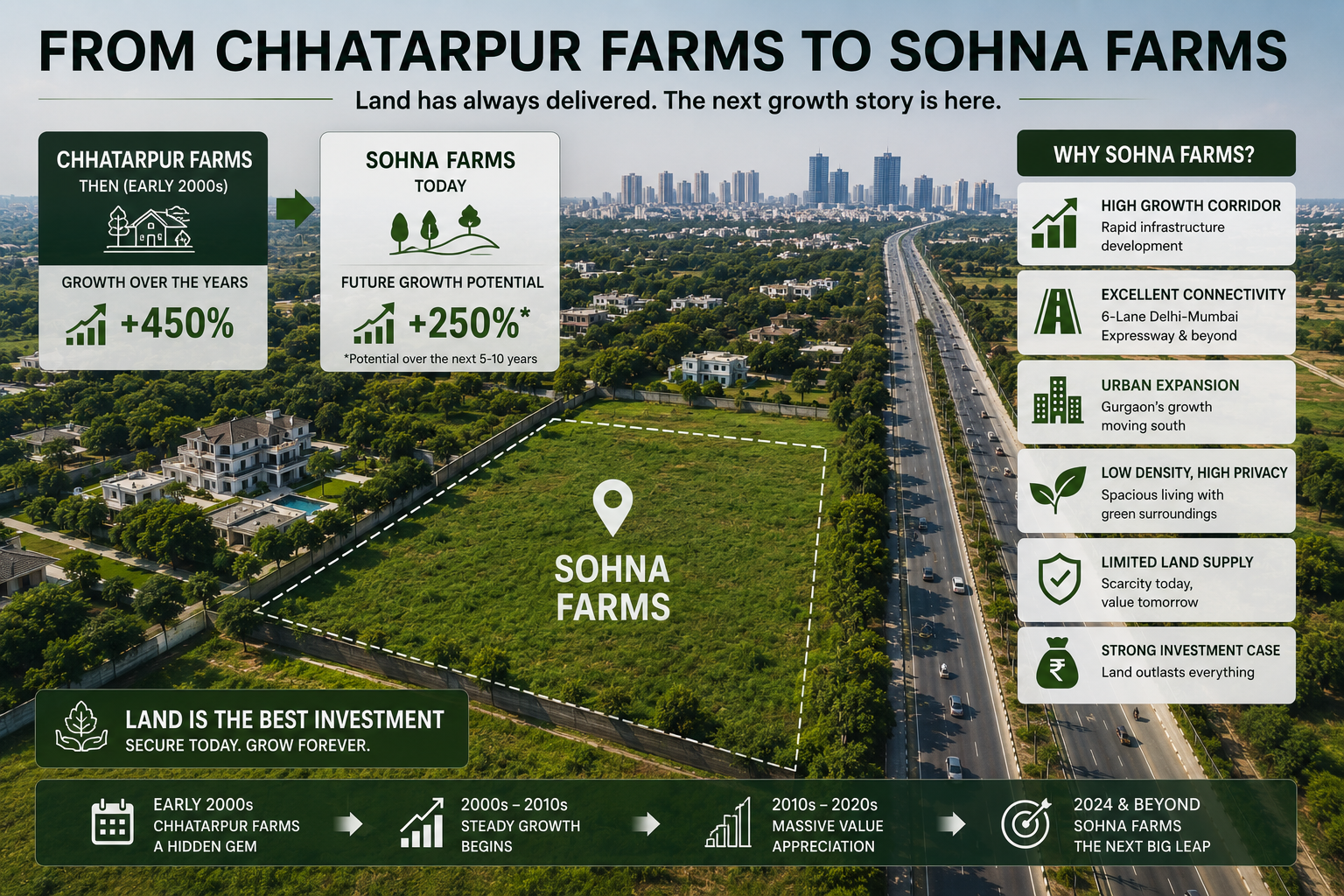
Is Sohna Really the Next Chhatarpur?
Three decades after Chhatarpur redrew South Delhi's map for space, privacy and exclusivity, a familiar pattern is now taking shape further south, and Sohna is where the smart money is beginning to look.
How Chhatarpur Farmhouses Created Multi-Crore Wealth for Early Buyers
What a quiet corner of South Delhi can teach investors about land, scarcity, and long-term wealth creation.

The ₹5 Crore Land Purchase That Became Worth ₹70 Crore
What the Story of DLF Chhatarpur Farms Reveals About Wealth Creation Through Premium Land Ownership
One short email. Stories you can use.
A free, occasional email from our editorial team with our latest features, explainers and reads. Unsubscribe any time — your email stays with us.