The Barbell Pantry: How American Shoppers Split Their Budgets Between Bulk Warehouses and Social Feeds
As inflation normalizes at an elevated baseline, U.S. households are cutting the retail middle out of their spending habits, pairing defensive wholesale bulk with algorithmic micro-splurges.

Inside a suburban Costco depot outside Chicago, flatbed carts navigate stacks of Kirkland paper towels and twenty-pound sacks of flour with mechanical efficiency. Yet three miles away, the same suburban consumer who spent two hundred dollars on shelf-stable staples routinely finishes the evening authorizing an unplanned forty-dollar checkout on TikTok Shop or Amazon for a viral kitchen gadget. The American shopping basket has stopped functioning as a unified hierarchy of brand preferences; instead, it has fractured into an aggressive barbell formation.
This divergence carries severe implications for general merchandisers that built their fortunes on the middle of the retail floor. For decades, players like Target depended on suburban shoppers wandering out of the grocery aisles to pick up seasonal throw pillows, branded denim, and cosmetics. That casual cross-aisle transference is breaking down as consumers compartmentalize their budgets into two non-overlapping buckets: extreme logistical austerity on recurring necessities, and highly friction-free novelty on mobile devices.
Defensive Volume and the Private-Label Sanctuary
The defensive side of this equation is anchored by wholesale clubs and dominant mass discounters. Costco continues to report North American membership renewal rates hovering near ninety-three percent, while Walmart has steadily expanded its market share among households earning more than one hundred thousand dollars annually. These affluent converts did not retreat to mass discount floors merely to survive acute price surges; having adopted private-label pantry goods and bulk pack sizes during the height of recent inflation, they have elected to remain there.
Even digital grocery aggregators reflect this defensive posture. On platforms like Instacart, transaction sizes for baseline produce and household chemicals show heightened price elasticity, with shoppers systematically substituting premium packaged goods for store brands whenever price differentials exceed single-digit percentages. The search for value has ceased to be an emergency measure and has hardened into standard operating procedure for the American middle class.
The modern shopper does not cut spending symmetrically across categories; they economize ruthlessly on the predictable to preserve a surplus for the unexpected.
The Frictionless Drain of Algorithmic Impulse
What makes the current climate distinct from previous post-inflationary periods is where the extracted savings migrate. Historically, belt-tightening on staples translated into broader liquidity preservation in savings accounts. Today, those liberated dollars are frequently consumed by algorithmic discovery engines that convert social attention into immediate sales before financial second thoughts can intervene.
TikTok Shop and Amazon have mastered this rapid conversion cycle. By embedding payment credentials and fulfillment networks directly beneath short-form video content, social commerce bypasses the deliberation inherent in a physical shopping excursion. These transactions are typically modest—often falling between fifteen and thirty-five dollars—making them psychologically invisible against the monthly household ledger, even as their aggregate frequency offsets the very savings engineered at the warehouse club.
This structural sorting leaves mid-tier retail in an increasingly precarious posture. If consumer capital flows exclusively toward pallet-sized replenishment at one extreme and impulse-driven direct-to-consumer parcels at the other, the traditional department store and the suburban strip-mall anchor lose their foundational utility. Merchants must now determine whether they are low-margin fulfillment utilities or high-velocity content networks; attempting to occupy the comfortable middle ground is yielding diminishing returns.
News Legacy maintains editorial independence. Some recommendations may contain affiliate links. We earn from qualifying purchases at no additional cost to you. Read our policy.
Read Next
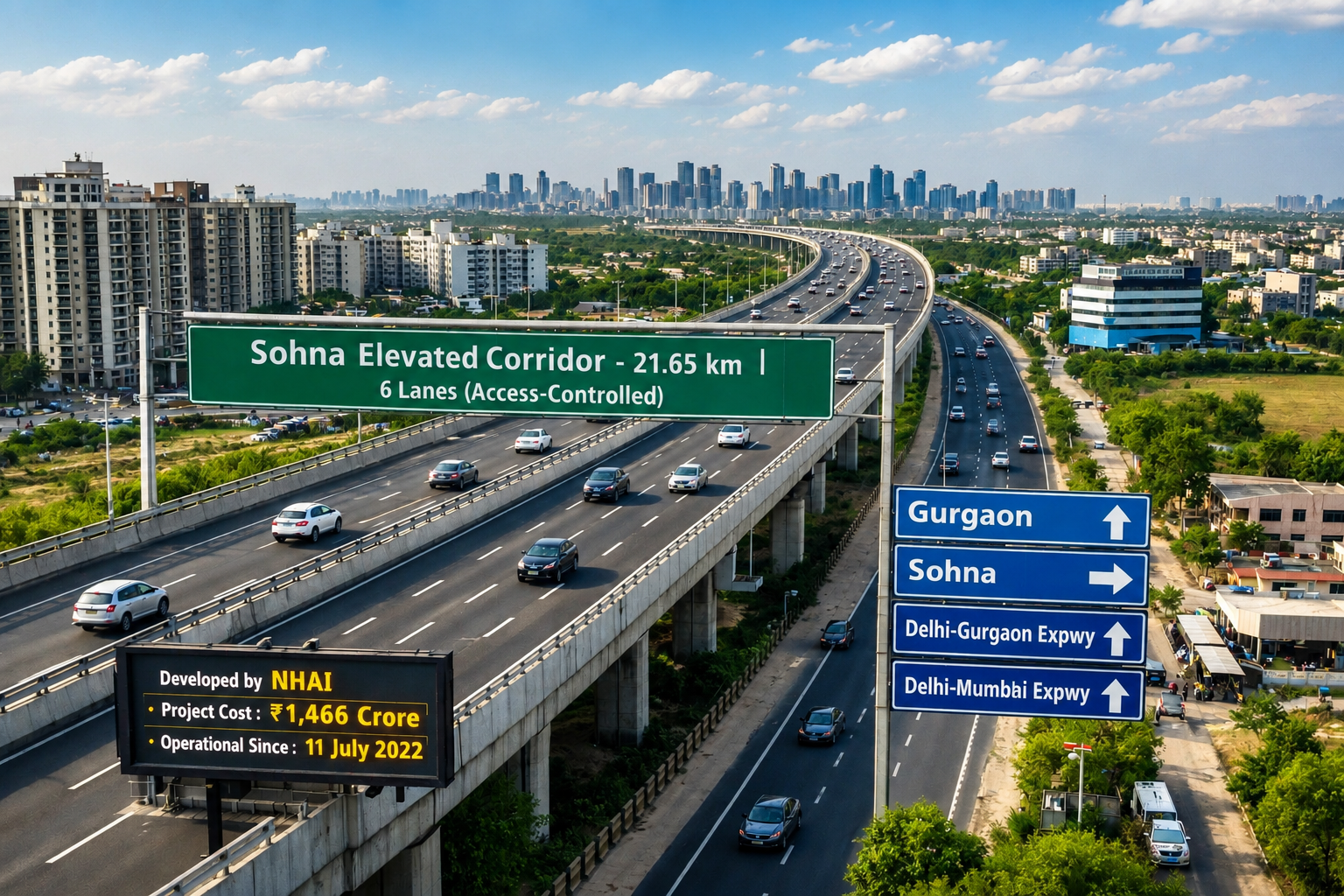
Is Sohna Really the Next Chhatarpur?
Three decades after Chhatarpur redrew South Delhi's map for space, privacy and exclusivity, a familiar pattern is now taking shape further south, and Sohna is where the smart money is beginning to look.
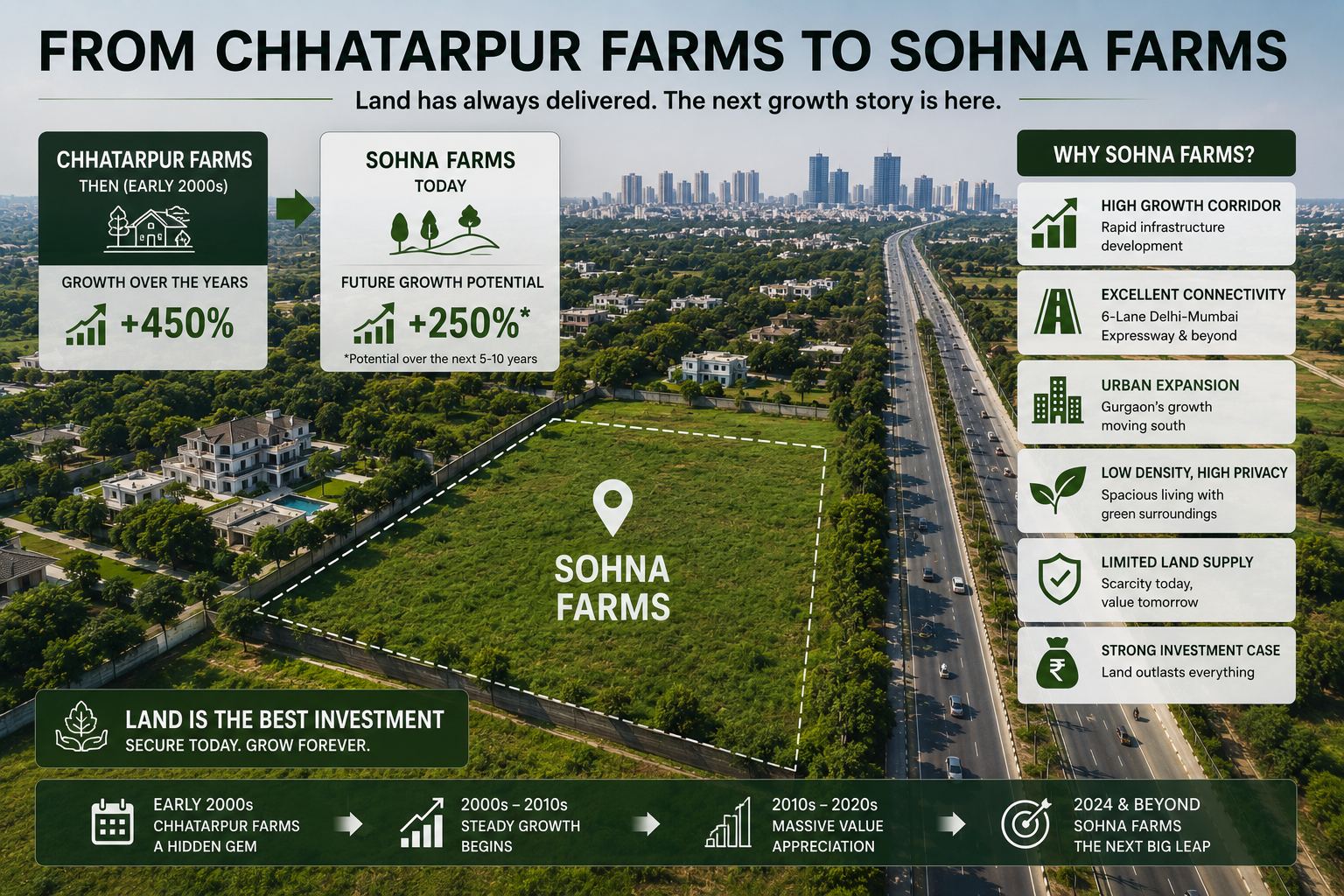
How Chhatarpur Farmhouses Created Multi-Crore Wealth for Early Buyers
What a quiet corner of South Delhi can teach investors about land, scarcity, and long-term wealth creation.
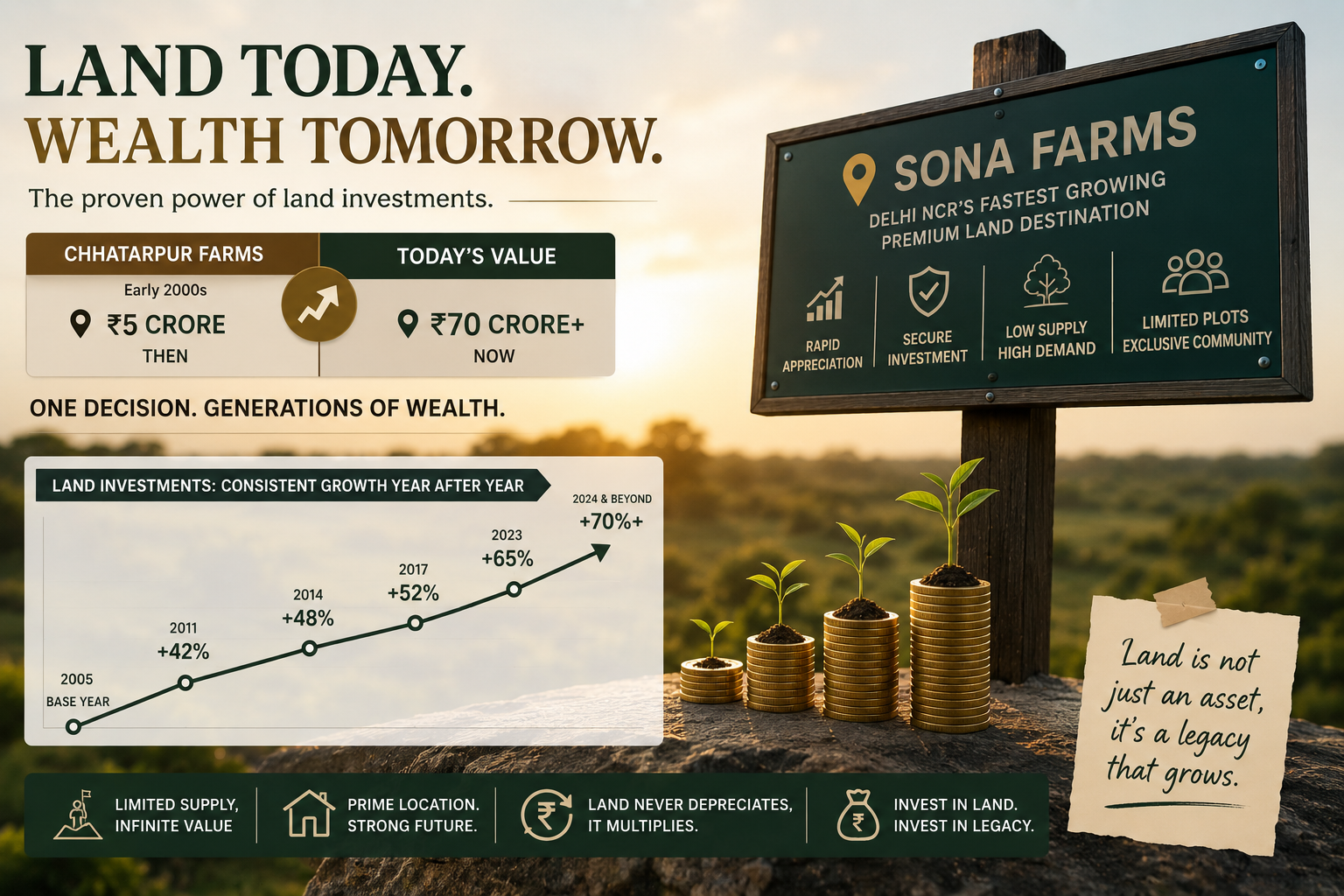
The ₹5 Crore Land Purchase That Became Worth ₹70 Crore
What the Story of DLF Chhatarpur Farms Reveals About Wealth Creation Through Premium Land Ownership
One short email. Stories you can use.
A free, occasional email from our editorial team with our latest features, explainers and reads. Unsubscribe any time — your email stays with us.