The Continental Gridlock: Why Europe’s Retail Giants Are Abandoning the Doorstep
Escalating transport levies and fragmented national networks are forcing continental merchants to trade doorstep delivery for dense locker grids and cross-border regional hubs.

At the intermodal freight terminal outside Poznań, articulated lorries carrying apparel destined for Berlin and Paris queue alongside intermodal rail containers bound for Rotterdam. For years, the strategic priority for operators such as Zalando and Poland’s Allegro was straightforward: reduce transit times between low-cost Central European fulfillment centres and Western consumers down to a uniform forty-eight hours. Today, that calculus has abruptly inverted. With European diesel costs volatile, carbon pricing expanding into road freight, and haulage wages rising across Poland and the Baltic states, speed has surrendered to density.
The continental fulfillment model is undergoing its most consequential restructuring since the introduction of single-market customs harmonisation. Unlike the United States, where transcontinental logistics is dominated by a duopoly of private carriers operating alongside Amazon’s captive air and ground network, Europe remains a patchwork of national postal champions and regional couriers. A parcel travelling from Lille to Milan still encounters differing road-tolling regimes, disparate cabotage restrictions, and vastly divergent last-mile cost profiles.
The border penalty and the locker pivot
To counteract these border penalties, platforms are systematically retreating from home delivery. The pioneer of this model, Allegro, transformed Poland into the world’s most locker-dense retail market, demonstrating that automated parcel machines (APMs) can lower last-mile delivery costs by roughly thirty to forty per cent compared to private doorstep couriers. Now, that blueprint is spreading westwards across France, Spain, and Italy, where urban congestion charges and vehicle emissions rules make domestic courier routes increasingly untenable.
The economics of European delivery are no longer defined by how fast a van can reach a front door, but by whether the recipient is willing to walk three hundred metres to clear the parcel from a steel locker.
Even dedicated fashion and marketplace operators are building alternative distribution rails. Vinted, the second-hand clothing platform founded in Vilnius, has spun out its own logistics division, Vinted Go, to construct a dedicated locker-to-locker grid across major French and Benelux metropolitan areas. Rather than purchasing standard domestic parcel services from La Poste or bpost at standard tariffs, Vinted aggregates its own cross-border volumes, leveraging secondary transport hubs to bypass traditional sorting centres altogether. In the low countries, Bol has similarly deepened its integration with pick-up points across the Netherlands and Flanders to defend gross margins against inbound Asian cross-border shipping.
The death of speed for speed’s sake
This emphasis on capital discipline stands in stark contrast to the speculative excesses of the recent past. The collapse and absorption of instant-delivery startups—typified by the winding down of the Gorillas network and the consolidation of survivors like Flink—demonstrated the financial impossibility of thirty-minute urban courier models lacking dense basket sizes. Traditional grocers have taken note. Instead of pouring capital into dedicated rapid-delivery dark stores, Carrefour in France and REWE in Germany are directing capital expenditure towards automated picking systems installed directly within regional distribution centres or back-rooms of large hypermarkets.
At the same time, return logistics is being aggressively re-engineered. Under mounting pressure from proposed European Union textile waste rules and the cost of capital, fashion merchants can no longer afford to subsidise the continent's habitual return rates, which regularly exceed fifty per cent in Germany and the Nordics. Platforms like Zalando are now imposing return fees or establishing regional return-grading facilities in Spain and Poland, eliminating the costly deadhead mileage of trucking unsold garments back to central fulfillment points in the Rhine-Ruhr.
What is emerging is a two-tier logistics geography. The era of frictionless, continent-wide delivery funded by retail equity has closed. In its place, European commerce is settling into a more rigid, regionalised apparatus—one where profit margins will belong to the operators who best balance shared locker density against the unyielding cost of cross-border transport.
News Legacy maintains editorial independence. Some recommendations may contain affiliate links. We earn from qualifying purchases at no additional cost to you. Read our policy.
Read Next
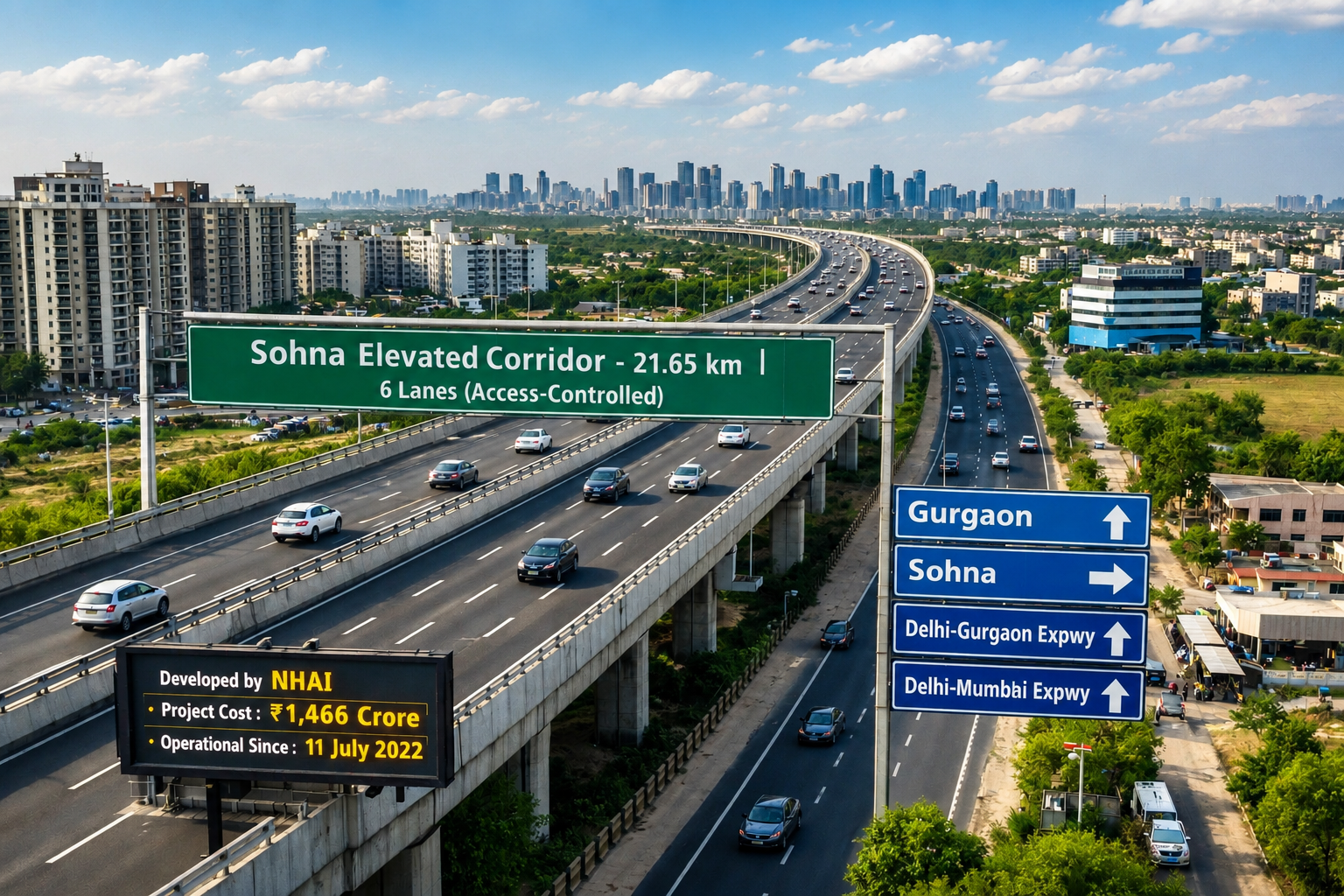
Is Sohna Really the Next Chhatarpur?
Three decades after Chhatarpur redrew South Delhi's map for space, privacy and exclusivity, a familiar pattern is now taking shape further south, and Sohna is where the smart money is beginning to look.

How Chhatarpur Farmhouses Created Multi-Crore Wealth for Early Buyers
What a quiet corner of South Delhi can teach investors about land, scarcity, and long-term wealth creation.

The ₹5 Crore Land Purchase That Became Worth ₹70 Crore
What the Story of DLF Chhatarpur Farms Reveals About Wealth Creation Through Premium Land Ownership
One short email. Stories you can use.
A free, occasional email from our editorial team with our latest features, explainers and reads. Unsubscribe any time — your email stays with us.