The Disinflationary Edge: Quick Commerce Retrenches, Retailers Adapt
European quick commerce's initial land grab, fueled by venture capital and pandemic-era demand, has given way to a more pragmatic pursuit of profitability. Established retailers and agile pure-plays now vie for market share, sharpening their operational models in a challenging economic climate.

The brightly coloured electric mopeds, once a ubiquitous sight navigating the cobbled streets of Berlin and Amsterdam, have become less numerous. Companies like Flink, a German quick commerce pure-play, have significantly scaled back their ambitions, consolidating warehouses and refining delivery zones. This contraction, a clear departure from the aggressive expansion witnessed between 2020 and 2022, reflects a broader recalibration within the European quick commerce sector as funding tightens and customer acquisition costs rise.
Initial forecasts for rapid, multi-billion-euro dominance have been tempered by the realities of thin margins and intense competition. While the promise of instant gratification remains potent, especially for urban consumers, the unit economics proved challenging for many early entrants. European consumers, facing persistent inflation and energy price volatility, are increasingly discerning, prioritising value and reliability over sheer speed at any cost.
Operational Efficiencies Drive Survival
The companies succeeding in this new environment are those demonstrating a laser focus on operational efficiency and a nuanced understanding of local markets. Carrefour, for instance, has leveraged its extensive physical footprint across France, Spain, and Italy, integrating rapid delivery services into its existing supermarket network. This 'dark store' model, coupled with strategic partnerships, enables a more cost-effective last-mile solution compared to pure-play quick commerce operators building infrastructure from scratch.
Similarly, German grocery giants REWE and Lidl are experimenting with their own rapid delivery options, cautiously expanding their reach without over-committing to high-risk ventures. Their strength lies in established supply chains and brand recognition, allowing them to cross-sell quick commerce alongside their traditional offerings. For these incumbents, quick commerce is an additive service, not a standalone, venture-backed gambit.
The quick commerce model, in its purest form, relies on an almost impossibly precise choreography of supply, demand, and logistics. Sustaining that perfectly without significant venture subsidy requires a level of operational mastery few companies possess inherently.
Cross-Border Competition and Niche Dominance
Cross-border dynamics are also shaping the landscape. While global giants like Amazon compete across the continent, European players often find success leveraging regional strengths. Companies like Zalando and Bol.com (operating in the Netherlands and Belgium) have refined their logistics over years, offering next-day or even same-day delivery for general merchandise, subtly encroaching on what might be considered 'quick' commerce for non-grocery items. Their competitive advantage stems from economies of scale and sophisticated warehousing networks.
Even in the second-hand market, platforms like Vinted, headquartered in Lithuania, demonstrate agile fulfilment for niche products. While not 'quick commerce' in the traditional sense, their model of peer-to-peer shipping has set consumer expectations for convenient, if not instant, delivery across national borders. In Poland, Allegro, an e-commerce marketplace, similarly offers extensive delivery options, reflecting a broader trend of generalist platforms integrating faster shipping to retain market share.
The remaining quick commerce pure-plays are now strategically pruning their operations, focusing on high-density urban areas and premium services. The era of unchecked expansion appears to be over. The market is maturing, with a clear bifurcation emerging between well-capitalised incumbents leveraging speed as an extension of their existing offer, and leaner, more targeted specialists carving out profitable niches in the highly competitive last-mile delivery space. The emphasis has shifted from simply being fast to being sustainably swift.
News Legacy maintains editorial independence. Some recommendations may contain affiliate links. We earn from qualifying purchases at no additional cost to you. Read our policy.
Read Next

Is Sohna Really the Next Chhatarpur?
Three decades after Chhatarpur redrew South Delhi's map for space, privacy and exclusivity, a familiar pattern is now taking shape further south, and Sohna is where the smart money is beginning to look.
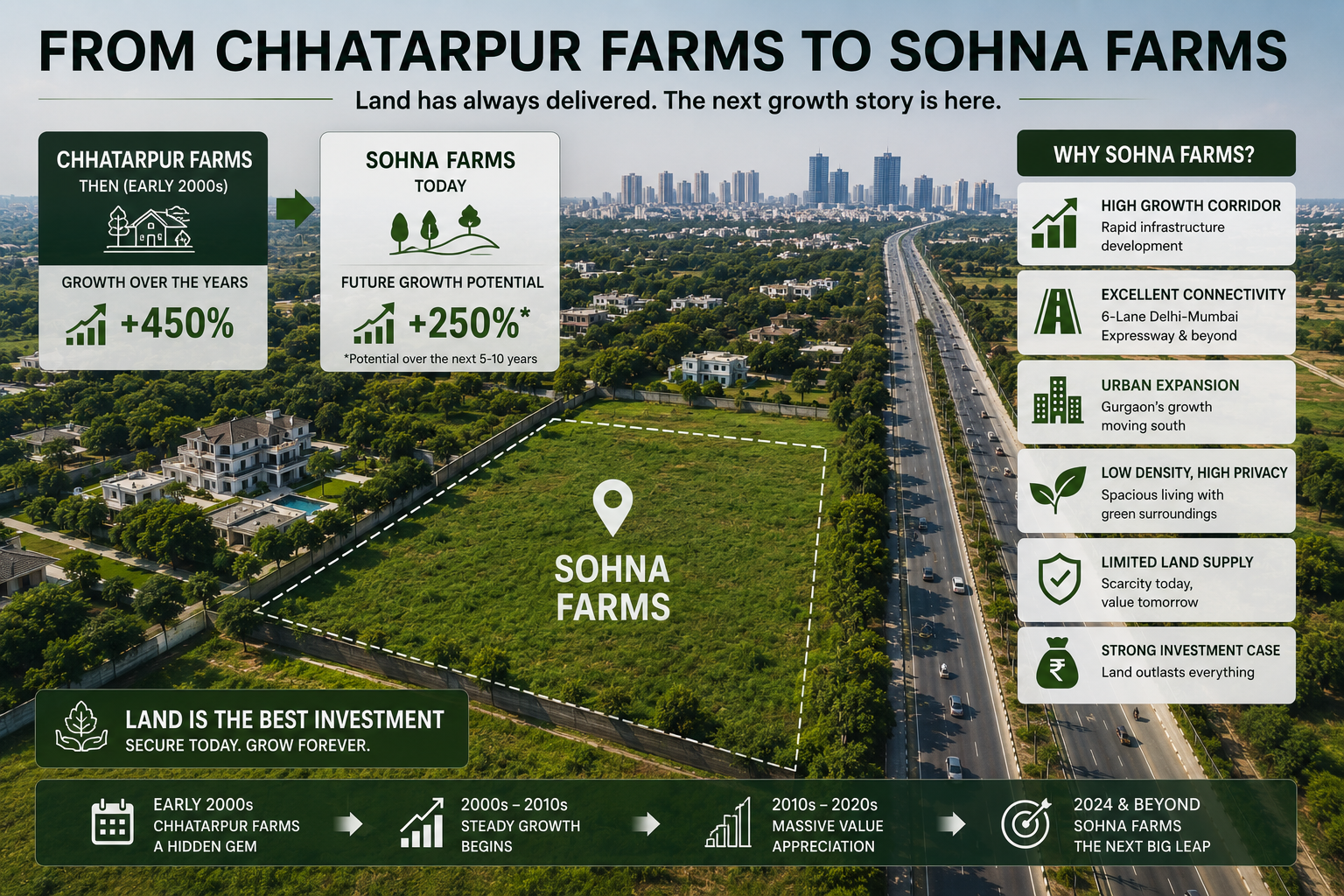
How Chhatarpur Farmhouses Created Multi-Crore Wealth for Early Buyers
What a quiet corner of South Delhi can teach investors about land, scarcity, and long-term wealth creation.
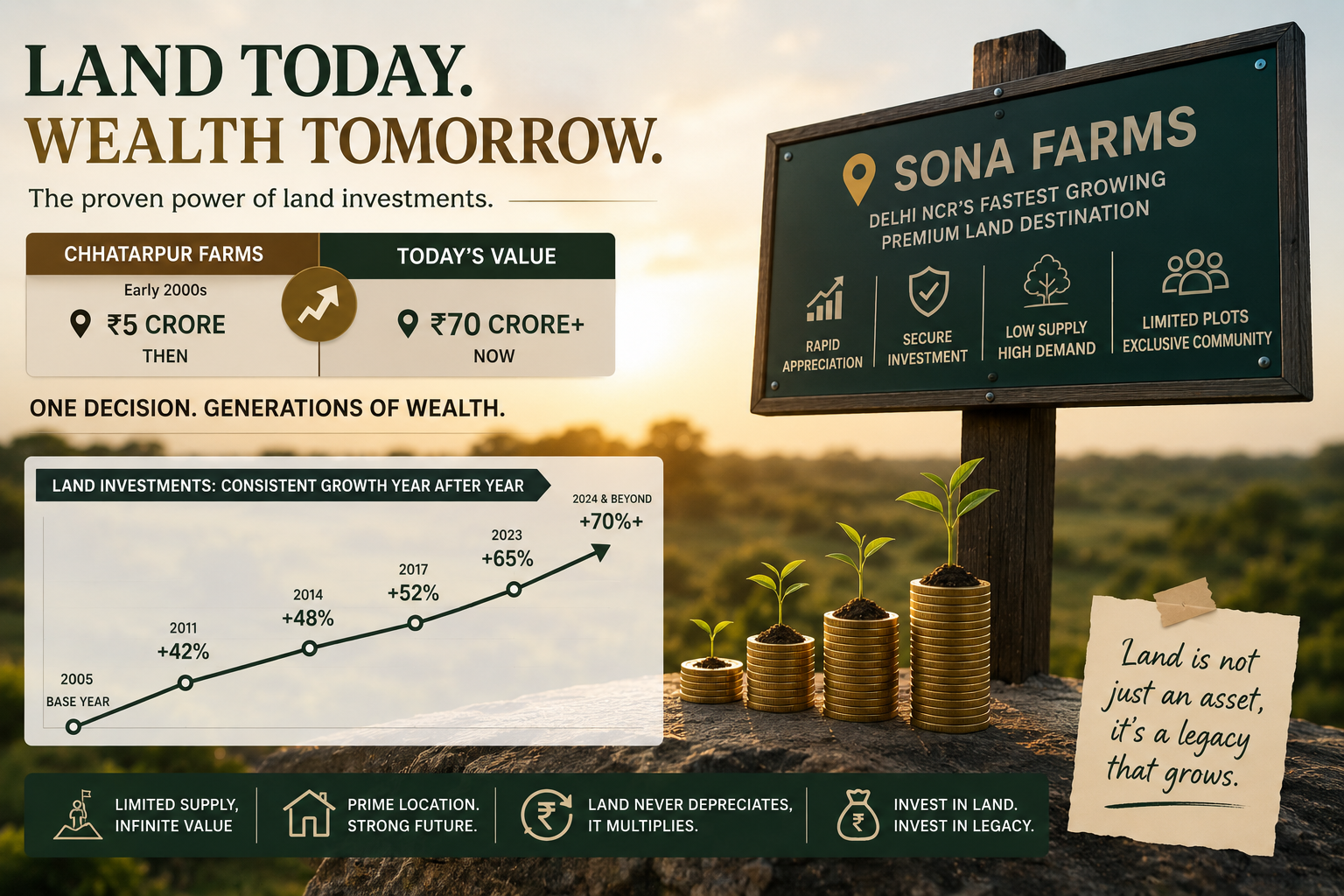
The ₹5 Crore Land Purchase That Became Worth ₹70 Crore
What the Story of DLF Chhatarpur Farms Reveals About Wealth Creation Through Premium Land Ownership
One short email. Stories you can use.
A free, occasional email from our editorial team with our latest features, explainers and reads. Unsubscribe any time — your email stays with us.