The Elusive Profitability of Quick Commerce in Britain's Urban Centres
While rapid grocery delivery has reshaped consumer expectations, the sector's long-term financial viability remains a complex challenge for established retailers and dedicated platforms alike. The pursuit of speed frequently conflicts with sustainable operational models.

A Deliveroo rider pauses outside a Tesco Express in central London, checking a smartphone before collecting a pre-packed order. This scene, now commonplace across British high streets, encapsulates the promise and paradox of quick commerce. For consumers, the convenience of groceries arriving within minutes has become an ingrained expectation. For the companies providing this service, from nimble startups to supermarket giants, achieving consistent profitability in a fiercely competitive and operationally intensive market continues to be a formidable task.
The initial land grab saw a proliferation of 'dark stores' and aggressive expansion, often subsidised by significant venture capital injections. Firms like Getir and Gorillas, once celebrated for their rapid market penetration, have since faced restructuring and consolidation, highlighting the unsustainable burn rates associated with their initial growth strategies. This has left a landscape where only the most efficient operators, or those with significant adjacent revenue streams, appear capable of weathering the economic headwinds.
The Legacy Retailer's Dilemma
Traditional supermarkets, initially hesitant, have moved decisively into the quick commerce space. Tesco, for instance, expanded its Whoosh rapid delivery service, aiming for 1,000 stores by early 2024, enabling deliveries within 60 minutes. Sainsbury's has similarly broadened its Chop Chop service. These initiatives leverage existing store networks, turning them into hybrid fulfilment centres, which theoretically lowers capital expenditure compared to building dedicated dark store infrastructure from scratch. However, the operational complexity of picking small, frequent orders from shelves designed for larger trolley shops introduces its own set of inefficiencies.
For these established players, quick commerce is often less about direct profit maximisation from individual orders and more about customer retention and market share defence against pure-play rapid delivery platforms. The incremental revenue from quick orders must be carefully balanced against the costs of dedicated staff, delivery fleet maintenance, and the potential disruption to in-store operations.
Ocado, while a technology leader in automated warehousing, has primarily focused on larger, scheduled deliveries. Its strategy differs from quick commerce platforms, emphasising efficiency through highly automated distribution centres. Yet, the pressure to offer faster services, potentially through its Zoom division, hints at the broader market pull towards immediacy, even for those whose core competency lies elsewhere.
Beyond Groceries: The Wider Retail Impact
The quick commerce model is not confined to food. ASOS and Next have invested heavily in rapid fulfilment capabilities for apparel, often offering next-day or even same-day delivery options in urban centres. This requires sophisticated logistics, robust inventory management, and significant investment in regional distribution hubs. While not 'quick commerce' in the 15-minute grocery sense, it demonstrates the escalating consumer demand for speed across diverse retail segments.
The persistent challenge lies in transforming a high-cost, high-speed operation into a financially self-sustaining enterprise without alienating consumers with prohibitive delivery charges.
Deliveroo and Just Eat, originally restaurant delivery specialists, have diversified aggressively into grocery and general merchandise. Their extensive networks of riders and sophisticated routing algorithms provide a distinct advantage. However, their reliance on a gig-economy workforce introduces regulatory and social responsibility considerations, alongside the continuous pressure to keep commission rates attractive to retailers while remaining profitable themselves. The race to zero delivery fees for subscribers further compresses margins.
The British consumer has demonstrated a clear appetite for speed, particularly in urban areas. This preference has driven innovation and investment. However, as the quick commerce sector matures, the focus is undeniably shifting from raw growth to demonstrable financial returns. The next phase will likely see further consolidation, technological advancements in route optimisation and dark store automation, and a more selective approach to geographic expansion, as companies seek to refine their models for enduring viability.
News Legacy maintains editorial independence. Some recommendations may contain affiliate links. We earn from qualifying purchases at no additional cost to you. Read our policy.
Read Next

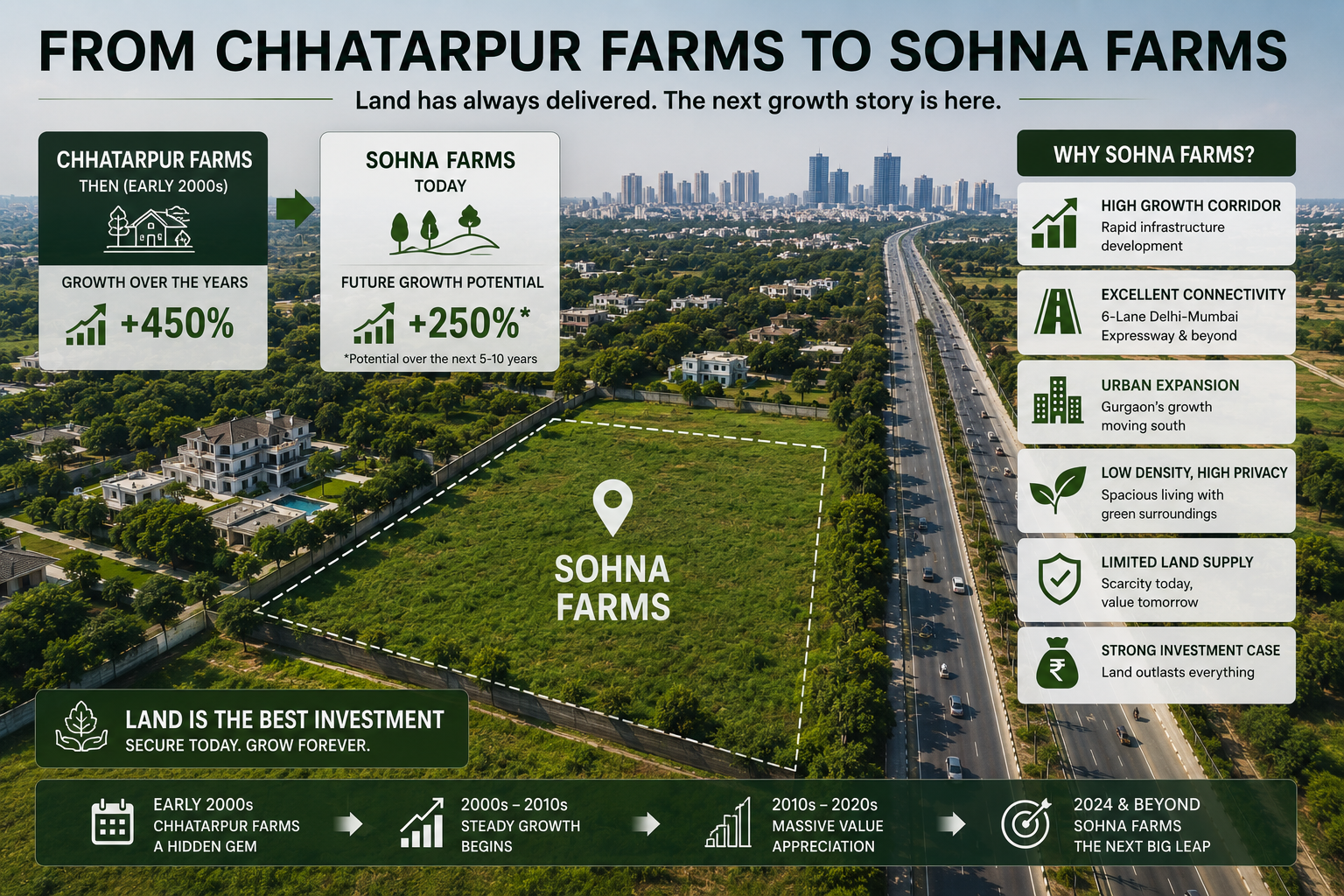
Is Sohna Really the Next Chhatarpur?
Three decades after Chhatarpur redrew South Delhi's map for space, privacy and exclusivity, a familiar pattern is now taking shape further south, and Sohna is where the smart money is beginning to look.
How Chhatarpur Farmhouses Created Multi-Crore Wealth for Early Buyers
What a quiet corner of South Delhi can teach investors about land, scarcity, and long-term wealth creation.

The ₹5 Crore Land Purchase That Became Worth ₹70 Crore
What the Story of DLF Chhatarpur Farms Reveals About Wealth Creation Through Premium Land Ownership
One short email. Stories you can use.
A free, occasional email from our editorial team with our latest features, explainers and reads. Unsubscribe any time — your email stays with us.