The Enduring Paradox of the British High Street: Value and Velocity Collide
As inflation eases, the UK consumer faces a complex calculus, balancing renewed fiscal caution with a persistent demand for convenience, reshaping the strategies of established retail giants and agile disruptors alike.

A Saturday afternoon stroll down Oxford Street reveals a familiar tableau of bustling shoppers, yet beneath the surface, the calculus governing their spending decisions has shifted profoundly. Footfall remains, but the basket size and category mix are undergoing a recalibration, reflecting an economy where persistent cost-of-living pressures have ingrained a new frugality. This dynamic challenges retailers, from the ubiquitous Tesco Express to the fashion behemoth ASOS, to redefine their value propositions in an era of constrained disposable income and evolving consumer expectations.
For months, household budgets have absorbed the impact of elevated energy bills and food price inflation, prompting a widespread re-evaluation of non-essential purchases. Data from the British Retail Consortium consistently highlighted a slowdown in non-food sales growth during the latter half of the previous year, with segments like home furnishings and consumer electronics experiencing particular headwinds. While overall retail sales volumes have shown intermittent signs of recovery, the underlying trend points to a more discerning consumer actively seeking better deals and prioritising longevity in their purchases.
The grocery sector offers a vivid illustration. Supermarket stalwarts like Sainsbury's and Tesco have invested heavily in price-matching schemes and loyalty programmes, often at the expense of profit margins, to compete with the persistent allure of discounters. This strategic battle for the weekly shop underscores a fundamental shift: convenience alone is no longer sufficient; it must be coupled with perceived value. Online grocer Ocado, despite its advanced logistics, must now work harder to justify its premium in an environment where every pence counts.
The Convenience Premium Under Scrutiny
The proliferation of rapid delivery services like Deliveroo and Just Eat during the pandemic created a powerful expectation of instant gratification. However, the associated costs, often in the form of delivery fees and service charges, are now facing increased scrutiny. While the 'on-demand' economy retains its appeal for time-poor consumers, particularly in urban centres, there is growing evidence of a plateau in its exponential growth. Consumers are becoming more selective, reserving these services for specific occasions rather than daily staples, prompting these platforms to diversify their offerings and seek new revenue streams beyond food delivery.
Meanwhile, traditional high street players are adapting. Marks & Spencer, leveraging its strong food proposition and renewed focus on quality apparel at competitive price points, has demonstrated resilience. Next, with its integrated online and physical store model, has continued to navigate the choppy waters by emphasising efficient logistics and a curated product assortment that resonates with its core demographic. Their successes suggest that a hybrid approach, blending digital accessibility with a tangible retail experience, offers a more robust path forward than a pure-play strategy in either direction.
One industry analyst observes that the British consumer is not abandoning the high street; rather, they are demanding more from it, seeking experiences and products that truly justify the journey and the expenditure.
Navigating the Digital Discount Divide
The digital realm presents its own set of challenges and opportunities. While online shopping offers unparalleled choice and price comparison, the relentless pressure on margins for e-commerce pure-plays like ASOS remains intense. Returns processing, marketing acquisition costs, and logistical complexities eat into profitability, especially as consumers become more accustomed to free returns and rapid shipping. The digital discount divide, where consumers flock to the cheapest online option, necessitates continuous innovation in supply chain management and customer retention strategies.
This environment fosters a landscape where agility and data-driven decision-making are paramount. Retailers must anticipate not only what consumers want to buy, but *how* they want to buy it, and crucially, *at what price* they are willing to pay. The enduring paradox is that while consumers yearn for a return to normalcy, their shopping habits have been irrevocably altered, creating a permanent mandate for retailers to offer compelling value across all channels, without compromising on the seamless experience that modern life demands. The evolution of the British shopping culture is less about dramatic revolutions and more about persistent, incremental recalibrations.
The next fiscal year will likely see a continued emphasis on efficiency, personalised offers, and a strategic balance between physical presence and digital convenience. Retailers failing to adapt to this nuanced consumer psychology risk being left behind in a market that remains fiercely competitive, even as the immediate inflationary pressures begin to recede.
News Legacy maintains editorial independence. Some recommendations may contain affiliate links. We earn from qualifying purchases at no additional cost to you. Read our policy.
Read Next

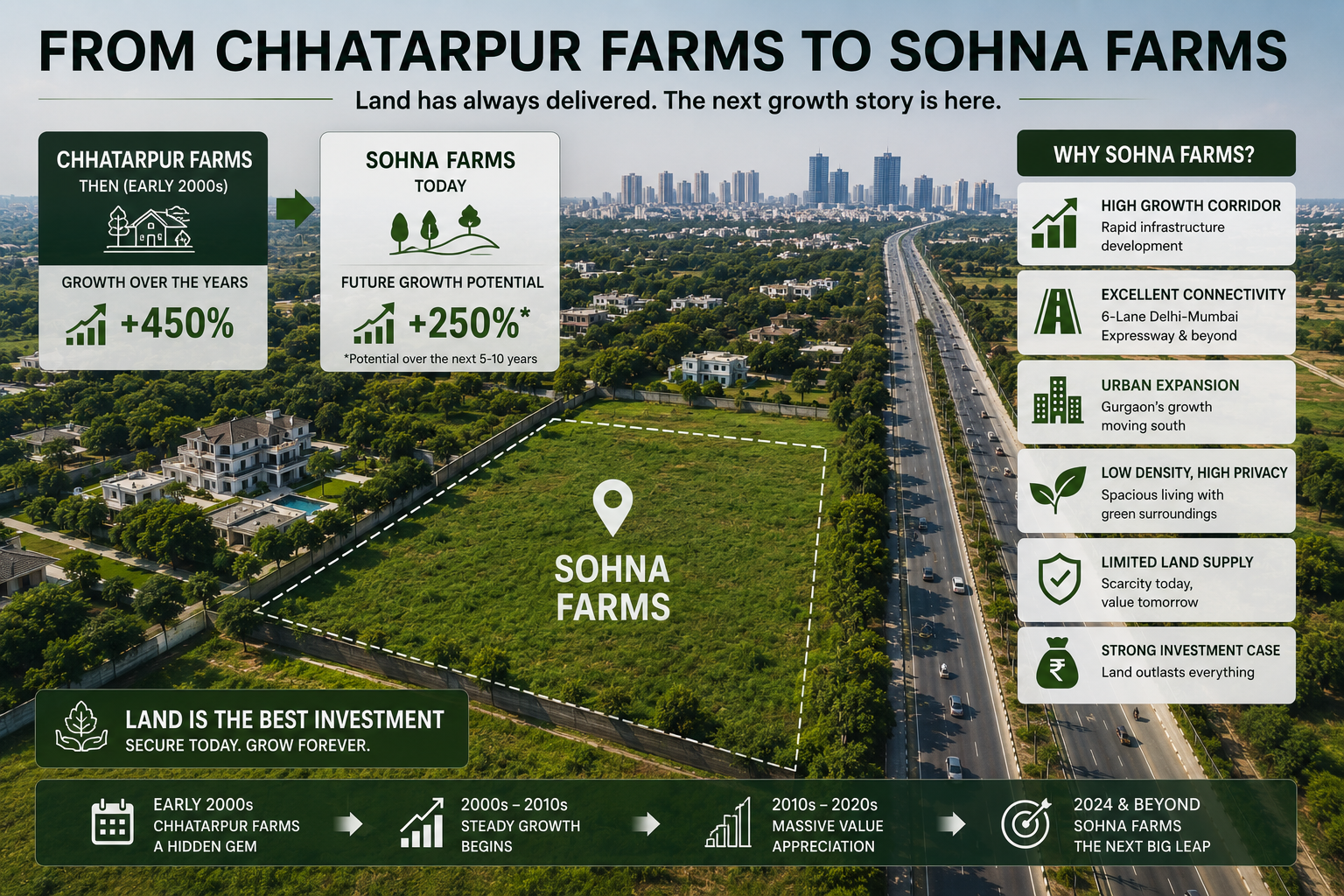
Is Sohna Really the Next Chhatarpur?
Three decades after Chhatarpur redrew South Delhi's map for space, privacy and exclusivity, a familiar pattern is now taking shape further south, and Sohna is where the smart money is beginning to look.
How Chhatarpur Farmhouses Created Multi-Crore Wealth for Early Buyers
What a quiet corner of South Delhi can teach investors about land, scarcity, and long-term wealth creation.

The ₹5 Crore Land Purchase That Became Worth ₹70 Crore
What the Story of DLF Chhatarpur Farms Reveals About Wealth Creation Through Premium Land Ownership
One short email. Stories you can use.
A free, occasional email from our editorial team with our latest features, explainers and reads. Unsubscribe any time — your email stays with us.