The European Platform Predicament: Why Retailers Grapple with Growth Beyond Borders
European retailers and e-commerce platforms confront a fragmented digital landscape, where localisation demands and diverse consumer habits stifle true continental scale, despite the promise of a single market.

The recent strategic adjustments by companies like Cdiscount, focusing heavily on its marketplace model in France, illustrate a broader dilemma facing European digital commerce. While the ambition for a unified European market for goods has been a political cornerstone for decades, the practicalities of scaling e-commerce platforms and the underlying software services across the continent remain a formidable challenge. The perceived homogeneity of the European consumer often dissolves at the national border, creating significant friction for expansion.
Businesses seeking to expand from, say, Germany into Spain, or from Poland into the Nordics, quickly encounter a patchwork of payment preferences, language nuances, regulatory specifics, and distinct logistical infrastructures. This fragmentation directly impacts the utility and efficacy of software-as-a-service (SaaS) tools designed to power e-commerce operations. A robust pan-European solution requires not just linguistic adaptation, but deep cultural and operational integration.
Localisation as a Competitive Moat
Major European players have often found their strongest footing within their domestic or regional spheres. Zalando dominates in fashion across a dozen markets, but its growth trajectory still involves nuanced country-by-country strategies rather than a single unified rollout. Similarly, Dutch retailer Bol.com thrives in the Benelux region, while Allegro maintains an unassailable position in Poland, both benefiting from a deep understanding of local consumer psychology and supply chain intricacies. This local expertise, while a strength, inadvertently raises the barrier to entry for genuinely pan-European platforms.
The challenge for SaaS providers is to offer tools that are both highly configurable for local markets yet scalable enough to serve multiple geographies efficiently. Payment gateways, for instance, must accommodate everything from German direct debits and Dutch iDEAL to Polish Blik and Scandinavian Swish, alongside standard card payments. Inventory management and fulfilment solutions must navigate disparate VAT regimes and varying customs procedures, even within the Schengen Area for certain goods or originations.
Even in high-growth segments like quick commerce, as seen with the rapid expansions and subsequent retrenchments of entities like Gorillas or Flink, the cost of hyper-localised logistics and marketing across numerous urban centres proved unsustainable without deep market penetration. Their eventual struggles underscore the capital-intensive nature of cross-border scaling in Europe, a lesson that equally applies to the underlying tech infrastructure.
The dream of a seamless digital single market often clashes with the reality of twenty-seven distinct consumer preferences and regulatory frameworks.
The SaaS Opportunity in Fragmentation
This fragmentation, while a hurdle, also presents a significant opportunity for specialised SaaS providers. Instead of a 'one-size-fits-all' platform, the demand is for modular, adaptable solutions that can integrate with existing local systems. This might include AI-driven translation services tailored for commercial product descriptions, sophisticated dynamic pricing tools sensitive to regional competitive landscapes, or supply chain optimisation software that accounts for national holidays and varied labour laws.
Large traditional retailers like Carrefour, REWE, and Lidl are increasingly investing in their own digital capabilities and marketplaces. Their digital transformations are often hybrid, leveraging global SaaS platforms for core functions while building bespoke solutions or integrating niche European providers for specific market needs. This preference for a 'best-of-breed' approach, rather than a monolithic suite, allows them to maintain local relevance while benefiting from modern infrastructure.
The vibrant second-hand market, exemplified by Vinted's success in connecting sellers and buyers across multiple European nations, demonstrates that cross-border commerce can thrive when the platform's core value proposition transcends national specificities, typically through a strong community and streamlined logistics. For SaaS providers, understanding these fundamental drivers of cross-border adoption — be it price, unique selection, or convenience — is critical for developing tools that truly enable growth in this complex environment.
News Legacy maintains editorial independence. Some recommendations may contain affiliate links. We earn from qualifying purchases at no additional cost to you. Read our policy.
Read Next

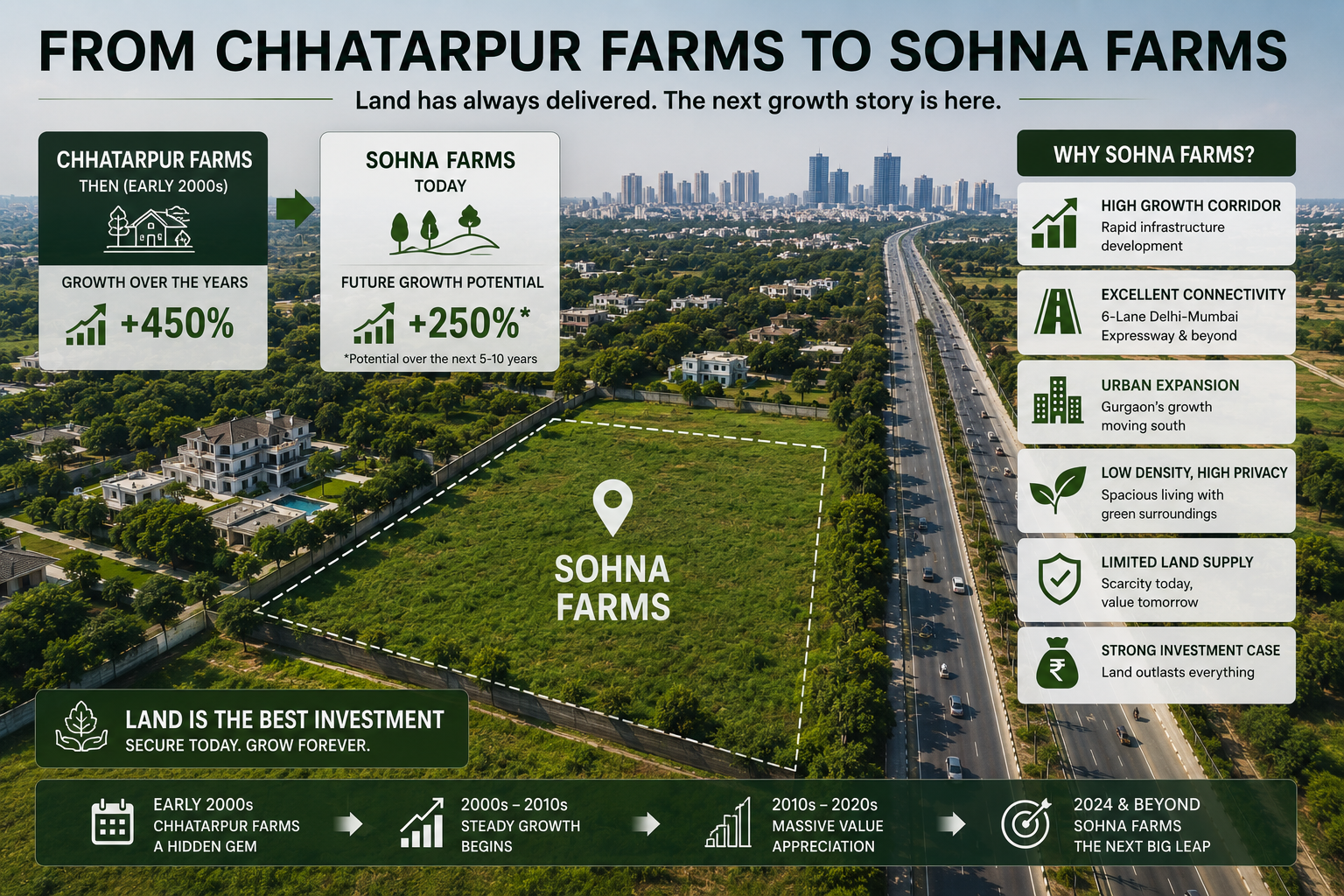
Is Sohna Really the Next Chhatarpur?
Three decades after Chhatarpur redrew South Delhi's map for space, privacy and exclusivity, a familiar pattern is now taking shape further south, and Sohna is where the smart money is beginning to look.
How Chhatarpur Farmhouses Created Multi-Crore Wealth for Early Buyers
What a quiet corner of South Delhi can teach investors about land, scarcity, and long-term wealth creation.

The ₹5 Crore Land Purchase That Became Worth ₹70 Crore
What the Story of DLF Chhatarpur Farms Reveals About Wealth Creation Through Premium Land Ownership
One short email. Stories you can use.
A free, occasional email from our editorial team with our latest features, explainers and reads. Unsubscribe any time — your email stays with us.