The Fractured Bazaar: Why Europe's Creator Economy Refuses to Emulate the Anglo-American Model
Linguistic boundaries, statutory crackdowns, and entrenched national marketplaces are forcing continental retailers to build a bespoke, decentralised architecture for creator-led commerce.

In Berlin, Zalando's engineering and merchandising teams have spent recent quarters quietly retooling the retailer's digital storefront around curated editorial formats, seeking to transform passive catalogue browsing into discovery guided by independent tastemakers. The German fashion giant is not alone in attempting to stitch creator recommendations directly into transactional baskets. From Warsaw to Paris and Amsterdam, domestic champions including Allegro, Cdiscount, and Bol are experimenting with live-streaming modules and curated creator storefronts. Yet unlike the monolithic ecosystems of Douyin in China or TikTok Shop in Britain, creator commerce on the European continent confronts a fragmented commercial terrain that stubbornly resists consolidation.
The Structural Wall of Linguistic Sovereignty
The primary constraint is geographical and cultural. Whereas an English-language creator based in London or Los Angeles can tap into broad linguistic liquidity across vast consumer pools, European creator conversion rates decay precipitously at national frontiers. A creator commanding substantial cultural capital among Italian apparel shoppers rarely generates viable unit economics for an independent merchant dispatching parcels from a fulfilment facility outside Poznań. While Allegro dominates Polish retail with over 14 million active accounts and Bol retains a defensive moat across the Benelux, their respective creator initiatives remain bounded by language, domestic logistics, and distinct national payment rails, from Blik in Poland to iDeal in the Netherlands.
Consequently, platform strategy on the continent has diverged from brute-force algorithmic commerce. Vinted, the Vilnius-founded resale marketplace, has arguably constructed Europe’s most resilient peer-to-peer social discovery loop, relying not on high-profile celebrity sponsorships, but on distributed organic styling across France, Spain, and Germany. Rather than committing multi-million-euro budgets to macro-tier lifestyle personalities, continental platforms are increasingly deploying programmatic affiliate frameworks to micro-tier curators who possess verifiable credibility within specific linguistic enclaves.
Europe's commercial frontiers remain stubbornly resilient; algorithmic distribution crosses borders far more easily than consumer trust and reverse logistics.
Regulatory Headwinds and the Margin Squeeze
Regulatory oversight compounds this operational complexity. France's landmark statutory framework governing commercial influence, enacted in 2023, introduced rigorous disclosure mandates and severe penalties for opaque promotional practices, establishing an enforcement template that regulators in Brussels and Berlin are actively monitoring. In Germany, strict civil liability standards around clandestine advertising make ambient product placement legally hazardous. For legacy supermarket groups like Carrefour and REWE, which flirted with creator-led promotions during the quick-commerce cycle once contested by Flink and Gorillas, influencer partnerships have migrated toward pragmatic, low-risk utility: recipe integrations, private-label staples, and measurable loyalty-app conversions.
The arithmetic of fulfilment presents the final arbiter of viability. In the DACH region and the Nordics, where consumer habits historically yield fashion return rates above 40%, impulse transactions stimulated by ephemeral social videos frequently prove margin-destructive. When an impulse order incurs cross-border return postage and refurbishment costs between Munich and Madrid, publisher commission rates rapidly outpace merchant net margins. Continental retailers are consequently treating creator commerce not as an instrument for speculative customer acquisition, but as a defensive lever for basket enrichment and brand equity.
What is taking shape across Europe is not an underdeveloped variant of the American creator economy, but a distinct regional adaptation. As capital discipline replaces the fantasy of a borderless pan-European social bazaar, the continent's dominant merchants are treating creators as specialised merchandising partners rather than self-contained retail storefronts. Enduring success between the Baltic and the Mediterranean will not belong to the platforms promising friction-free global scale, but to those capable of managing fragmented margins within strictly guarded national jurisdictions.
News Legacy maintains editorial independence. Some recommendations may contain affiliate links. We earn from qualifying purchases at no additional cost to you. Read our policy.
Read Next

Is Sohna Really the Next Chhatarpur?
Three decades after Chhatarpur redrew South Delhi's map for space, privacy and exclusivity, a familiar pattern is now taking shape further south, and Sohna is where the smart money is beginning to look.
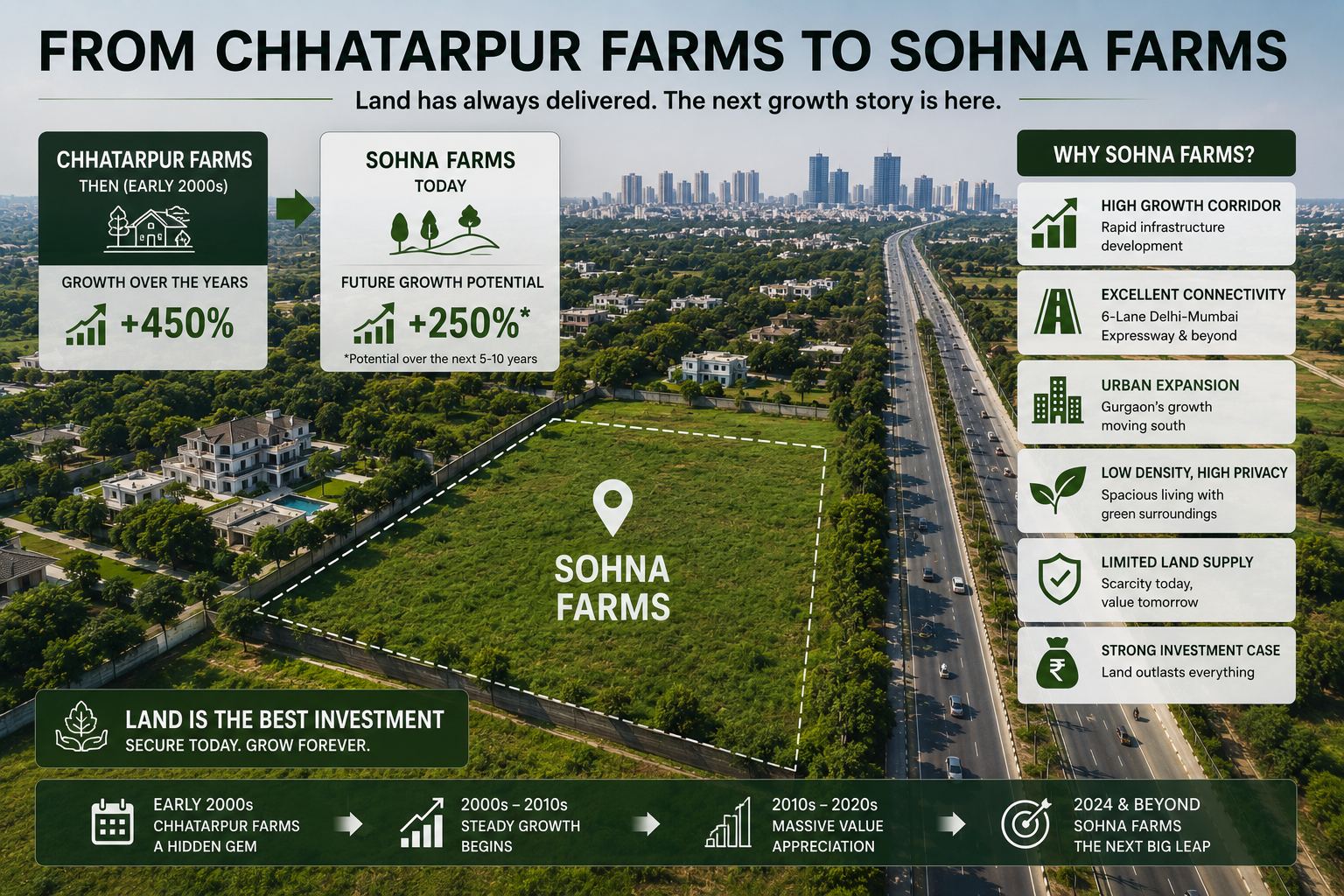
How Chhatarpur Farmhouses Created Multi-Crore Wealth for Early Buyers
What a quiet corner of South Delhi can teach investors about land, scarcity, and long-term wealth creation.
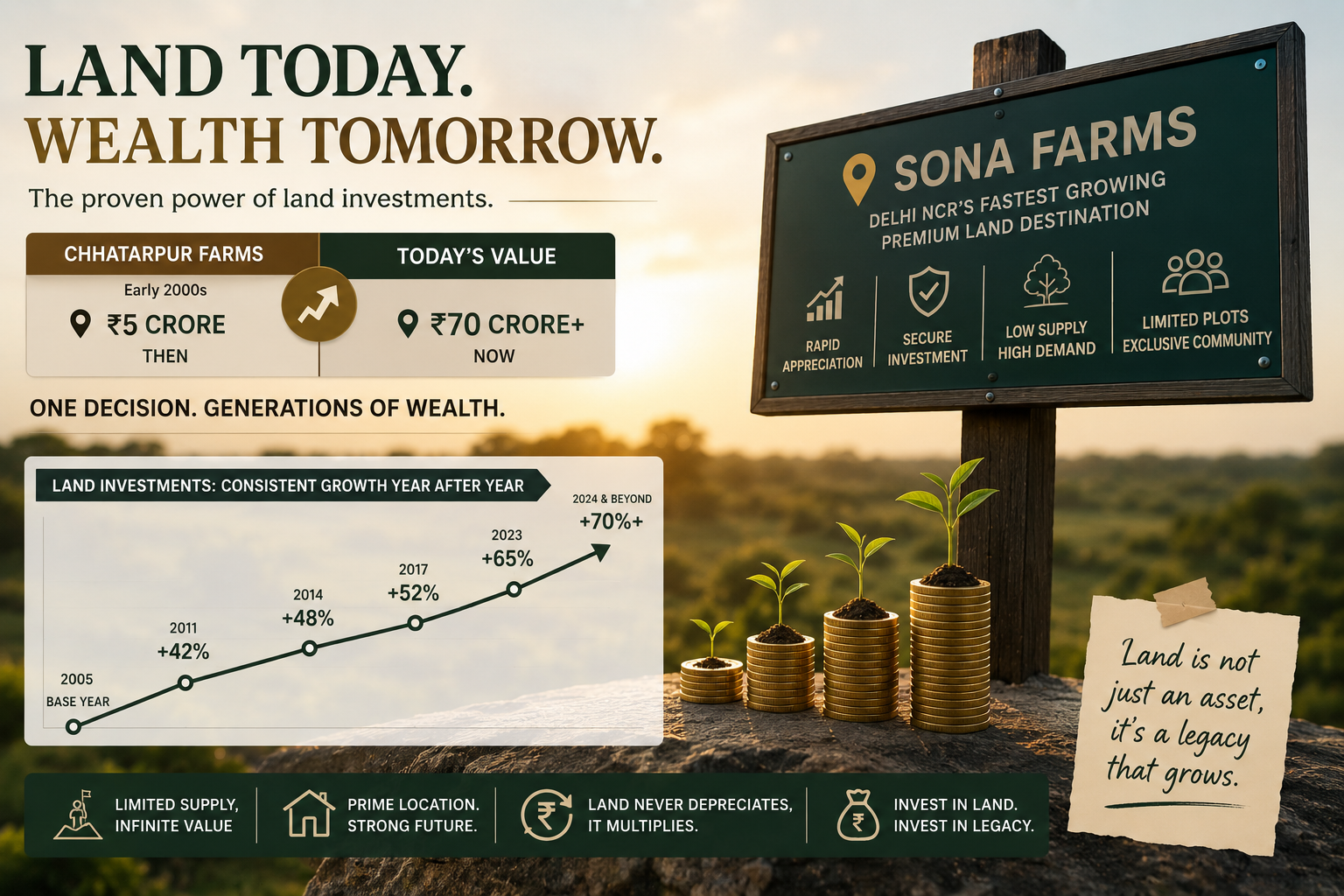
The ₹5 Crore Land Purchase That Became Worth ₹70 Crore
What the Story of DLF Chhatarpur Farms Reveals About Wealth Creation Through Premium Land Ownership
One short email. Stories you can use.
A free, occasional email from our editorial team with our latest features, explainers and reads. Unsubscribe any time — your email stays with us.